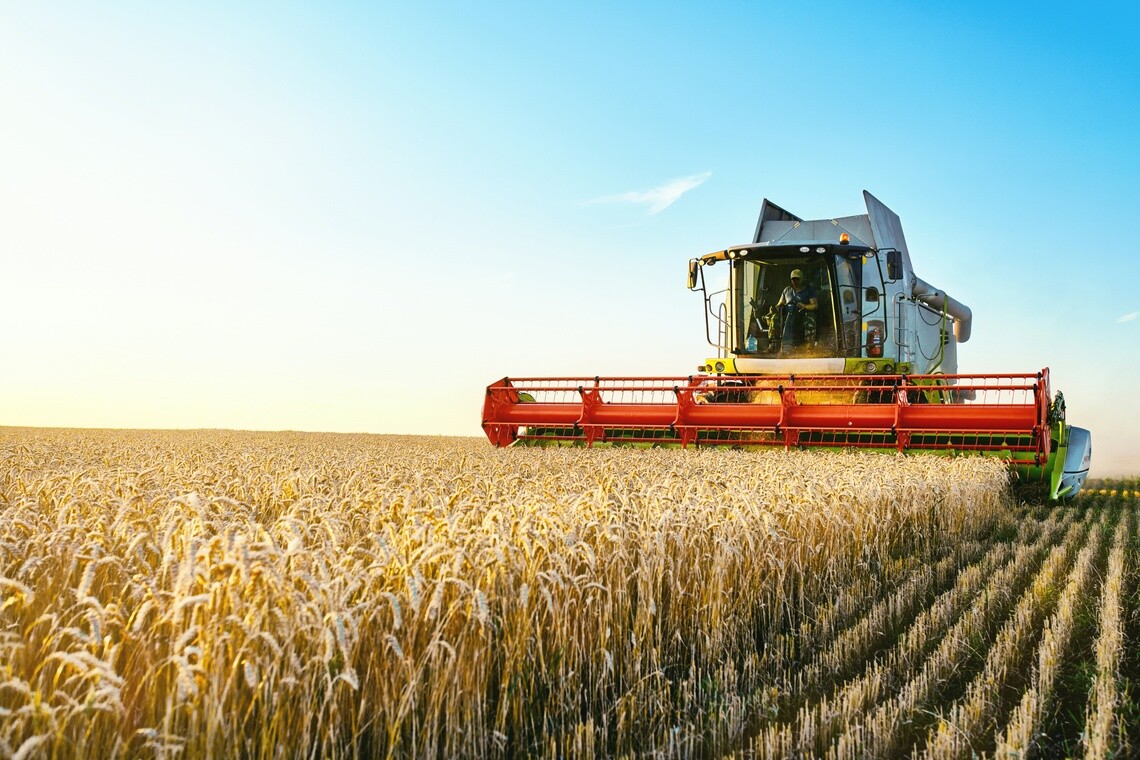
Harvester cutting wheat in a field
Combine harvester harvests ripe wheat. Ripe ears of gold field on the sunset cloudy orange sky background. . Concept of a rich harvest. Agriculture image
Equipment downtime during peak season costs more than most operations realize.
When your agricultural tires fail during critical planting or harvest windows, the real expense isn't just the service call; it's the cascading costs of idle equipment, delayed operations and missed weather windows that can impact your entire season's profitability.
What's the True Cost of Agricultural Tires?
The total cost of ownership tells a different story than the sticker price.
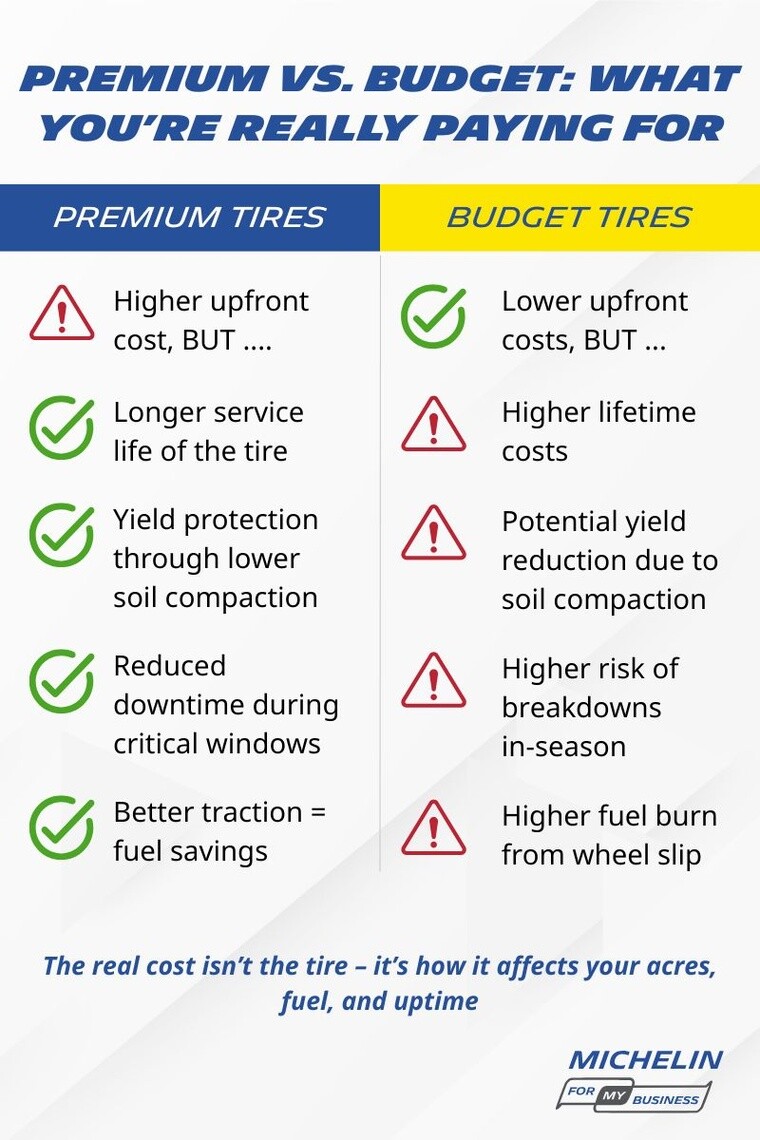
While premium agricultural tires require a higher upfront investment, they deliver measurable returns through improved fuel efficiency, reduced downtime and longer service life. When you factor in the true cost of tire-related delays and replacements, the math often favors quality over initial savings.
This Article Will Explain:
How Premium Agricultural Tires Impact Your Bottom Line
Quality tire selection directly impacts multiple areas of your operation's profitability. Beyond the obvious performance benefits, premium tires function as a strategic investment that protects revenue streams and reduces operational risks across your entire farming operation.
Four Key Performance Areas
Operational Continuity: Reliable equipment performance during planting and harvest seasons protects your most valuable asset: time. When weather windows are narrow and schedules are tight, tire failures can create costly disruptions that extend far beyond the replacement cost.
Equipment Protection: Quality tires help preserve your equipment investment through even wear patterns and reduced stress on drivetrain components, maximizing equipment efficiency throughout the service life.
Fuel and Labor Efficiency: Superior traction translates directly to operational savings. Better grip means less wheel slip, reducing fuel consumption while allowing operators to maintain consistent productivity across thousands of acres and multiple seasons.
Soil Health Investment: Premium tire technology that reduces soil compaction protects your most fundamental asset: the land itself. Maintaining soil structure supports better yields and impacts profitability for years beyond the initial purchase.
IF and VF Tires Performance: How Michelin Ultraflex Technology Delivers
Michelin Ultraflex technology introduced the Very High Flexion (VF) standard to the market in 2004, demonstrating how advanced engineering creates measurable value for farming operations.
This innovative technology uses flexible design that allows the tire to bend and flex more than standard tires. The enhanced flexion distributes weight across a larger contact patch, delivering superior grip while enabling operators to carry heavier loads at reduced air pressures without sacrificing speed. The result is improved productivity without compromising soil health.
What Are the Benefits of IF and VF Tires?
Independent studies prove that investing in advanced tire technology delivers concrete returns. Research from the University of Illinois and Harper Adams University on Michelin Ultraflex technology demonstrated a 4% yield increase* and 10% fuel savings* compared to conventional agricultural tires.
Three Ways IF and VF Tires Impact Your Bottom Line
The performance advantages of Michelin Ultraflex technology translate into measurable financial benefits across your operation:
- • Fuel Savings: Better traction reduces wheel slip, cutting fuel costs while increasing productivity.
- • Yield Protection: Superior soil protection prevents compaction damage and rutting, which helps boost long-term field productivity.
- • Operational Efficiency: Enhanced load capacity and performance improve annual work efficiency, maximizing equipment utilization.
What You Need to Know to Make an Informed Investment Decision for Your Operation
Evaluating premium agricultural tires requires looking beyond the initial purchase price to understand the total impact on your operation's profitability.
Key Performance Metrics to Consider
Fuel efficiency gains, yield protection and equipment longevity represent the primary areas where premium tires deliver measurable returns.
However you should look for tires backed by independent research demonstrating concrete performance improvements. Reliability during critical seasons becomes equally important. The cost of a single breakdown during planting or harvest has the potential to exceed the price difference between premium and budget options.
Calculating Your Operation's Needs
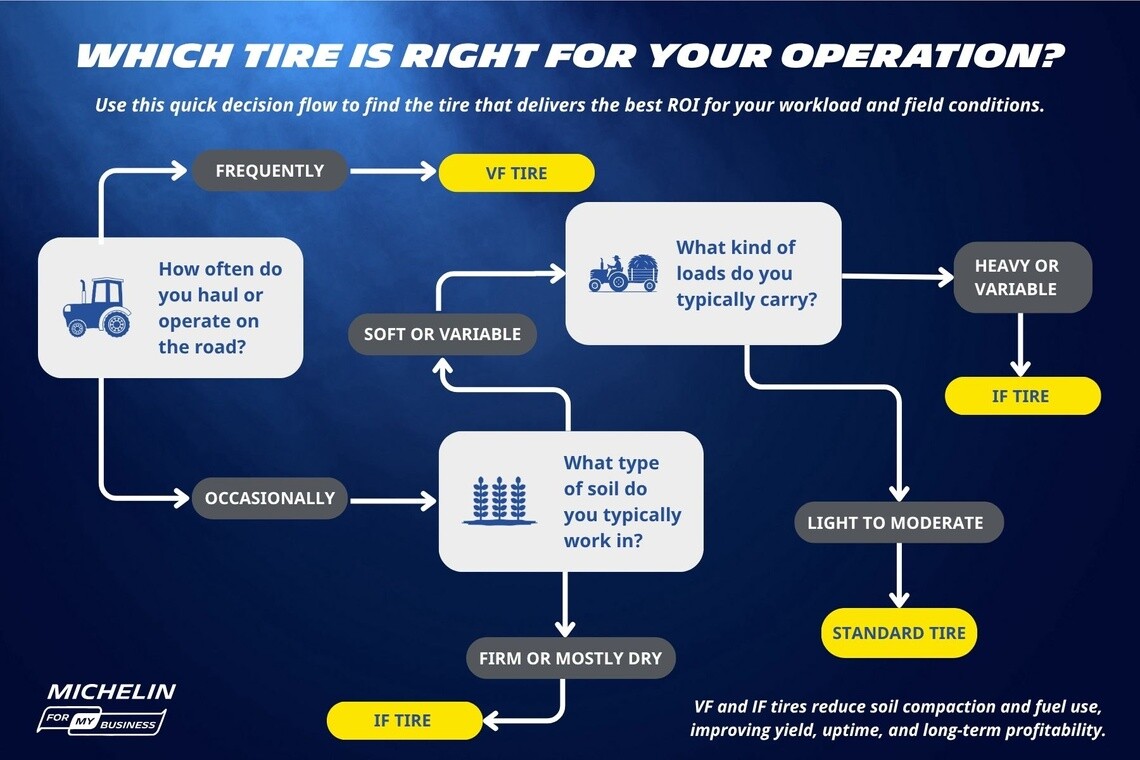
Your farm's size, equipment utilization and operational priorities determine which tire features deliver the most value. Operations running leased equipment benefit significantly from even wear patterns, while high-acreage farms see greater returns from fuel efficiency and reduced downtime.
Soil conditions and field characteristics also influence tire selection. Operations dealing with compaction-sensitive soils may find the soil protection benefits of VF technology justify the investment through long-term yield preservation.
- Choose Tires Backed by Manufacturer Guarantees
- Purchase tires backed by manufacturers with concrete performance guarantees. Michelin tires with Ultraflex technology like the YieldBib, are backed by a 1-year guarantee, providing additional confidence when making the premium tire investment.
Make the Right Choice for Your Operation
When replacing tires on your farm equipment, it's important to look for tires that deliver measurable returns. Check out Michelin's comprehensive lineup of agricultural tires outfitted with Ultraflex technology that provide improved fuel efficiency, enhanced traction and reduced soil compaction for long-term field productivity.
Ready to purchase? Contact your tire dealer or use Michelin's dealer locator tool to find a retailer near you and learn more about how Ultraflex technology can benefit your operation.
Frequently Asked Questions about Agriculture Tires
VF stands for Very High Flexion, a tire technology that allows agricultural tires to operate at lower pressures while maintaining load capacity. VF tires feature flexible sidewall construction that creates a larger footprint for better traction and reduced soil compaction compared to standard radial tires.
- IF (Increased Flexion) tires can operate at 20% lower air pressure or carry 20% more load at the same pressure compared to a standard tire.
- VF (Very High Flexion) tires can operate at 40% lower air pressure or carry 40% more load at the same pressure as a standard tire.
IF and VF tires both deliver superior flexibility over conventional radial designs. However, VF technology takes it a step further – offering even better flexibility and soil protection than IF options. Both tire types enable lower-pressure operation, but VF stands out as the cutting edge of agricultural tire innovation available today.
Replace tires when the lug depth is below 20%, when sidewall damage is visible, or when irregular wear patterns develop. Other signs include frequent air pressure loss, cracking in the sidewall, or when the tire can no longer maintain proper inflation. Regular inspection during maintenance helps identify replacement needs.
Proper tire pressure depends on your specific equipment, load and operating conditions. The key is running the lowest pressure possible while safely carrying your load. This maximizes the tire's footprint and reduces soil compaction. Consult your tire manufacturer's load and inflation tables for precise recommendations based on your specific setup.
Improper tire pressure is a leading cause of agricultural tire service issues. Under-inflation causes excessive heat buildup, premature wear and potential tire failure. Over-inflation reduces the tire's footprint, decreasing traction and increasing soil compaction. Maintaining correct pressure maximizes tire life, fuel efficiency and field performance. Use Michelin’s Agropresure app to find the correct air pressure for any tire and implement a combo with or without knowing the axle weight.
* A study carried out by Harper Adams University in the UK in 2012, demonstrates that MICHELIN ULTRAFLEX technology increases agronomic yields by 4% on average. These results are confirmed by similar studies carried out in the United States (Illinois) and Brazil (Mato Grosso).


