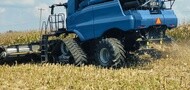
Farm mobility with tracks
How Agricultural Track Systems Improve Farm Mobility
Agricultural equipment needs to move efficiently between fields and operate reliably across changing terrain and soil conditions. Discover how agricultural track systems can support farm mobility through improved traction, stability and ground pressure management. Explore the features and benefits of Michelin rubber tracks for tractors, combines, sprayers and other agricultural equipment.
ON THIS PAGE
- How Agricultural Track Systems Improve Mobility Between Fields
- Key Agricultural Track System Features That Support Farm Mobility
- How Agricultural Track Systems Support Mobility and Efficiency
- Explore Michelin Agricultural Tracks and Track Systems
- Frequently Asked Questions About Agricultural Track Systems
How Agricultural Track Systems Improve Mobility Between Fields
Agricultural equipment often needs to travel between fields, sometimes across considerable distances. Track systems designed for agricultural applications can help support equipment stability and mobility during these transitions, allowing farmers to move between locations while maintaining operational flexibility.
Michelin agricultural track systems are designed to support performance in demanding farming environments. Depending on the equipment and track configuration, features such as track tensioning systems and specialized undercarriage components can help maintain track alignment, manage loads and support reliable operation during field-to-field travel.
Key Agricultural Track System Features That Support Farm Mobility
Agricultural track systems incorporate components designed to support stability, maneuverability and durability across different operating conditions. Depending on the equipment and track system configuration, the following features can help improve mobility and support reliable performance in the field and during road travel.
1. Active Track Tensioners
Active tensioning systems help maintain appropriate track tension as equipment moves across changing terrain. Some designs also allow additional recoil movement to help manage debris and reduce stress on track components, supporting reliable operation and potentially extending component service life.
2. Bogie Wheels
Pivoting and oscillating bogie wheels help track systems adapt to uneven ground while supporting equipment stability. By distributing loads across the track assembly, these components can help reduce concentrated pressure and maintain more consistent ground contact.
3. Low-Maintenance Components
Some agricultural track systems use oil bath hubs that reduce the need for routine greasing or bearing repacking. These designs can simplify maintenance requirements, reduce service time and help minimize equipment downtime.
4. Durable Track Frame Design
Heavy-duty track frames and reinforced components are designed to withstand demanding agricultural operating conditions. A durable frame helps maintain structural integrity and supports consistent performance during fieldwork and travel between locations.
5. Rubber Track Design
Agricultural rubber tracks are engineered to support traction, maneuverability and efficient equipment movement. Depending on the tread and track design, certain configurations may help reduce soil buildup during headland turns and limit rolling resistance, supporting smoother operation in the field.
How Agricultural Track Systems Support Mobility and Efficiency
Agricultural track systems can support more efficient equipment movement by improving weight distribution and helping maintain performance across changing field conditions. These benefits can be especially valuable when farmers need to move equipment between locations and complete fieldwork within limited planting and harvest windows.
How Track Systems Help Manage Ground Pressure
Agricultural track systems distribute equipment weight across a larger ground contact area, which can help reduce surface ground pressure and limit soil disturbance. This can support equipment mobility in soft or wet field conditions while helping protect soil structure. Actual results depend on equipment weight, track configuration and soil conditions.
Supporting Efficient Farm Operations
Moving equipment efficiently between fields can help farmers make the most of limited planting and harvest windows. Agricultural track systems designed for field and road applications can support reliable transitions between locations, helping reduce unnecessary interruptions and maintain productivity throughout the growing season.
Explore Michelin Agricultural Tracks and Track Systems
Michelin offers agricultural rubber tracks and track systems designed to support mobility, durability and productivity across demanding farming applications. Whether you're operating tractors, combines, sprayers or other agricultural equipment, explore Michelin track solutions designed to help maintain reliable performance in the field and during travel between locations.
More Tips & Advice for Agricultural Rubber Tracks
Explore More Agriculture Solutions
Find more Michelin resources, guidance and solutions for farm operations.
Frequently Asked Questions About Agricultural Track Systems
Agricultural track systems can help improve farm mobility by supporting equipment stability, traction and weight distribution across varying field conditions. Depending on the equipment and track configuration, these systems can help farmers move efficiently between fields and maintain productivity during planting, harvesting and other agricultural operations.
Agricultural track systems typically include rubber tracks, drive wheels, idlers, rollers and a tensioning mechanism. Some configurations also feature oscillating bogie wheels, active tensioners and specialized undercarriage components designed to support stability, maneuverability and durability across different operating conditions.
Agricultural track systems are designed to maintain ground contact and distribute equipment weight across a larger surface area. Features such as oscillating bogie wheels and track tensioning systems can help certain configurations adapt to uneven terrain, supporting equipment stability and consistent operation in challenging field conditions.
Yes. Agricultural track systems require regular inspections and maintenance to support reliable performance. Operators should check track tension, inspect rubber tracks for damage or uneven wear, and monitor undercarriage components. Maintenance requirements vary by system, so always follow the equipment and track manufacturers' recommendations.
Rubber tracks and track systems are available for various types of agricultural equipment, including tractors, combine harvesters, sprayers, planters and fertilizer carts. Compatibility depends on the equipment manufacturer, model and track configuration. Farmers should verify fitment and application requirements before selecting a track solution.


