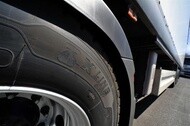
MICHELIN X® LINE ENERGY™ TYRE
How to Read Commercial Truck Tire Sizes
The right commercial truck tire size depends on more than wheel diameter. Tire size, load capacity, axle position, wheel compatibility and operating application all need to work together. Start with the vehicle and existing tire specifications, then confirm that any replacement tire meets the requirements of the truck, wheel and application.
IN THIS ARTICLE:
Why commercial truck tire size matters
Commercial truck tire size affects how the tire fits the wheel, carries the vehicle's load and works within the truck's configuration. That's why tire size should be considered alongside load capacity, axle position, wheel compatibility and application, not as a stand-alone measurement.
For fleets, selecting a replacement tire starts with understanding the vehicle's requirements. A tire may physically fit the wheel but still be unsuitable for the load, axle position or operating conditions.
Key factors include:
- Tire dimensions: The tire must be compatible with the wheel and available clearance.
- Load capacity: The tire must support the load requirements of the vehicle and axle.
- Axle position: Steer, drive and trailer positions can have different tire requirements.
- Wheel and rim compatibility: Tire and wheel specifications must be compatible.
- Application: Long-haul, regional, urban and mixed-service operations can place different demands on a tire.
The goal is not simply to find a tire that fits. It is to find a tire size and specification appropriate for how the vehicle operates.
Where to find your commercial truck tire size
The tire sidewall is one of the first places to identify the size currently mounted on the truck. The size appears as a combination of numbers and letters that describe the tire's dimensions and construction.
Vehicle documentation and manufacturer information can also provide fitment specifications. When selecting a replacement tire, use the existing tire size as a starting point rather than assuming it is the only requirement, especially if the vehicle, wheels or application have changed.
TIRE MARKINGS EXPLAINED
1 - Tire size designation: 315/70 R 22.5
2 - Load index and speed symbol: 154/150 L
3- Winter service markings: 3PMSF and M+S
4 - Tire position code: D indicates a drive-axle tire in this example
5 - Direction of rotation
6 - Tubless construction

Michelin tire markings
7 - Michelin tire line: X® MULTI
8 - Radial construction
9 - Manufacturer: Michelin
10 - X®: MICHELIN Radial tire symbol
11 - DOT Tire Identification Number (TIN): The last four digits of the TIN identify the week and year the tire was manufactured. For example, 2710 indicates the 27th week of 2010.
How to read commercial truck tire size markings
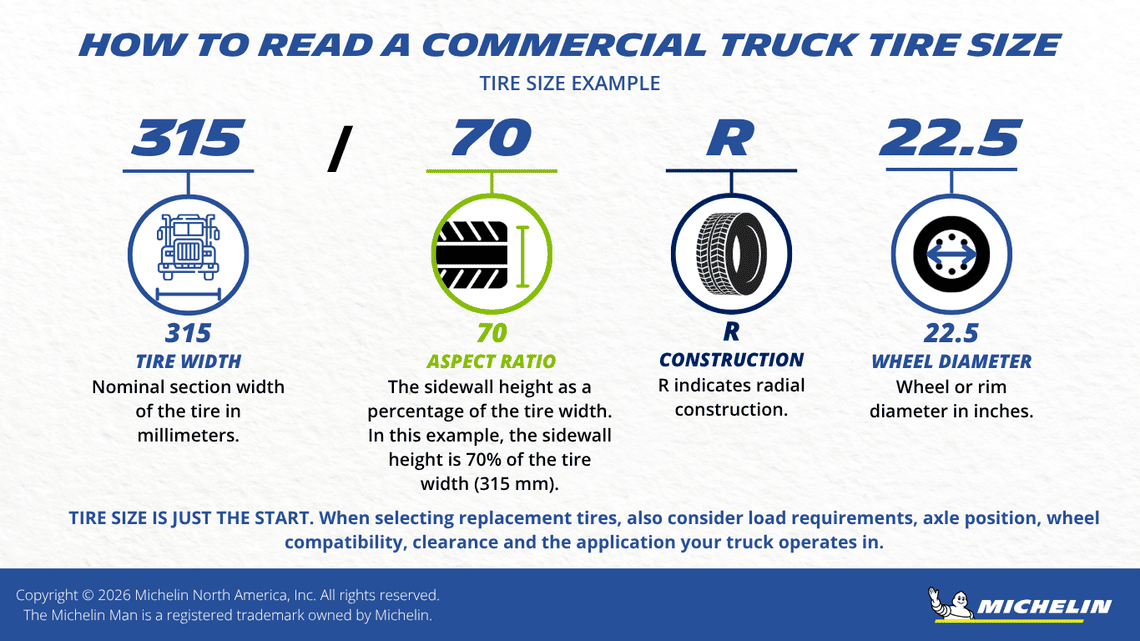
How to Read a Commercial Truck Tire Size Infographic
A commercial truck tire size combines several pieces of information into one designation. Understanding the basic format makes it easier to compare your current tire with potential replacements.
For example:
295/75R22.5
can be read as:
- 295 – nominal section width of the tire in millimeters
- 75 – aspect ratio, expressed as the sidewall height relative to the tire width
- R – radial construction
- 22.5 – wheel or rim diameter in inches
Other markings on the sidewall provide additional information such as load capacity, load range or service description, depending on the tire.
Load and speed information also matters
Tire size alone does not tell you everything needed to select a commercial tire. Load and speed markings provide additional information about the tire's operating capabilities.
Load information indicates the load the tire is designed to support under specified conditions.
Speed ratings identify the maximum rated speed associated with the tire under defined operating conditions.
These markings should be considered along with the vehicle's load requirements, axle position and application when evaluating a replacement tire.
How to choose a replacement commercial truck tire size
When replacing commercial truck tires, matching the numbers on the sidewall is only the starting point. The replacement also needs to work with the vehicle's load requirements, wheel, axle position and operating application.
1. Confirm the current tire and vehicle specifications
Start with the size currently installed, then confirm the vehicle and wheel specifications before selecting a replacement.
If the vehicle has been modified or its operating conditions have changed, the existing tire should not automatically be treated as the only acceptable fitment.
2. Match the tire to the required load
Consider the actual load carried by the vehicle and axle. The replacement tire must have the appropriate load capability for the application.
Load, tire size and configuration also influence the appropriate inflation pressure. See why proper tire pressure matters for more information.
3. Confirm wheel and rim compatibility
The tire must be compatible with the wheel diameter and rim specifications.
A tire that appears similar in overall size may still require a different rim width or configuration, so fitment should be confirmed using the applicable technical guidance.
4. Check clearance and configuration
Make sure there is adequate clearance around the tire throughout normal vehicle operation.
For dual assemblies, spacing and compatibility between the tires also need to be considered. Consult the appropriate vehicle, wheel and Michelin fitment guidance before changing dimensions.
5. Consider the application and axle position
Once fitment requirements are established, choose a tire designed for the truck's operating environment and axle position.
Long-haul, regional, urban and mixed-service fleets may prioritize different combinations of mileage, traction, durability, fuel efficiency and retreadability.
That last paragraph gives us a natural transition into tire selection without making this page a product catalog.
What to check before choosing a replacement truck tire
Factor | Why it matters | What to confirm |
|---|---|---|
Tire size | Determines basic dimensions and wheel fitment | Current size and approved alternatives |
Load requirement | The tire must support the vehicle and axle load | Appropriate load capacity |
Wheel/rim | Tire and wheel specifications must be compatible | Diameter, rim specification and fitment |
Axle position | Steer, drive and trailer applications have different requirements | Tire is appropriate for the intended position |
Clearance/configuration | Different dimensions can affect vehicle and dual-tire fitment | Available clearance and dual spacing |
Application | Operating conditions influence the tire needed | Long-haul, regional, urban or mixed service |
Can you use a different tire size on a commercial truck?
An alternative commercial truck tire size may be appropriate in some applications, but compatibility should be confirmed before changing from the specified or currently approved size.
Changing tire size can affect factors such as:
- load capacity
- wheel and rim compatibility
- overall tire dimensions
- vehicle clearance
- dual-tire spacing
- axle fitment
- inflation requirements
Before changing from the specified or currently approved tire size, confirm compatibility using the vehicle, wheel and tire manufacturer's technical guidance.
For fleets, this is especially important when considering a size change to address load, fuel efficiency, traction, availability or another operating objective. A different size should solve a defined fleet need without creating a new fitment or maintenance issue.
I would not include the ~3% rule that appeared in one research result. That's exactly the kind of numerical fitment recommendation we'd need approved technical substantiation for.
Choosing the right tire for your application
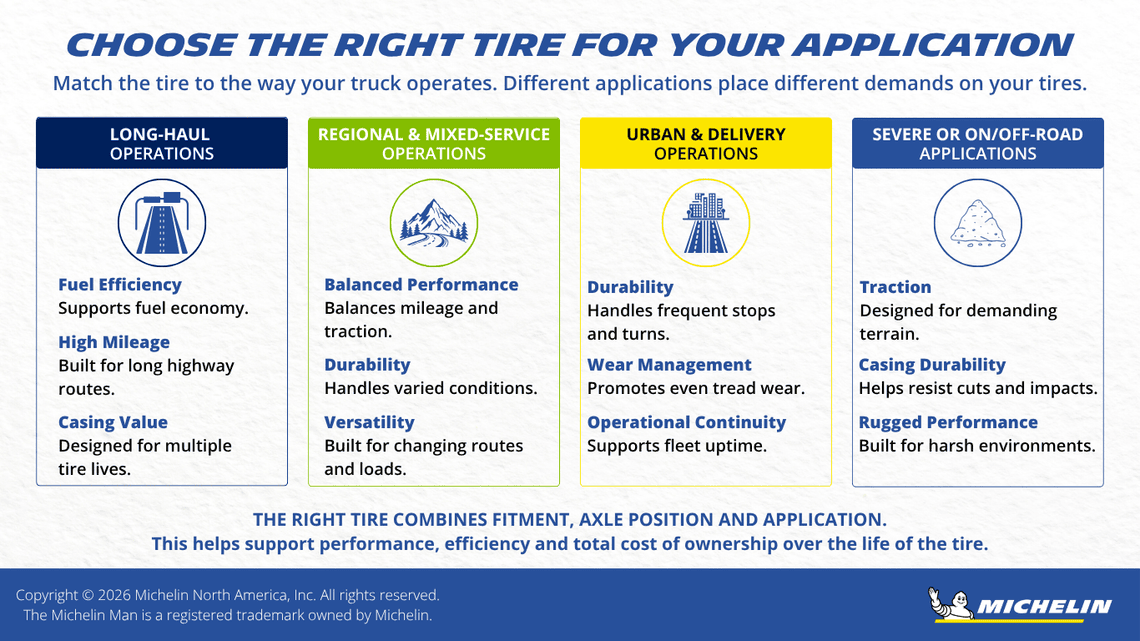
Commercial Truck Tire Application Guide Infographic
Once the correct size and fitment requirements are established, the next decision is choosing a tire designed for the way the truck operates.
Long-haul operations
High-mileage operations may prioritize fuel efficiency, mileage, casing value and predictable performance.
Regional and mixed-service operations
These fleets may need a balance of mileage, traction and durability across varied operating conditions.
Urban and delivery operations
Frequent stops, turns and curb contact can increase the importance of durability and wear management.
Severe or on/off-road applications
Demanding applications may require tires designed for traction and durability under off-highway conditions.
Choosing the right tire means considering fitment, axle position and application, not tire size alone.
Find Michelin Commercial Truck Tires for Your Fleet
Once you know the tire size, axle position and application requirements, use Michelin’s tire selection tools to explore commercial truck tires that fit your fleet’s needs.

Need help confirming tire fitment?
A Michelin commercial tire dealer can help you evaluate tire options for your vehicle and application.
Tire Size Is One Part of a Complete Tire Strategy
Choosing the right commercial truck tire starts with fitment, but load requirements, axle position, operating conditions and inflation pressure also influence tire selection.
Taking a consistent approach to tire selection can help fleets make more informed replacement decisions and choose tires suited to the way their vehicles operate.
Additional Resources
Frequently Asked Questions About Commercial Truck Tire Sizes
Start with the tire size currently installed and confirm the vehicle and wheel specifications. The appropriate replacement also needs to meet the truck's load requirements, axle position, wheel fitment and operating application.
A size such as 295/75R22.5 identifies the tire's nominal width, aspect ratio, radial construction and wheel diameter. Additional sidewall markings provide information such as load and service capabilities.
A different tire size may be possible in some applications, but wheel compatibility, load capacity, clearance, axle fitment, dual spacing and inflation requirements should be evaluated before changing sizes.
Yes. Steer, drive and trailer positions can place different demands on tires, so tire selection should account for both the correct fitment and intended axle position.
Start with the vehicle and tire specifications to establish the required fitment, then use Michelin's commercial tire selection tools to explore tires for the appropriate size, axle position and application.


