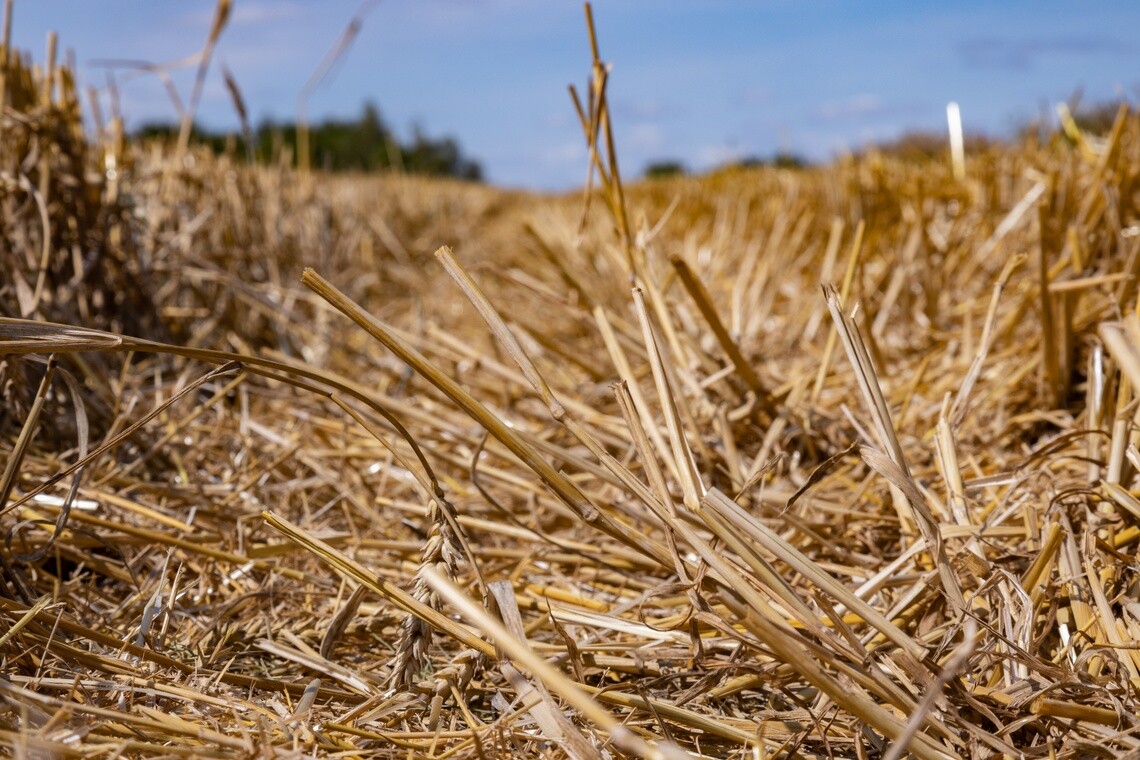
stubble in a field that's been harvest
Comprehensive Prevention, Inspection and Cost-Saving Strategies for Harvest Season
Harvest is a critical time for your operation, but it also presents unique challenges – one of the most costly being stubble damage to agricultural tires.
Modern seed varieties have revolutionized farming over the past decade, delivering crops that withstand harsh conditions and maximize yields. But this progress comes with a trade-off: the sharp, rigid stubble left behind after harvesting corn, soybeans and wheat can damage your tires, leading to repairs and downtime.
This guide covers everything you need to know about stubble damage: from prevention strategies and inspection protocols to cost analysis and practical tips that will help protect your investment and maintain productivity.
This Blog Will Cover:
1. Step-by-step guide to preventing stubble damage on agricultural tires
2. Choosing the right agricultural tires to prevent stubble damage
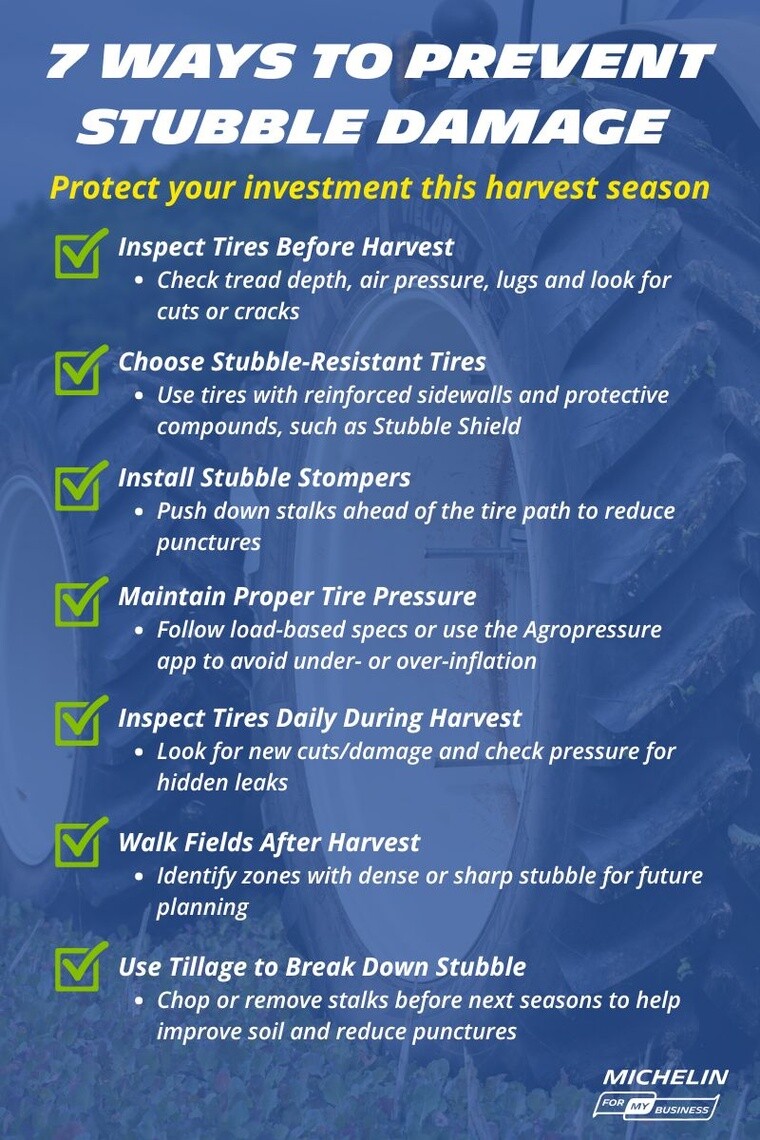
Step-by-Step Guide to Preventing Stubble Damage on Agricultural Tires
1. Assess the Tires on Your Equipment
Before harvest, inspect your tires in four key areas: check tread depth for adequate traction, look for cuts or debris below the lugs, examine lugs for cracks or missing pieces and verify proper tire pressure according to manufacturer specs.
2. Choose the Right Tires for Stubble Resistance
Not all agricultural tires are created equal when it comes to stubble resistance. When outfitting your equipment, consider tires specifically designed to withstand stubble damage. For example, Michelin offers a range of agricultural tires engineered with advanced rubber compounds, reinforced sidewalls and Stubble Shield technology to resist cuts and punctures from tough crop residue.
3. Install Stubble Stompers or Deflectors
Stubble stompers (also known as stalk stompers or stubble deflectors) are attachments that mount to the front of your combine, tractor or planter. These devices push stubble down and away from your tires, reducing punctures and cuts.
When selecting stubble stompers, ensure they're compatible with your equipment and adjusted to the correct height for your crop residue. As you switch between different crops throughout the season, reassess your equipment setup since different crops require different deflector heights.
Regularly inspect and maintain these attachments, adjusting settings as crop conditions change throughout the harvest season.
4. Maintain Proper Tire Pressure
Operating your equipment with the correct tire pressure is crucial for both performance and stubble protection.
Overinflated tires are more rigid and susceptible to punctures, while underinflated tires can flex excessively, increasing the risk of sidewall damage. Refer to your tire manufacturer’s guidelines or the Michelin Agropressure app for recommended pressures based on load and field conditions.
5. Inspect Tires Regularly During Harvest
Throughout the harvest season, make it a habit to inspect your tires daily for signs of stubble damage, such as cuts, cracks or embedded stalks. However, keep in mind that damage from sharp stalks isn’t always visible to the naked eye - small punctures or splits may not be immediately apparent.
To catch issues early, check your tire pressure regularly in addition to visual inspections. A drop in pressure can indicate a slow leak caused by hidden damage, allowing you to address the problem before it leads to unexpected downtime or more costly repairs.
6. Post-harvest Field Assessment
After harvest ends, walk your fields to assess their condition and identify areas that pose the greatest risk for future tire damage. Look for fields with particularly tall, dense, sharp stubble or environmental elements like sharp rocks and deer antlers that could threaten tires during fall tillage, spring planting or next season's operations.
Make a note of any problem areas where more aggressive stubble is present. This post-harvest assessment helps you prioritize which fields need immediate stubble management and allows you to plan equipment routes that minimize tire exposure to the worst conditions.
7. Tillage and Stubble Management
Tillage practices following harvest significantly reduce stubble-related tire damage for future field operations. Chopping, disking or using specialized stubble management equipment breaks down sharp stalks and incorporates residue into the soil, creating safer conditions for tires.
Time your tillage operations strategically - working fields soon after harvest while stalks are still somewhat pliable makes breakdown easier and more effective. Adjust your tillage equipment settings to ensure adequate stubble incorporation without creating compaction issues.
Well-managed post-harvest tillage not only protects tires but can also improve soil conditions and reduce pest habitat, delivering multiple operational benefits beyond tire protection.
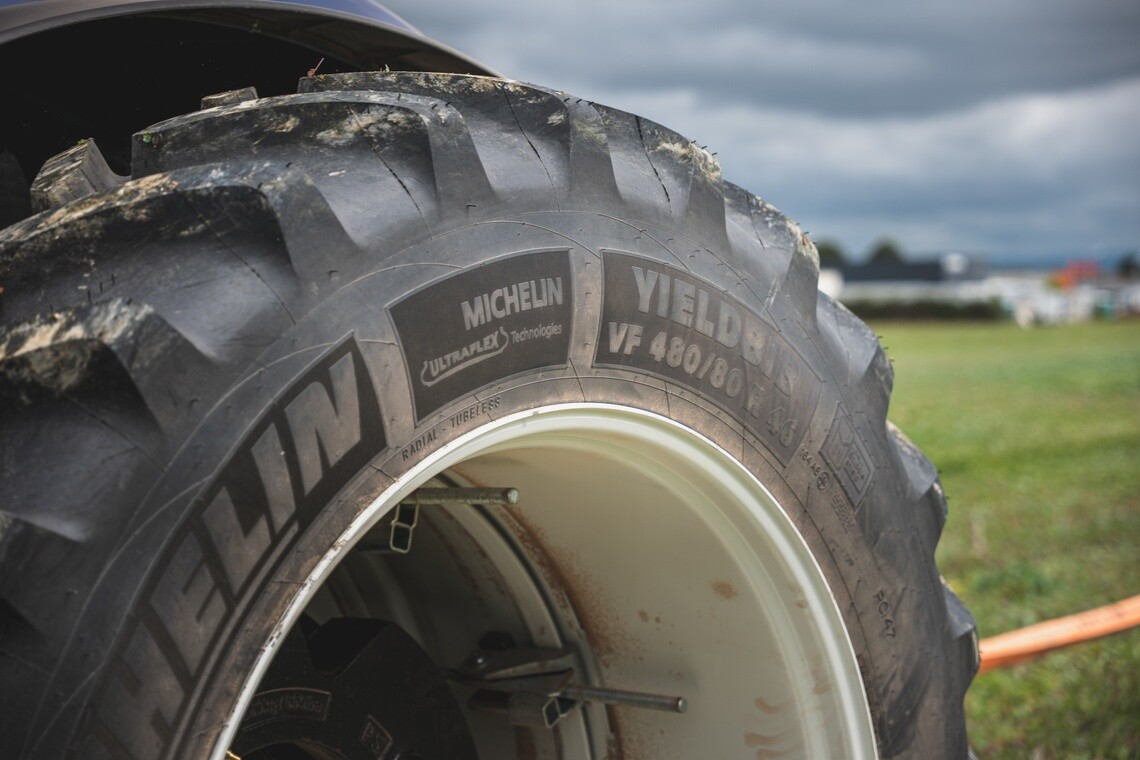
Michelin Yieldbib tires feature Stubble Shield technology designed to offer more longevity against stubble damage.
The Long-Term Value of Choosing the Right Agricultural Tires for Your Farm Equipment
Agricultural tire selection shouldn't be driven by initial price alone.
Investing in tires with superior rubber compounds and premium materials from core to surface may cost more upfront but delivers measurable returns through extended durability. Premium construction means longer life for every component – not just the tread, but belts, sidewalls and bead areas that typically fail first in budget tires.
The total cost of ownership calculation becomes clear when you account for longevity, reduced operational downtime and eliminated emergency replacements during critical harvest windows.
Stubble Shield Technology: Engineering Excellence
Michelin's Stubble Shield technology is a multi-layered tire protection system that prevents stubble damage through three key innovations:
- • A sweeping 45-degree tread design that deflects stubble away from the tire surface
- • Additional reinforcement in the center of the tread for targeted defense against penetration
- • An exclusive rubber compound that enhances durability against chipping and cutting from sharp crop residue
Michelin Agricultural Tire Warranty and Longevity
-
Michelin agricultural tires are engineered for extended service life when maintained properly through regular inspections, correct inflation and appropriate operating practices. Many farmers report getting multiple harvest seasons from their Michelin tires, significantly extending replacement intervals compared to budget alternatives.
Michelin demonstrates confidence in their construction quality by offering comprehensive warranty coverage on agricultural tire models, providing added protection for your investment. Michelin offers three warranties/guarantees for agricultural tires, including the following:
- • Ag Tires 90-Day Promise Guarantee
- • UltraFlex One-Year Satisfaction Guarantee
- • Stubble Damage Warranty: four years of warranty coverage
This warranty support, combined with the brand's reputation for durability, contributes to lower total cost of ownership calculations.
Protect Your Operations from Stubble Damage on Tires
Stubble damage is unavoidable, but there are steps you can take to manage and prevent extensive damage. Don't wait for a breakdown to discover your tires aren't harvest-ready. Michelin's agricultural tires with Stubble Shield technology offer proven protection when you need it most.
Ready to protect your investment? Use Michelin's dealer locator tool to find an authorized dealer near you and discuss the right tire solution for your operation.
Your harvest window won't wait – make sure your tires are ready.
Frequently Asked Questions about Stubble Damage
Stubble damage occurs when sharp crop stalks left after harvest puncture, cut or abrade tire rubber. This damage causes air loss, reduces tire lifespan and can lead to costly equipment downtime during critical harvest operations.
Look for visible cuts, cracks, or embedded stalks during daily inspections. However, small punctures may not be immediately visible. Monitor tire pressure regularly - a gradual pressure drop often indicates hidden damage from stubble penetration before it becomes a major failure.
Proper tire pressure varies by load and field conditions. Overinflated tires are rigid and more susceptible to punctures, while underinflated tires risk sidewall damage from excessive flexing.
Yes, stubble stompers significantly reduce tire damage by pushing stalks away from tire paths. When properly installed and maintained, these attachments provide excellent return on investment by preventing costly tire repairs and unexpected downtime during harvest.
With proper maintenance, correct inflation and stubble protection measures, quality agricultural tires can serve multiple harvest seasons. Michelin agricultural tires, when properly maintained, often exceed farmer expectations for longevity compared to budget alternatives.


