
Material Handling Tires and Solutions
Material Handling Tires for Demanding Operations
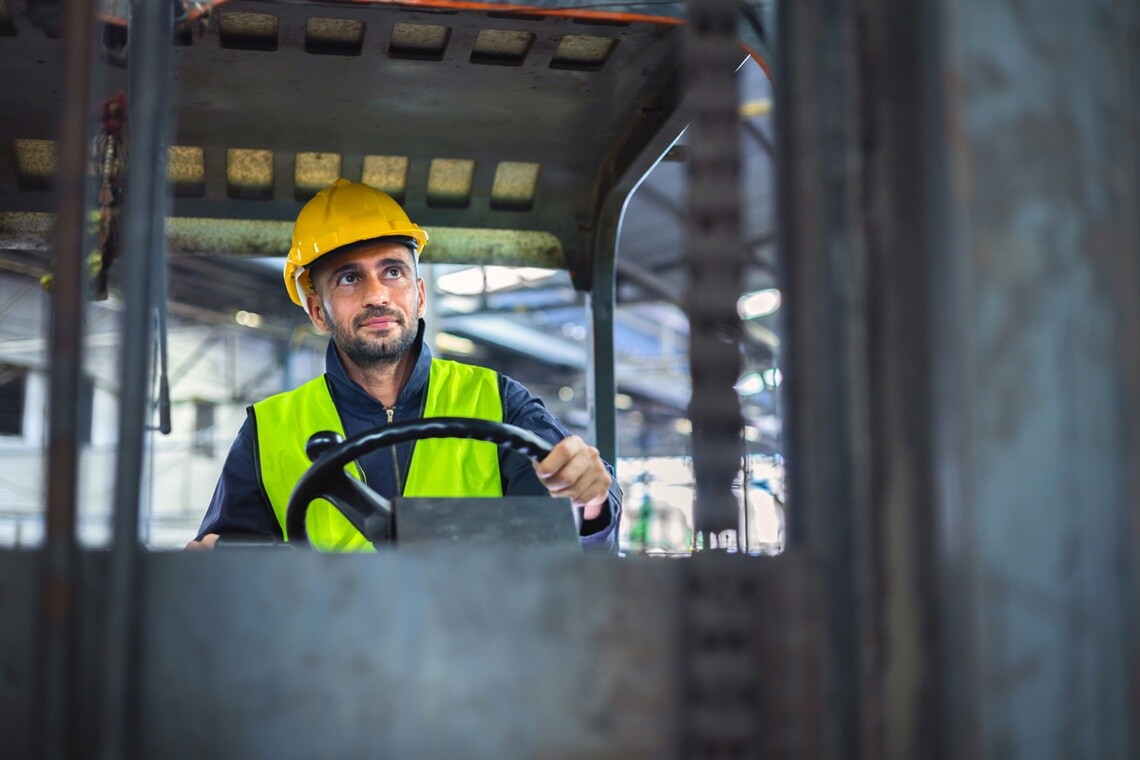
Keep material handling equipment productive with Michelin tires designed for demanding warehouse, manufacturing, port, terminal and airport ground support operations. Find tire solutions for your equipment, application and operating conditions.
Material Handling Equipment Operator
Keep Material Handling Operations Moving
Material handling equipment operates in demanding environments where uptime, durability and productivity matter. From warehouses and manufacturing facilities to ports, terminals and airports, tires must handle repeated starts and stops, heavy loads, demanding surfaces and intensive operating cycles. Choosing the right tire for the equipment and application can help support reliable performance while managing tire-related downtime and operating costs.
Material Handling Tire Application
Match the Tire to the Application
Material handling tire needs vary by equipment, load, surface, speed and operating environment. Selecting a tire designed for the demands of the application can help support reliable equipment performance and tire life.

Material Handling Tire Downtime
Help Reduce Tire-Related Downtime
Punctures, tire damage and premature wear can interrupt operations and affect productivity. Choosing the appropriate tire technology and maintaining tires properly can help keep equipment available when it's needed.

Material Handling Tire Value
Get More Value From Your Tires
Tire value goes beyond the initial purchase price. Durability, service life, maintenance requirements and equipment productivity can all affect the overall value of a material handling tire over its life.

Find Material Handling Tires for Your Application
Material handling tire requirements vary significantly by operating environment and equipment type. Explore Michelin tire solutions for ports and terminals, warehouses and manufacturing facilities, and aircraft ground support operations.
Port and Terminal Material Handling Equipment
Port & Terminal Equipment
Port and terminal equipment handles heavy loads across demanding surfaces and long operating cycles. Explore Michelin tire solutions for equipment such as container handlers, reach stackers, terminal tractors and other vehicles used to keep cargo moving.
Warehouse and Manufacturing Material Handling
Warehouse, Distribution & Manufacturing Equipment
From forklifts and lift trucks to other industrial equipment, tires must perform through frequent starts, stops and turns in demanding indoor and outdoor environments. Find Michelin tire solutions designed for material handling operations in warehouses, distribution centers and manufacturing facilities.

Aircraft Ground Support Equipment
Ground support equipment helps keep airport operations moving on tight schedules. Explore Michelin tire solutions for baggage tractors, ground support vehicles and other equipment operating around aircraft and airport facilities.
MICHELIN X TWEEL Airless Material Handling Tire
Airless Tires for Material Handling Equipment
Eliminate flats and the need to maintain tire pressure with Michelin® X® TWEEL® airless radial tires. Designed for demanding material handling applications, TWEEL technology combines the tire and wheel into a single airless solution.
What to Consider When Choosing Material Handling Tires
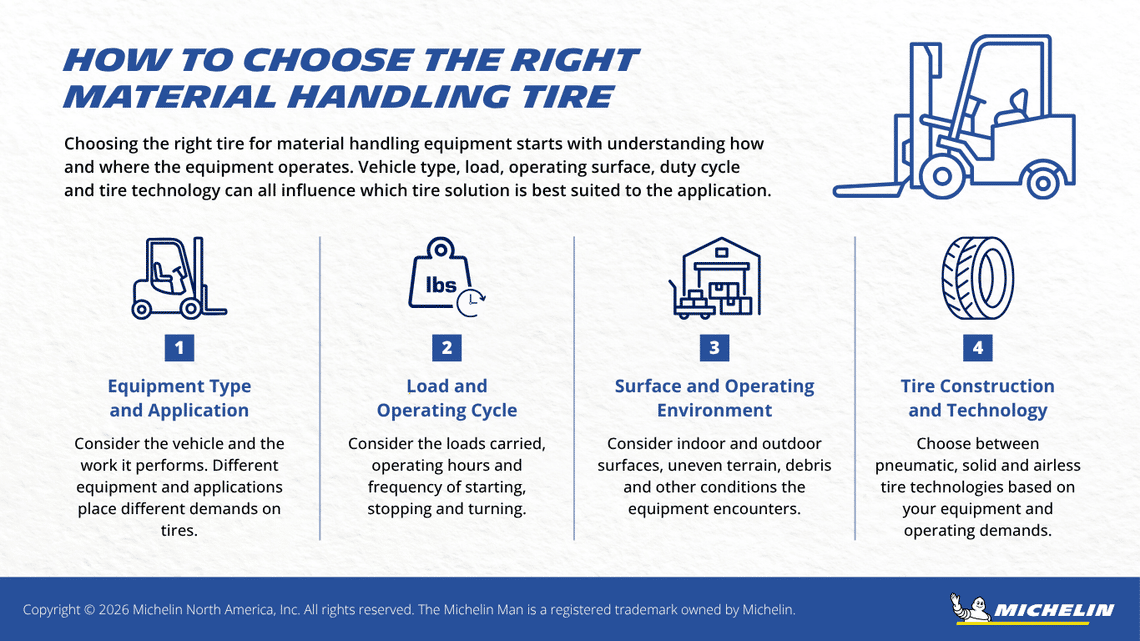
Choosing the right tire for material handling equipment starts with understanding how and where the equipment operates. Vehicle type, load, operating surface, duty cycle and tire technology can all influence which tire solution is best suited to the application.
How to Choose the Right Material Handling Tire
1. Equipment Type and Application
Start with the vehicle and the work it performs. Forklifts, container handlers, terminal tractors and airport ground support equipment can place very different demands on their tires.
2. Load and Operating Cycle
Consider the loads the equipment carries, how frequently it operates and the amount of starting, stopping and turning involved. Intensive operating cycles can increase the demands placed on tires.
3. Surface and Operating Environment
Indoor concrete, outdoor pavement, uneven surfaces and debris-prone environments create different tire demands. Consider where the equipment spends its time and the conditions it encounters.
4. Tire Construction and Technology
Depending on the equipment and application, material handling tire options can include pneumatic, solid and airless technologies. Understanding the demands of your operation can help determine which solution is the right fit.
Need Material Handling Tire Specifications?
Looking for detailed tire specifications and product information? Explore the Michelin Material Handling Tire Databook to help identify tire solutions for your equipment and application.
Frequently Asked Questions About Material Handling Tires
Material handling tires are designed for equipment used to move, lift and transport materials in applications such as warehouses, manufacturing facilities, ports, terminals and airports. Tire requirements vary based on the equipment, load, operating surface and duty cycle.
Start by considering the equipment type, load, operating cycle, surface conditions and operating environment. Different applications place different demands on tires, so the right solution depends on how and where the equipment is used.
Depending on the equipment and application, material handling tire options can include pneumatic, solid and airless technologies. Each has different characteristics, so tire selection should be based on the equipment and demands of the operation.
Selecting tires suited to the application can help reduce issues such as punctures, tire damage and premature wear that can take equipment out of service. Tire maintenance and choosing the appropriate tire technology can also help support equipment availability.
Tire life can be influenced by load, operating hours, speed, starting and stopping, turning, surface conditions, tire maintenance and the demands of the application. Choosing the appropriate tire and monitoring its condition can help fleets get the intended performance from their tires.