
Semi trucks and trailers
How to Choose the Right Truck Tires for Freight Transport
Choosing the right truck tire for freight transport starts with understanding how and where your fleet operates. Highway mileage, regional routes, vehicle loads, axle position and operating conditions can all influence which tire characteristics matter most.
Instead of focusing on purchase price alone, fleets should consider factors such as fuel efficiency, tread life, durability and casing value to choose tires that support cost per mile and long-term fleet performance.
IN THIS ARTICLE:
Start With Your Fleet’s Application and Duty Cycle
The right truck tire depends on the work the vehicle performs. A tire designed for long stretches of highway may need to prioritize different performance characteristics than one used for regional routes with frequent stops, turns and changes in road conditions.
Before comparing tires, consider how each vehicle operates:
- Route type: Long-haul highway, regional, urban or mixed-route operation
- Annual mileage: Higher-mileage applications may place greater emphasis on rolling resistance, wear performance and lifecycle value
- Load: Tire size and load capacity must be appropriate for the loads the vehicle carries
- Road conditions: Highway pavement, secondary roads and more demanding surfaces can create different tire performance needs
- Climate and weather: The conditions a fleet regularly encounters can influence traction and tread requirements
- Operating pattern: Frequent braking, acceleration, turning and stop-and-go operation can affect wear differently than sustained highway travel
For many fleets, this means there is no single tire that is the right choice for every truck. Matching the tire to the application helps fleets prioritize the performance characteristics that matter most for each vehicle and route.
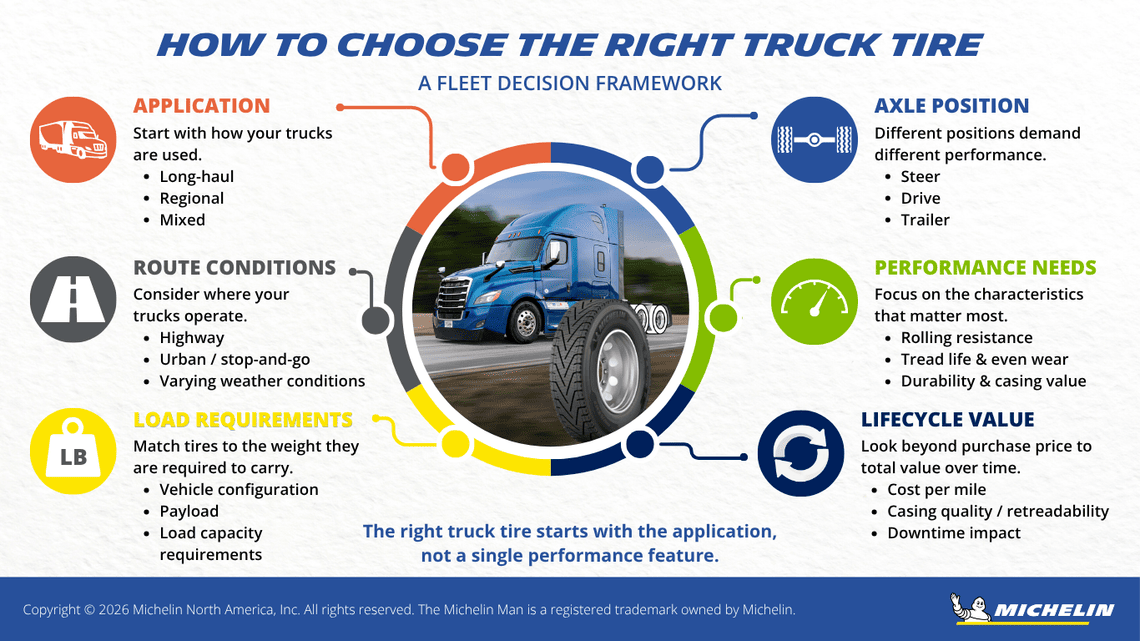
How to Choose the Right Truck Tire: Fleet Decision Framework
Match the Tire to the Axle Position
A truck’s steer, drive and trailer positions place different demands on the tires. Choosing tires designed for each axle position can help fleets balance handling, traction, wear and efficiency across the vehicle rather than expecting one tire design to perform every job equally well.
Different axle positions have different priorities
STEER TIRES
Primary priorities:
Handling, steering response, stability and even wear.
What fleets should consider:
Choose tires designed to support predictable handling and consistent wear for the vehicle’s application.
DRIVE TIRES
Primary priorities:
Traction, durability and wear performance.
What fleets should consider:
Look for tires that balance traction with durability under acceleration, torque and the fleet’s operating conditions.
TRAILER TIRES
Primary priorities:
Rolling efficiency, durability and resistance to irregular wear.
What fleets should consider:
Choose tires designed to roll efficiently while managing the wear demands of trailer applications.
Some tires may be designed for multiple positions, while others are optimized for a specific axle and application. The right choice depends on both where the tire will be mounted and how the vehicle operates.
For example, a high-mileage long-haul fleet may place greater emphasis on rolling resistance across its tire positions, while a regional fleet with frequent starts, stops and turns may give greater weight to traction and resistance to scrub or irregular wear.
The goal isn’t simply to choose a good truck tire, it’s to choose the right tire for the job, axle position and operating environment.
What Factors Matter Most When Choosing Truck Tires?
Once you’ve identified the application and axle position, the next step is to compare the tire characteristics that can have the greatest impact on fleet performance and operating costs. The right priorities will vary by fleet, but several factors consistently influence tire selection.
Factor | What to Consider | How It Can Influence Your Fleet |
|---|---|---|
Rolling resistance | How efficiently the tire rolls while carrying the required load | Lower rolling resistance can help reduce fuel consumption, particularly in high-mileage operations. |
Tread life | Expected wear based on route, application and operating conditions | Longer tread life can increase miles between replacements and help lower cost per mile. |
Durability | Resistance to scrub, impacts and demanding operating conditions | Greater durability can help reduce premature tire removal and unplanned replacement. |
Load capacity | Whether the tire is appropriate for the vehicle’s expected loads | Selecting the proper tire for the load helps support consistent tire performance and casing life. |
Traction | Tread design and performance for the conditions the vehicle regularly encounters | Traction needs may increase with frequent stopping, acceleration, varied road surfaces or challenging weather. |
Casing and retread potential | Casing quality and ability to support additional service lives when eligible | A quality casing can provide additional lifecycle value through retreading and help reduce total tire costs over time. |
The priorities won’t be the same for every fleet
A long-haul fleet covering thousands of highway miles may place greater emphasis on rolling resistance and tread life. A regional fleet making frequent stops and turns may prioritize durability, traction and resistance to irregular wear.
Rather than maximizing one tire characteristic, fleets should look for the combination of performance attributes that best supports their specific operation and cost objectives.
Highway vs. Regional Truck Tires: What’s the Difference?
Highway and regional freight operations place different demands on tires. Long-haul trucks typically spend more time traveling at sustained speeds over highways, while regional vehicles may encounter more frequent stops, turns, acceleration and varied road conditions. Those differences can change which tire characteristics deserve the most attention.Maintaining a high level of operational efficiency means respecting deadlines and optimizing vehicle uptime.
Consideration | Highway / Long-Haul Operations | Regional Operations |
|---|---|---|
Typical use | Long distances at sustained highway speeds | Shorter routes with more stops, turns and varied roads |
Rolling resistance | Often a higher priority because of high annual highway mileage and fuel consumption | Still important, but may need to be balanced against other operational demands |
Tread life | Even wear and high mileage potential can be important for lowering cost per mile | Wear resistance is important, particularly with frequent braking, turning and acceleration |
Durability | Tires need to withstand sustained mileage and operating temperatures | Resistance to scrub, impacts and demanding road conditions may become a greater priority |
Traction | Appropriate traction for highway, weather and operating conditions | May require greater emphasis due to frequent starts, stops and changing road conditions |
Fleet objective | Balance fuel efficiency, mileage and lifecycle value | Balance durability, traction, wear and operating cost |
There’s no single best tire for every freight route
For a predominantly long-haul fleet, a tire designed to help reduce rolling resistance while delivering strong mileage may provide greater operational value. Regional fleets may benefit more from tires designed to withstand frequent stops, turns and higher scrub conditions while still supporting fuel efficiency.
For mixed operations, the decision becomes a balance. Look at where the vehicle spends most of its time and which tire-related costs have the greatest impact on that operation.
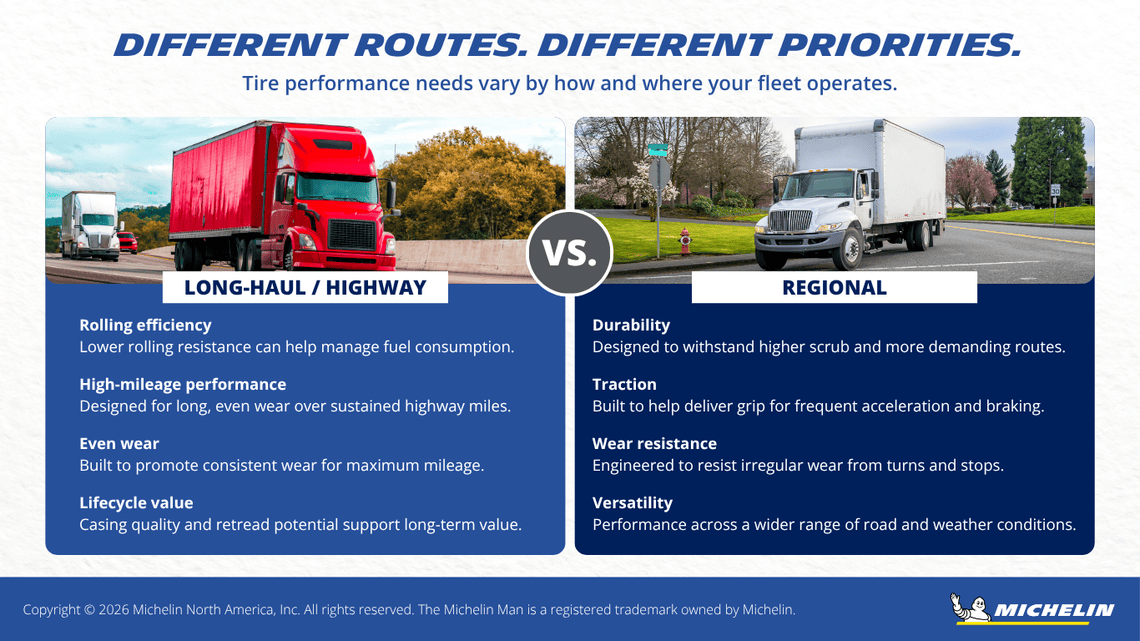
Long-Haul vs. Regional Truck Tire Performance Priorities
Balancing Fuel Efficiency and Tread Life
Fuel efficiency and tread life can both influence a fleet’s operating costs, but the right balance depends on how and where the vehicle operates. A tire with lower rolling resistance can help reduce fuel consumption, while strong wear performance can help increase the miles a tire remains in service.
For high-mileage highway fleets, rolling resistance may carry more weight because even incremental improvements in fuel efficiency can add up across many miles. For regional operations, frequent braking, acceleration and turning may make durability and resistance to wear more important.
When fuel efficiency may be the higher priority
Consider placing greater emphasis on rolling resistance when vehicles:
- Accumulate high annual highway mileage
- Spend long periods traveling at sustained speeds
- Have fuel consumption as a significant operating-cost priority
- Operate primarily on routes where frequent stops, turns and high-scrub conditions are limited
When tread life and durability may carry more weight
These characteristics may deserve greater emphasis when vehicles:
- Operate on regional or mixed routes
- Make frequent stops and turns
- Encounter higher scrub or more demanding road conditions
- Experience wear-related tire removals as a significant fleet expense
The goal isn’t necessarily to choose between fuel efficiency and tire life. It’s to find the tire that delivers the right balance for your operation and provides strong value over its full lifecycle.
Look Beyond Tire Price to Cost Per Mile
The lowest-priced tire isn’t necessarily the lowest-cost tire to operate. For fleets, the better measure of value is often how much performance and service life a tire delivers relative to its total cost.
Cost per mile can help fleets compare tire options based on what they deliver in operation rather than purchase price alone. Tire life, fuel consumption, maintenance needs and the potential to retread a quality casing can all contribute to the tire’s overall lifecycle economics.
When comparing tire value, consider:
- Initial purchase cost: What does the tire cost to put into service?
- Mileage potential: How many usable miles can the tire deliver for your application?
- Fuel efficiency: How could rolling resistance affect fuel consumption over those miles?
- Maintenance: What practices will be needed to help maintain tire performance and maximize service life?
- Retread potential: Can the casing provide additional service lives if it remains eligible for retreading?
- Downtime: How could premature removals or tire-related service affect fleet productivity?
A tire with a higher initial price may deliver greater value if it provides more usable miles, helps manage fuel consumption or supports additional service lives through retreading. Evaluating the full lifecycle can give fleets a clearer picture of total tire cost and help identify the tire that best supports their operating objectives.
Choosing Michelin Tires for Your Freight Application
Once you understand your fleet’s application, axle position and performance priorities, the next step is matching those needs to the right tire. Michelin offers truck tires designed for different freight applications, allowing fleets to prioritize characteristics such as fuel efficiency, mileage, durability and traction based on how their vehicles operate.
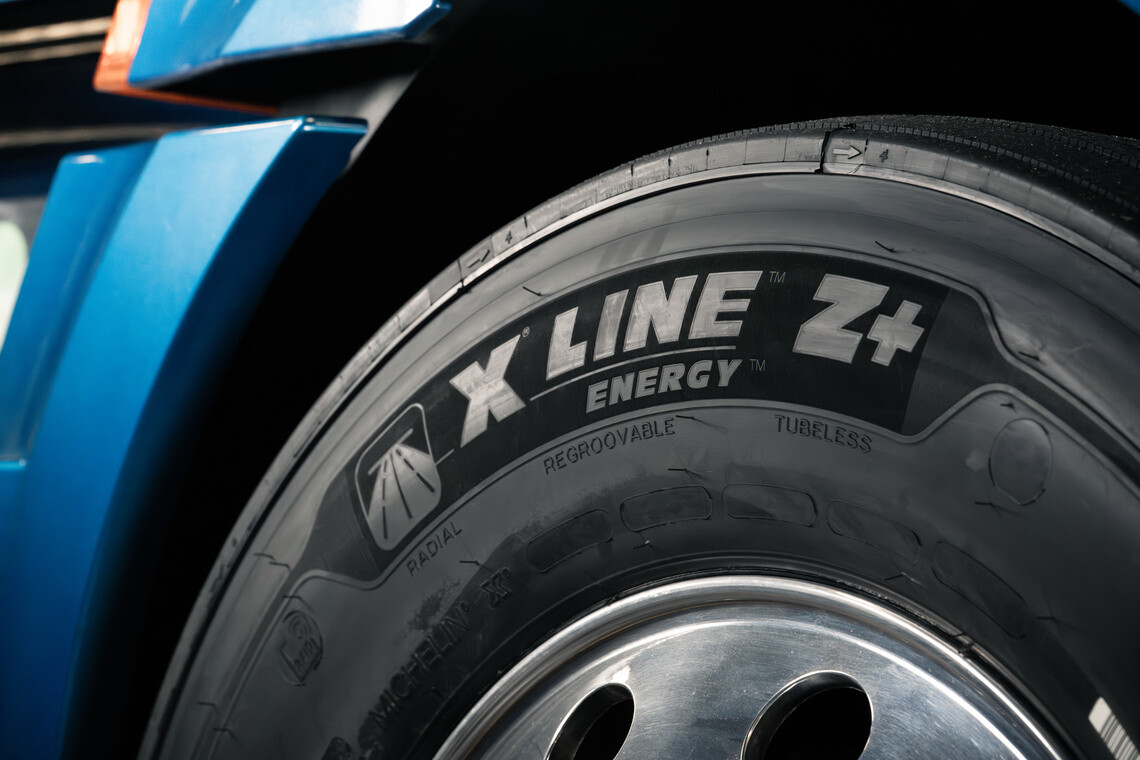
sidewall of x line energy z+ tire
For long-haul highway operations
For fleets that spend most of their time traveling long distances at sustained highway speeds, look for tires designed to balance:
- Low rolling resistance to help manage fuel consumption
- Long, even wear for high-mileage operations
- Durability for sustained highway use
- Casing quality that can support lifecycle value and future retreading when eligible
Michelin X® Line tires are designed for long-haul applications where fuel efficiency and mileage performance are key fleet priorities.
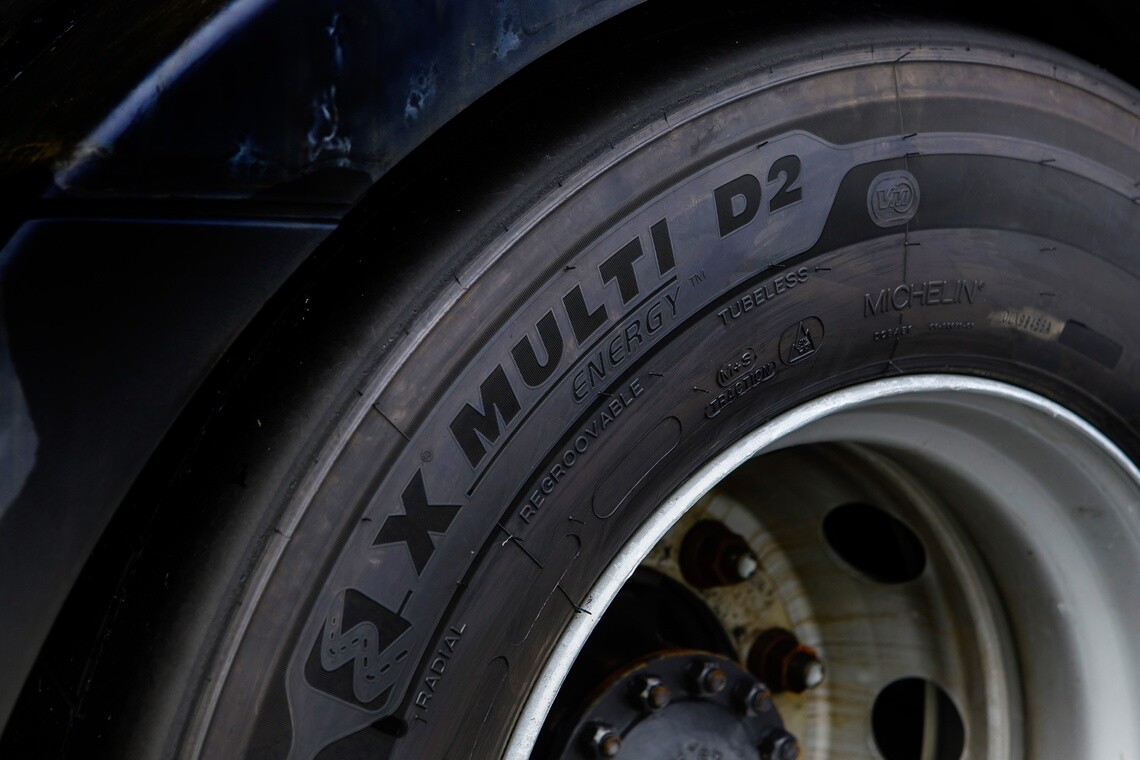
Michelin X® Multi™ Tire for Regional Freight Operations
For regional freight operations
Regional fleets typically encounter more frequent stops, turns and changes in road conditions. Tire selection may place greater emphasis on:
- Durability in higher-scrub applications
- Resistance to irregular wear
- Traction for frequent acceleration and braking
- A balance of mileage and fuel efficiency
Michelin X® Mult tires are designed for regional and multi-purpose applications where fleets need performance across a wider range of operating conditions.
Match the tire to the work
The right Michelin tire ultimately depends on more than whether a truck operates in “long-haul” or “regional” service. Axle position, load, route conditions and fleet performance priorities should all be considered when selecting a tire for a specific vehicle and application.
Choose Tires Based on Long-Term Fleet Value
Choosing the right truck tires for freight transport comes down to matching the tire to the work. Start with the application and axle position, then consider the performance characteristics that matter most for your routes, from rolling resistance and tread life to durability, traction and load requirements.
For many fleets, the strongest tire choice isn’t necessarily the one with the lowest purchase price or the longest list of features. It’s the tire that delivers the right balance of performance, efficiency and lifecycle value for the operation.
By evaluating tires based on cost per mile and long-term fleet performance, fleets can make more informed tire decisions while supporting fuel efficiency, tire life and predictable operating costs.
Additional Resources
Frequently Asked Questions about Choosing Truck Tires
Start with the vehicle’s application, duty cycle and axle position. From there, consider factors such as rolling resistance, tread life, durability, traction, load requirements and casing value. The right combination depends on how and where the truck operates.
Yes. Tires for long-haul highway operations may place greater emphasis on rolling resistance, even wear and high-mileage performance. Regional tires may need to balance fuel efficiency with durability, traction and resistance to wear caused by frequent stops, turns and changing road conditions.
Steer, drive and trailer positions place different demands on a tire. Steer tires typically prioritize handling, stability and even wear; drive tires emphasize traction and durability; and trailer tires often focus on rolling efficiency, durability and resistance to irregular wear. Always select tires approved for the intended axle position and application.
It depends on the operation. High-mileage highway fleets may place greater emphasis on lower rolling resistance to help manage fuel consumption, while regional fleets may give more weight to tread life and durability. Fleets should consider how both factors contribute to cost per mile rather than evaluating either characteristic alone.
Not necessarily. Purchase price is only one part of tire cost. Mileage, fuel efficiency, maintenance, casing value, retread potential and tire-related downtime can all affect lifecycle economics. Evaluating cost per mile can provide a clearer picture of which tire delivers greater long-term value for a fleet.


