
Doing a routine maintenance safety check on truck
Commercial Truck Preventive Maintenance: A Guide for Fleets
Preventive maintenance helps fleets address potential issues before they lead to unexpected downtime, premature tire wear or more costly repairs. A proactive approach combines routine inspections, driver observations and maintenance planning to help keep trucks available and operating efficiently.
For fleet managers, the goal isn’t simply to maintain equipment, it’s to protect tire life, improve maintenance predictability and support reliable fleet performance over time.
IN THIS ARTICLE:
Preventive Maintenance Starts Before a Truck Needs Repair
Preventive maintenance is a planned approach to inspecting and maintaining trucks before an issue results in an unexpected repair or roadside event. Instead of waiting for a problem to interrupt operations, fleets can use routine inspections, driver observations and maintenance records to identify developing issues and plan service more proactively.
For fleet managers, that shift from reactive to preventive maintenance can support several operational priorities:
- More predictable uptime: Planned maintenance can help identify issues before they contribute to unexpected breakdowns or emergency repairs.
- Better cost control: Addressing maintenance needs earlier can help fleets reduce the disruption and expense associated with unplanned service.
- Longer tire life: Regular pressure checks, inspections and attention to wear patterns can help protect tire performance and usable life.
- More consistent maintenance planning: Inspection results and maintenance history give fleets better information for determining when vehicles need attention.
- Greater operational continuity: Scheduling maintenance around fleet needs can make it easier to keep vehicles available when they're needed.
Michelin’s preventive maintenance guidance similarly emphasizes moving fleets from a reactive approach toward planned maintenance, with scheduled inspections and reporting supporting uptime and longer-term cost control.
Preventive maintenance vs. reactive maintenance
Preventive maintenance | Reactive maintenance |
|---|---|
Service is planned based on inspections, schedules and vehicle needs | Service occurs after a problem develops |
Potential issues can be identified earlier | Issues may not be addressed until performance is affected |
Maintenance can be coordinated around operations | Repairs can create unexpected operational disruption |
Records and trends help inform future maintenance | Decisions are often driven by the immediate repair need |
The goal isn't to eliminate every unexpected repair. Preventive maintenance is about giving fleets more opportunities to identify developing issues, plan interventions and reduce maintenance variability before a truck is unexpectedly taken out of service. Michelin's service guidance specifically cautions against implying that all breakdowns can be prevented.
When an unexpected tire-related event does occur, Michelin roadside assistance can help fleets get vehicles back in operation.
Did you know?
Michelin truck tires often feature a small Michelin man logo on the sidewall, which can help indicate the location of the tread wear indicators.
What Should Be Included in a Commercial Truck Preventive Maintenance Checklist?
A commercial truck preventive maintenance checklist should cover the vehicle systems and components that can reveal wear, damage or developing maintenance needs before they disrupt operations. The exact checklist and service intervals will vary based on the vehicle, application, mileage, operating conditions and applicable requirements.
For many fleets, key inspection areas include:
Tires & Wheels
• Inflation pressure
• Tread depth
• Wear patterns
• Visible damage
• Valve components
• Rims and wheel condition
Brakes
• Brake condition
• Changes in braking performance
• Signs of component wear
Steering & Suspension
• Looseness
• Pulling
• Vibration
• Visible wear or damage
Fluids & Leaks
• Fluid levels
• Visible leaks
• Signs of fluid loss
Lights & Electric Systems
• Exterior lights
• Warning indicators
• Battery condition
• Electrical issues
Belts & Hoses
• Cracking
• Deterioration
• Leaks
• Visible wear
Engine & Drivetrain
• Unusual noises
• Changes in performance
• Visible leaks
• Warning indicators
Driver-Reported Issues
• New noises
• Vibration
• Warning lights
• Changes in handling or vehicle performance
Build the Checklist Around Your Fleet
There isn’t one maintenance interval that applies to every commercial truck. Fleets should establish inspection and service schedules based on manufacturer recommendations, operating conditions, vehicle usage, maintenance history and applicable requirements.
The goal is consistency: know what should be checked, document what you find and have a clear process for addressing maintenance needs before they become larger operational disruptions.
Catch Maintenance Warning Signs Before They Disrupt Operations
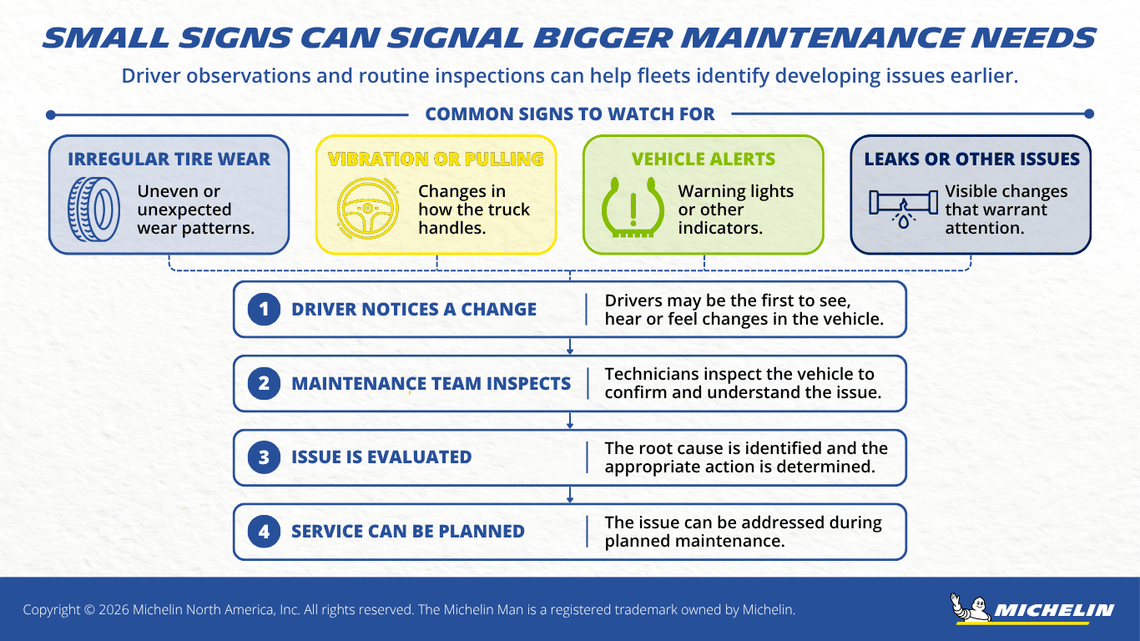
Preventive maintenance is most effective when fleets know what changes to look for between scheduled service events. Drivers and technicians are often the first to notice changes in how a truck sounds, handles or performs, making those observations an important part of identifying developing maintenance needs.
Some warning signs that may deserve further inspection include:
Changes in Tire Wear
Uneven or accelerated tread wear can point to inflation, alignment or mechanical conditions that need attention. Tracking wear patterns over time can help fleets identify recurring issues rather than simply replacing the affected tire.
Pulling, Vibration or Changes in Handling
A truck that begins pulling to one side, vibrating or handling differently may need further inspection. Tires, wheels, alignment, steering or suspension components can all contribute to these changes.
Changes in Braking Performance
Changes in braking response, unusual noises or other differences noticed during braking should be documented and evaluated according to the fleet’s maintenance procedures.
Fluid Leaks or Unexplained Fluid Loss
Visible leaks or repeated changes in fluid levels can indicate a developing maintenance issue. Including these observations in routine inspections can help fleets identify when further service is needed.
Warning Lights and Vehicle Alerts
Dashboard indicators and vehicle alerts provide another source of maintenance information. Rather than treating them as isolated events, fleets can incorporate alerts into their inspection and maintenance process.
New or Unusual Noises
Changes in vehicle sound can be an early indication that something is operating differently. Drivers should have a clear process for reporting new noises so maintenance teams can determine whether inspection or service is required.
Commercial Truck Preventive Maintenance Warning Signs
Driver Observations Are Part of Preventive Maintenance
Drivers experience the vehicle in operation every day, which can make their observations valuable to the maintenance team. A consistent reporting process helps turn observations, such as vibration, unusual wear, warning indicators or changes in vehicle performance, into information that can be evaluated and acted on.
The important step is closing the loop: document the issue, evaluate it and record the maintenance action taken. Over time, those records can help fleets identify recurring problems and make more informed maintenance decisions.
Set Preventive Maintenance Intervals Based on How Your Fleet Operates
Preventive maintenance intervals should reflect how each vehicle is actually used. Mileage matters, but operating conditions, duty cycle, vehicle age, maintenance history and manufacturer recommendations can all influence when inspections and service should occur.
Instead of relying on one maintenance interval across every truck, fleets can build schedules around factors such as:
- Manufacturer recommendations: Use vehicle, tire and component guidance as the foundation for maintenance planning.
- Mileage and operating hours: Higher-use vehicles may reach maintenance needs sooner than trucks that accumulate fewer miles or hours.
- Duty cycle: Long-haul, regional, urban and mixed operations can place different demands on vehicles and tires.
- Operating conditions: Loads, road conditions, climate and stop-and-go operation can influence maintenance needs.
- Vehicle and tire history: Previous repairs, wear patterns and recurring issues can help identify where closer monitoring may be appropriate.
- Inspection findings: New wear, damage or changes in performance may require attention before the next planned service event.
Combine Routine Inspections With Scheduled Maintenance
A strong preventive maintenance program doesn’t rely on scheduled service alone. Routine driver inspections and maintenance-team checks can provide information about what is happening between planned service events.
When an inspection identifies a developing issue, fleets can evaluate whether maintenance should be moved forward rather than waiting for the next scheduled interval. That creates a more responsive approach while still maintaining a structured maintenance plan.
Use Maintenance Records to Improve the Schedule Over Time
Maintenance records can show more than what work was completed. Tracking inspection findings, tire wear, repairs and recurring issues can help fleets identify patterns across individual vehicles or the broader fleet.
In practice, the most useful preventive maintenance schedule isn’t simply a calendar, it’s a process that combines planned intervals with what the fleet is learning from inspections, vehicle usage and maintenance history.
Use Fleet Data to Make Maintenance More Proactive
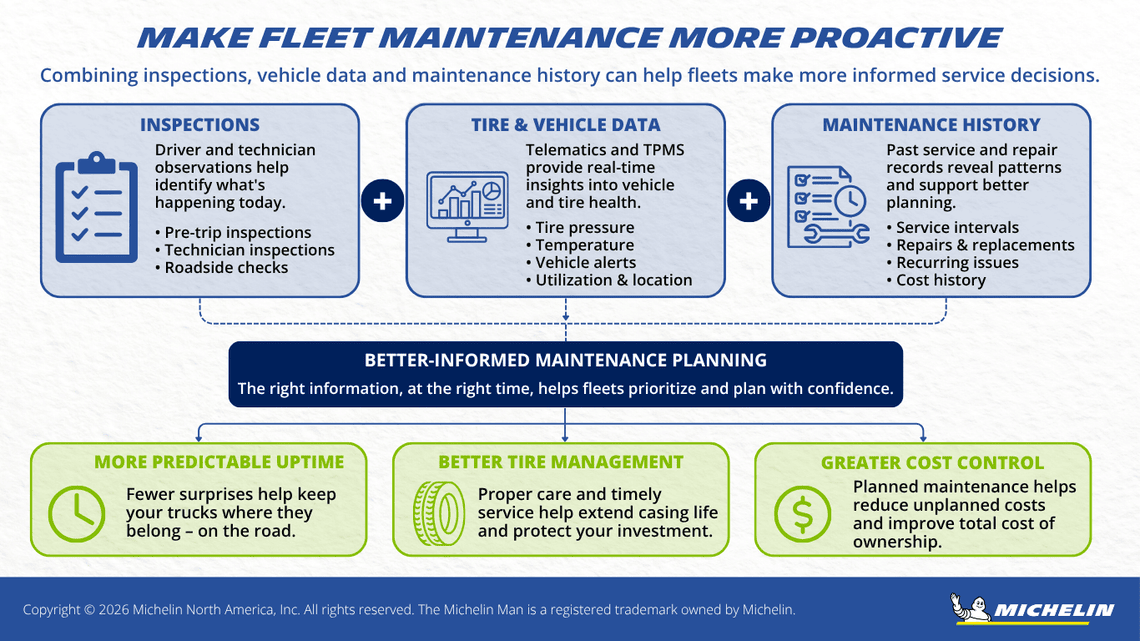
Preventive maintenance becomes more useful when fleets can combine scheduled inspections with information about what is happening across their vehicles and tires. Tools such as telematics, tire pressure monitoring systems (TPMS) and digital maintenance records can help maintenance teams identify trends, prioritize attention and make more informed service decisions.
Instead of relying only on fixed schedules or waiting for a driver to notice a problem, fleet data can provide additional visibility into developing maintenance needs.
Tire Pressure Monitoring Can Help Identify Inflation Issues
Tire pressure monitoring systems can provide fleets with more consistent visibility into inflation conditions between manual inspections. Depending on the system, alerts can help maintenance teams identify pressure changes that may require further inspection or service.
TPMS should complement, not replace, regular tire inspections and appropriate inflation-pressure practices.
Telematics Can Add Context to Maintenance Planning
Vehicle data can help fleets understand how trucks are being operated and identify information that may affect maintenance decisions. Mileage, operating hours, vehicle alerts and usage patterns can provide additional context when determining when a vehicle may need attention.
For larger fleets, this visibility can also help maintenance teams prioritize vehicles rather than treating every truck exactly the same.
Maintenance Records Turn Individual Events Into Trends
Digital maintenance records can help fleets connect inspection findings, repairs, tire changes and recurring issues over time. Identifying patterns across vehicles, routes or applications can help maintenance teams investigate underlying causes and make more informed service decisions.
What this means for fleets: Combining maintenance history with vehicle data can help identify what needs attention and when.
Michelin Connected Fleet can help fleets use connected vehicle data and insights to support more informed fleet management decisions.
Proactive Fleet Maintenance Planning
Preventive Maintenance Can Support Lower Operating Costs and More Uptime
Preventive maintenance isn’t only about keeping individual components in working condition. For fleets, the broader value comes from making maintenance more predictable and helping vehicles remain available for planned operations.
When inspections, maintenance schedules and vehicle data work together, fleets may be better positioned to:
- Reduce unplanned downtime: Identifying developing issues can create opportunities to address maintenance needs before they contribute to unexpected service events.
- Protect tire investment: Proper inflation, wear monitoring and timely maintenance can help fleets get more value from their tires over their usable life.
- Improve maintenance predictability: Planned service can make it easier to coordinate shop time, parts and vehicle availability.
- Support fuel efficiency: Maintaining appropriate tire inflation and addressing vehicle conditions that increase rolling resistance can help manage fuel consumption.
- Control lifecycle costs: Looking at maintenance across the vehicle and tire lifecycle can help fleets focus on total operating value rather than individual repair or replacement costs alone.
Move From Individual Repairs to Long-Term Fleet Performance
For many fleets, the opportunity is to think beyond individual repairs. Inspection history, tire performance, maintenance costs and vehicle availability can provide a broader picture of how equipment is performing over time. Tracking cost per mile can add another measure for understanding how tire and maintenance decisions contribute to overall fleet operating costs.
In practice, preventive maintenance works best as an ongoing fleet strategy, not a series of isolated service events. A consistent approach can help fleets protect tire life, improve maintenance planning and support more predictable long-term fleet performance.
Additional Resources
Frequently Asked Questions About Commercial Truck Preventive Maintenance
Preventive maintenance is a planned approach to inspecting and maintaining trucks before developing issues lead to unexpected repairs or downtime. It can include routine inspections, scheduled service, driver observations and maintenance records to help fleets identify and address maintenance needs proactively.
A preventive maintenance checklist may include tires and wheels, brakes, steering and suspension, fluids and leaks, lights and electrical systems, belts and hoses, and other vehicle components. Fleets should tailor their checklist to the vehicle, application, operating conditions and applicable manufacturer recommendations.
There is no single maintenance interval that applies to every commercial truck. Maintenance schedules should consider manufacturer recommendations, mileage or operating hours, duty cycle, operating conditions, vehicle history and findings from routine inspections.
Proper inflation, routine tire inspections and attention to irregular wear can help protect tire life and support fuel efficiency. Identifying tire or vehicle issues earlier may also help fleets reduce unplanned maintenance and get more value from their tire investment.
TPMS, telematics and digital maintenance records can give fleets additional visibility into tire pressure, vehicle usage, alerts and maintenance history. Combined with regular inspections, this information can help maintenance teams identify trends, prioritize vehicles and make more informed service decisions.


