
Why is tyre retreading a good option for my trucks?
How Does Tire Retreading Extend the Life of a Truck Tire?
Commercial truck tire retreading can help fleets extend the service life of their tires, reduce cost per mile, and get more value from quality casings. But retreading isn't the right choice for every tire. Understanding how the process works, when a casing qualifies, and how retreading fits into a tire management strategy can help fleets make informed replacement decisions.
IN THIS ARTICLE:
What Is Commercial Truck Tire Retreading?
Commercial truck tire retreading is the process of replacing the worn tread on a tire with new tread after the tire's casing has been professionally inspected and determined to be suitable for continued service. Instead of replacing the entire tire, retreading allows fleets to continue using a quality casing that still meets inspection requirements.
For many fleets, retreading is part of a long-term tire management strategy rather than simply a way to reduce replacement costs. A properly maintained casing can provide additional service life, helping fleets maximize the value of their tire investment while supporting lower cost per mile and more predictable operating expenses.
However, not every commercial truck tire can be retreaded. Before a tire is accepted for retreading, the casing is thoroughly inspected for structural integrity, damage and overall condition. Only casings that meet established inspection standards move forward in the retreading process.
Retreading is commonly used across many commercial trucking applications, including long-haul, regional and mixed-service fleets, where tire lifecycle management plays an important role in controlling operating costs and maximizing asset utilization.

Early Pioneers of Commercial Tire Retreading
Did You Know? Commercial tire retreading has been used for more than a century and continues to play an important role in helping fleets maximize casing value and extend tire life.
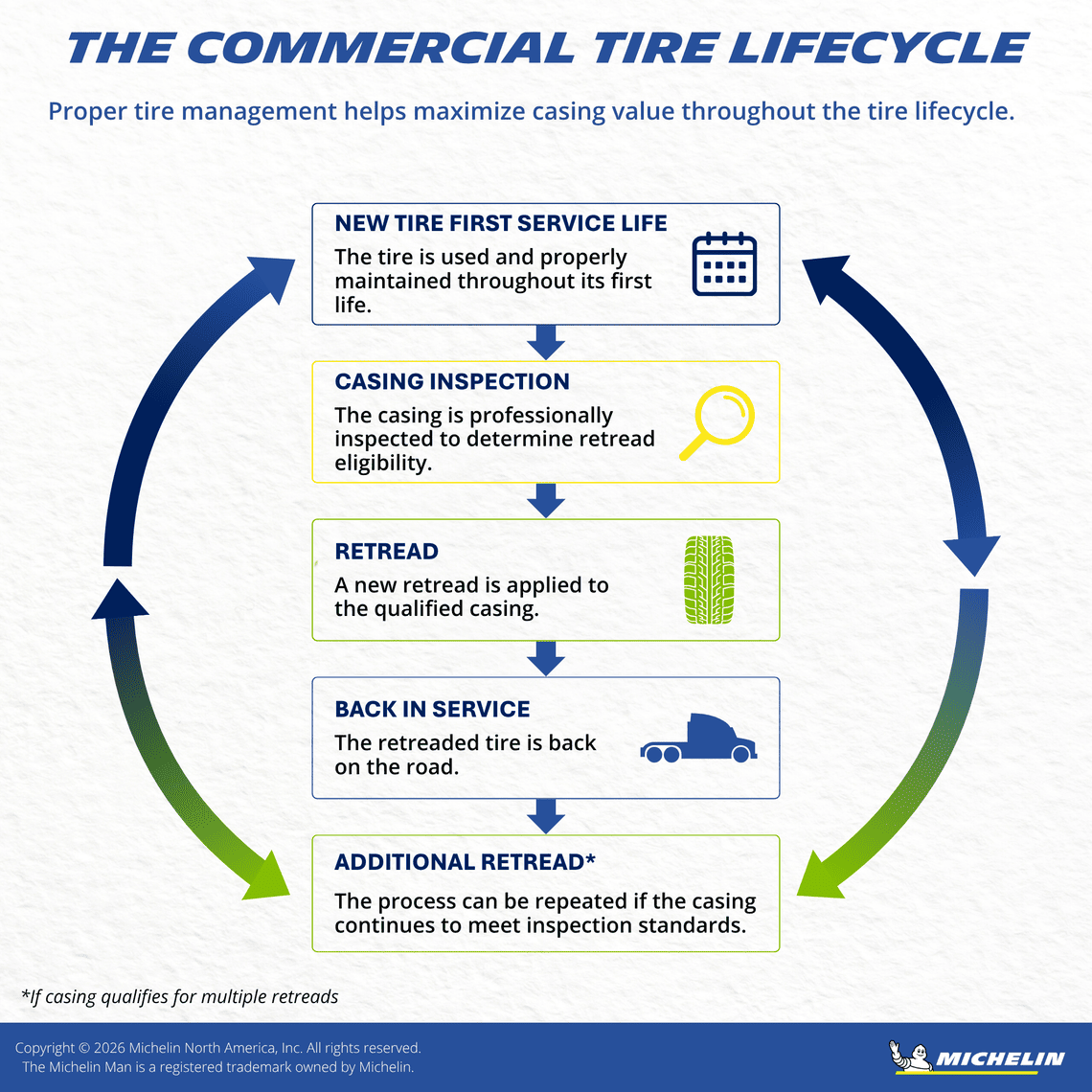
Commercial Truck Tire Retreading Lifecycle
Learn more about Michelin commercial truck retreading solutions and how retreading fits into a complete tire lifecycle strategy.
How Tire Treading Helps Extend Tire Life and Lower Fleet Costs
For many commercial fleets, the value of tire retreading goes beyond replacing worn tread. A retreading program can help fleets get more value from quality casings, reduce the frequency of purchasing new tires and support a lower cost per mile over the tire's lifecycle.
Rather than treating a tire as a single-use asset, retreading allows fleets to maximize the usable life of the casing when it meets inspection requirements. This approach can improve long-term tire planning while helping control operating costs.
More Value from Quality Casings
A commercial truck tire casing is one of the tire's most valuable components. Proper tire selection, inflation, maintenance and regular inspections throughout the tire's first life can help preserve casing condition and improve the opportunity for future retreading.
Support More Predictable Fleet Maintenance
Retreading is often part of a planned tire management program rather than a reactive replacement decision. Monitoring tire condition and evaluating casings during scheduled maintenance can help fleets make more informed replacement decisions and better plan tire budgets.
Lower Cost Per Mile
Because a retreaded tire reuses an existing casing, it typically costs less than purchasing a comparable new tire. For fleets managing large numbers of vehicles, incorporating retreading into a tire management strategy can help reduce tire-related operating costs over time.
Compare how premium retreads stack up against low-cost import tires over the long term.
Support Sustainability Goals
Extending the service life of quality tire casings can help reduce the number of new tires required over time and make more efficient use of tire materials throughout their lifecycle. For fleets with sustainability goals, retreading can be one part of a broader tire lifecycle management strategy.
Retread Tires vs. New Tires: What's the Difference?
Retread tires and new tires each have a place in a commercial fleet's tire strategy. Rather than viewing them as competing options, many fleets use both as part of a multi-life tire management program.
New tires provide the original casing that may later become a candidate for retreading, while retread tires allow fleets to continue getting value from quality casings that meet inspection requirements. The right choice depends on the tire's condition, the fleet's operating requirements and its overall tire management strategy.
Consideration | Retread Tires | New Tires |
|---|---|---|
Primary purpose | Extend the service life of a qualified casing | Begin the tire's first service life |
Casing | Reuses an inspected casing | New casing |
Initial purchase cost | Typically lower than a comparable new tire | Higher initial purchase cost |
Lifecycle strategy | Supports multi-life tire management | Establishes casing value for future retreading |
Best suited for | Fleets with qualified casings and a planned tire management strategy | New vehicle fitments, casing replacement or when retreading is not appropriate |
For many fleets, the decision is not retread or new, it's when each makes the most sense. A well-managed tire program often includes both, using new tires to establish casing value and retread tires to help maximize the usable life of quality casings.
Still have questions about retread performance or reliability? Explore common misconceptions about commercial truck retreads.
Determining Whether a Commercial Truck Tire Can Be Retreaded
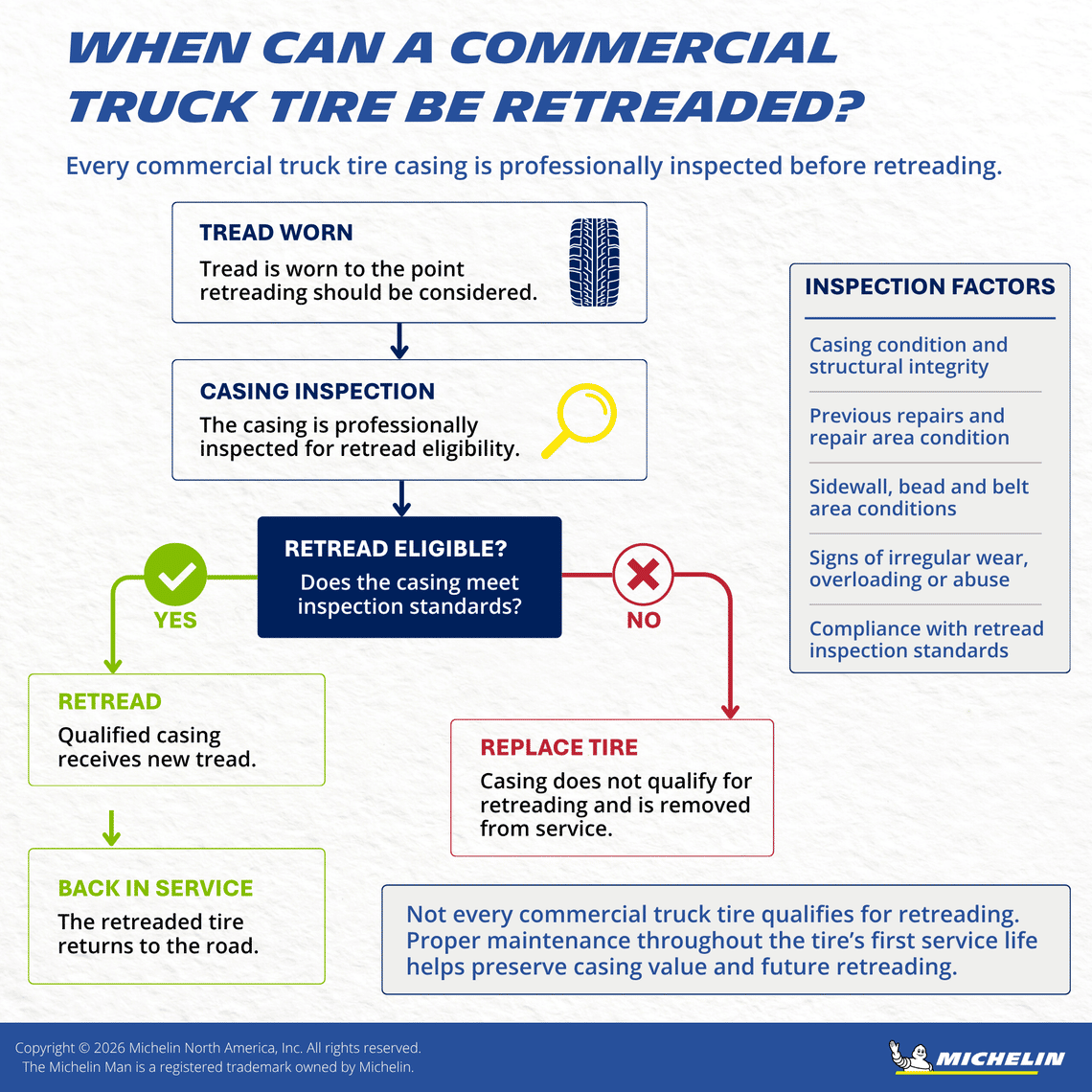
Commercial Truck Tire Retread Inspection Process
Not every commercial truck tire is suitable for retreading. Before a tire enters the retreading process, its casing must be thoroughly inspected to determine whether it meets established inspection standards. The condition of the casing plays an important role in whether a tire can continue into another service life.
For fleets, this means that tire maintenance begins long before retreading is considered. Proper inflation, routine inspections and timely maintenance throughout the tire's first life can help preserve casing condition and improve the opportunity for future retreading.
Michelin uses advanced inspection technologies to evaluate commercial truck tire casings before retreading.
Protecting casing value starts early
A quality casing is one of a fleet's most valuable tire assets. Consistent tire maintenance, including proper inflation, regular inspections and addressing tire issues promptly, can help preserve casing condition throughout the tire's first service life.
This is why many fleets view retreading as part of a broader tire lifecycle strategy rather than a decision made only after the tread is worn.
Learn how Michelin retread technology supports casing inspections.
What inspectors look for
During the inspection process, trained technicians evaluate the tire casing for conditions that could affect its suitability for retreading. Depending on the casing's condition, this may include evaluating:
- Casing integrity for structural damage or abnormalities.
- Tread wear to determine whether the tire has reached an appropriate point for retreading.
- Sidewall condition for cuts, punctures or other damage.
- Previous repairs that could affect the casing.
- Signs of heat or impact damage that may make the casing unsuitable for continued service.
Only casings that meet inspection requirements move forward in the retreading process.
How Does the Commercial Truck Tire Retreading Process Work?
Once a commercial truck tire has been inspected and determined to be suitable for retreading, it goes through a series of controlled steps to prepare the casing and apply new tread. While specific manufacturing processes may vary, the overall objective is to restore the tire to service using a qualified casing and new tread.
Step 1: Casing Inspection
Every tire begins with a detailed inspection to evaluate the condition of the casing. Only tires that meet established inspection requirements continue through the retreading process.
Step 2: Buffing
The remaining worn tread is removed from the tire casing to create a prepared surface for the new tread. This process helps ensure the casing is ready for the next stage of retreading.
Step 3: Repair
If appropriate, approved repairs may be made to the casing before new tread is applied. Tires that do not meet inspection requirements are removed from the process rather than repaired beyond acceptable limits.
Step 4: New Tread Application
A new tread is applied to the prepared casing using an approved retreading process. The tread selected may vary depending on the intended commercial application.
Step 5: Curing
The tire is placed in a controlled curing process that bonds the new tread to the casing.
Step 6: Final Inspection
Before returning to service, the finished retread undergoes a final inspection to confirm it meets quality requirements.
Although the retreading process follows a defined sequence, the quality of the finished tire begins with the condition of the original casing. Proper maintenance throughout the tire's first service life remains one of the most important factors in supporting future retread opportunities.
Make Tire Treading Part of Your Fleet Tire Strategy
Commercial truck tire retreading is most effective when it is part of a broader tire management strategy rather than a standalone replacement decision. Tire selection, proper inflation, regular inspections and preventive maintenance all contribute to preserving casing condition and supporting future retread opportunities.
For many fleets, a lifecycle approach to tire management helps maximize the value of quality casings while supporting more predictable maintenance planning and long-term operating costs. Retreading can play an important role in that strategy when tires are properly maintained and meet inspection requirements.
Whether your fleet is evaluating retreading for the first time or looking to expand an existing program, understanding the condition of your tire casings is an important first step. Working with experienced commercial tire professionals can help determine which tires are suitable for retreading and how retreading fits into your fleet's overall tire management strategy.
Proper tire maintenance throughout the tire's first service life helps maximize casing value and improve the opportunity for successful retreading. Explore Michelin's commercial truck retreading solutions to learn how a complete tire lifecycle strategy can help lower fleet costs.
Additional Resources
Frequently Asked Questions About Commercial Truck Tire Retreading
Commercial truck tire retreading is the process of replacing the worn tread on a tire after the casing has been professionally inspected and determined to be suitable for continued service. Instead of replacing the entire tire, retreading allows fleets to continue using a quality casing as part of a multi-life tire strategy.
Not every commercial truck tire is suitable for retreading. Before entering the retreading process, the casing is inspected for its overall condition, including structural integrity, signs of damage, previous repairs and other factors that may affect its suitability. Only casings that meet inspection requirements move forward in the retreading process.
A new tire begins its first service life with a new casing, while a retread tire reuses an inspected casing and applies new tread. Many commercial fleets use both as part of a tire management strategy—new tires establish casing value, and retread tires help extend the service life of quality casings that qualify for continued use.
Retreading can help fleets get more value from quality tire casings while supporting lower tire replacement costs over the tire's lifecycle. When combined with proper tire maintenance and casing management, retreading can contribute to a lower cost per mile and more predictable tire planning.
A tire's casing is the foundation of the retreading process. Before a tire can be retreaded, the casing must pass a professional inspection to determine whether it is suitable for continued service. Proper inflation, routine inspections and preventive maintenance throughout the tire's first life can help preserve casing condition and improve the opportunity for future retreading.


