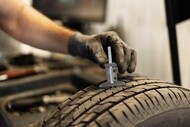
Commercial Truck Tire Tread Wear Inspection
Mechanic is using a caliper to check the tread depth of a tire to determine if it needs replacing
What Causes Uneven Wear on Commercial Truck Tires?
Uneven commercial truck tire wear can result from improper inflation, wheel alignment, mechanical conditions, load distribution, tire selection and operating conditions. The location and pattern of the wear can provide clues about what may be contributing to the problem.
Regular tire inspections can help fleets spot irregular wear earlier, investigate possible causes and address underlying conditions before they create additional tire or maintenance needs. This guide explains common truck tire wear patterns, what they may indicate and how fleets can help manage uneven wear.
IN THIS ARTICLE:
Uneven Tire Wear Can Point to More Than One Cause
Uneven tire wear happens when the tread wears at different rates across the tire or develops an irregular pattern over time. For commercial fleets, that wear can provide useful clues about tire condition, vehicle setup and operating conditions, but the pattern alone may not identify a single cause.
Inflation pressure is an important factor, but it isn’t the only one. Alignment, suspension or mechanical conditions, load distribution, tire and wheel condition, axle position and the way a truck operates can all contribute to irregular wear.
Look Beyond the Worn Tire
When uneven wear appears, replacing or rotating the tire may address the immediate condition, but it may not address what contributed to the wear. Fleets should consider the tire as part of the larger vehicle system and investigate possible contributing factors.
That may include checking:
- Inflation pressure: Underinflation, overinflation or pressure differences between dual tires can affect how the tread contacts the road.
- Wheel alignment: Toe, camber or axle-alignment conditions may contribute to characteristic wear patterns.
- Mechanical condition: Suspension, shock, bearing, brake or wheel-related conditions may contribute to irregular wear.
- Load and application: Vehicle loading, route conditions and duty cycle can influence how tires wear.
- Tire selection and position: Tires should be appropriate for their application and axle position.
What the wear pattern tells you is where to start looking, not necessarily the final diagnosis. Examining the pattern alongside inflation, alignment, vehicle condition and operating history can help fleets determine the appropriate next step.
What Do Common Truck Tire Wear Patterns Mean?
The way a commercial truck tire wears can provide clues about what is happening at the tire, wheel or vehicle level. Some patterns are commonly associated with inflation conditions, while others may point toward alignment, suspension, wheel-end or operating factors.
A wear pattern should be treated as a starting point for inspection rather than a diagnosis on its own. Similar-looking wear can have more than one contributing cause.
Common Wear Patterns and What to Check
Wear pattern | What you may see | Possible contributing factors | What to check |
|---|---|---|---|
Center wear | More wear through the center of the tread than at the shoulders | Inflation pressure, load and application conditions | Verify cold inflation pressure against the recommended pressure for the load and application |
Both-shoulder wear | Both outer edges wear faster than the center | Underinflation, loading or operating conditions | Check inflation pressure, load and operating conditions |
One-sided wear | One shoulder or side of the tread wears faster | Alignment or vehicle mechanical conditions | Inspect alignment and relevant suspension or wheel-end components |
Feathering | Tread ribs feel smooth in one direction and sharper in the other | Toe or other alignment conditions | Check wheel and axle alignment |
Cupping or scalloping | Repeating high and low spots around the tread | Suspension, shock, balance or wheel-end conditions | Inspect suspension, shocks, wheel/tire assembly and related components |
Diagonal wear | Angled or diagonal wear develops across the tread | Alignment, mechanical or tire/wheel assembly conditions | Inspect alignment, wheel-end components and tire/wheel condition |
Flat spotting | A localized section of tread is worn more heavily | Braking, wheel lockup or prolonged stationary conditions | Review braking conditions and inspect the affected tire and vehicle |
Inflation-Related Wear Can Appear Across the Tread

Uneven truck tyre wear due to overinflation
Wear concentrated toward the center of the tread may be associated with overinflation or other operating and application factors.
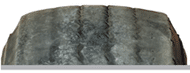
Uneven truck tyre wear due to underinflation
Wear concentrated at both shoulders may be associated with underinflation, loading or other operating conditions.
Inflation-related wear should be evaluated alongside the tire’s load, application and inflation history rather than diagnosed from tread appearance alone.
The Pattern Is Only Part of the Diagnosis
Where the tire is mounted matters too. Steer, drive and trailer tires experience different forces, loads and operating demands, so the same general wear pattern may need to be evaluated differently depending on wheel position.
When irregular wear appears, fleets should look at the complete operating picture, including inflation history, alignment, mechanical condition, load, route and axle position, before determining the appropriate corrective action.
Check the Conditions That Can Contribute to Uneven Tire Wear
Once irregular wear is identified, the next step is to investigate what may be contributing to it. Inflation pressure, alignment, mechanical condition and vehicle loading can all affect how a commercial truck tire wears.
Because more than one factor may be involved, fleets should evaluate the tire together with the vehicle and its operating conditions rather than treating the tread pattern as a diagnosis by itself.
Start With Tire Inflation Pressure
Proper inflation helps a tire maintain the intended contact with the road. When inflation pressure is not appropriate for the tire’s load and application, tread wear can become uneven and tire performance may be affected.
Fleets should:
- Check inflation pressure when tires are cold.
- Use the appropriate inflation pressure for the tire, load and application.
- Inspect tires regularly for pressure loss or significant differences between tires.
- Investigate repeated pressure loss rather than simply reinflating the tire.
- Use tire pressure monitoring systems (TPMS), where equipped, to complement regular tire inspections.
Pressure history can also provide useful context. A tire that is at the appropriate pressure during an inspection may have operated under different conditions earlier in its service.
What this means for fleets: pressure checks should be part of an ongoing tire-management routine, not only a response to visible irregular wear.
Check Wheel and Axle Alignment
Alignment conditions can change how the tread contacts the road and may contribute to feathering, shoulder wear and other irregular patterns.
Toe-in
Toe-in occurs when the front edges of the tires point toward each other relative to the rear edges. Excessive toe-in may contribute to irregular or feathered tread wear.
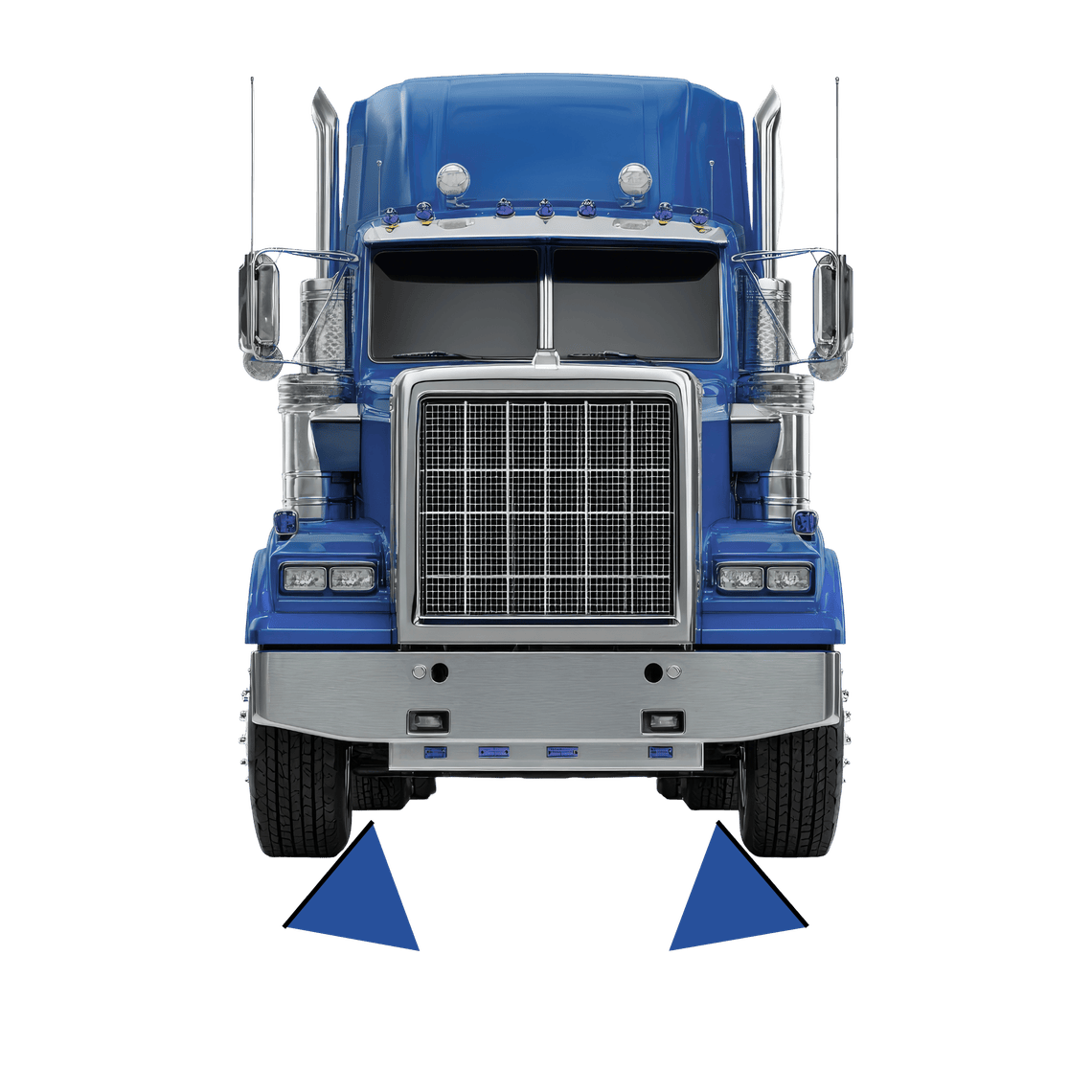
Commercial Truck Toe-In Alignment
Toe-out
Toe-out occurs when the front edges of the tires point away from each other relative to the rear edges. Excessive toe-out may contribute to irregular or feathered tread wear.

Commercial Truck Toe-Out Alignment
Alignment should also be considered when irregular wear returns after a tire has been serviced or replaced. Correcting the tire condition without investigating the underlying vehicle condition may allow the wear pattern to develop again.
Inspect Suspension and Wheel-End Conditions
Not every irregular wear pattern begins with inflation or alignment. Suspension, shock, bearing, brake and wheel/tire assembly conditions may also affect how a tire wears.
Pay particular attention when a fleet sees:
- Cupping, scalloping or repeating high and low spots
- Irregular wear that continues after inflation and alignment have been checked
- Vibration, pulling or other changes reported by the driver
- Similar wear recurring on the same vehicle or wheel position
In these cases, the wear pattern can help direct the inspection, but the underlying condition should be identified before determining the appropriate corrective action.
Consider Load, Route and Operating Conditions
How a truck is loaded and operated can also influence tire wear. Payload, load distribution, route type, road surface, turning frequency and stop-and-go operation can place different demands on tires.
When a wear issue keeps returning, look for patterns across the fleet. Ask whether it appears on the same axle position, vehicle type, route or application. Recurring patterns can help maintenance teams distinguish an isolated tire issue from a condition that may require broader attention.
Treat Recurring Wear as a Signal to Investigate Further
Replacing a worn tire may address the immediate need, but repeated irregular wear can indicate that another condition has not been resolved.
When the same pattern returns, review the tire’s inflation history, alignment, mechanical condition, load and operating environment together. Finding and addressing contributing conditions can help fleets get more consistent tire performance and reduce avoidable tire replacement.
Check Tire Matching in Dual Assemblies
Tires in a dual assembly need to work together. Differences in tire size, inflation pressure or tread depth can cause paired tires to rotate differently and may contribute to irregular wear.

Skewed tread patterns on twin tyres cause by incorrect pairing
When inspecting dual tires, check:
- Inflation pressure on both tires
- Tire size and compatibility
- Differences in tread depth
- Signs of irregular or accelerated wear
- Clearance between the paired tires
If one tire in a dual assembly needs replacement, verify that the replacement is appropriately matched with the remaining tire according to Michelin recommendations.
Reduce Uneven Tire Wear With Consistent Tire Management
Preventing every instance of irregular tire wear may not be possible, but consistent tire management can help fleets identify developing issues earlier and address contributing conditions before they become recurring problems.
The goal is not simply to make tires last longer. It is to understand how tires are performing across the fleet and use that information to support more predictable maintenance, tire utilization and operating costs.
Build Tire Checks Into Routine Inspections
Regular inspections give drivers and maintenance teams opportunities to identify changes before they become more significant. Tire checks should look beyond remaining tread depth and consider how the tread is wearing across the tire.
A routine inspection can include:
- Inflation pressure
- Tread depth and differences across the tread
- Irregular or rapidly developing wear
- Cuts, damage or embedded objects
- Dual-tire condition and matching
- Changes since the previous inspection
Recording what is found can also make recurring patterns easier to recognize over time.
Track Wear Patterns Across the Fleet
One irregularly worn tire may point to an issue with that tire or vehicle. When the same pattern repeatedly appears across similar trucks, routes or wheel positions, the information becomes more useful for maintenance planning.
For example, fleets can look for recurring wear by:
- Vehicle or vehicle type
- Steer, drive or trailer position
- Route or application
- Maintenance history
- Tire model or specification
This can help maintenance teams move from responding to individual worn tires to investigating why the same condition keeps returning.
Address the Cause, Not Just the Worn Tire
A tire replacement may be necessary when a tire reaches the end of its usable service, but replacing the tire alone may not prevent the same wear from developing again.
When irregular wear is found, use the pattern as a trigger to review the conditions that may have contributed to it. Inflation, alignment, mechanical condition, loading and operating environment should all be considered as appropriate.
Correcting contributing conditions can help fleets protect the value of their tire investment and get more consistent performance from tires over time.
Use Tire Wear to Inform Maintenance Decisions
Tire wear is more than a tire issue. It can provide maintenance teams with information about how vehicles are operating and where additional inspection may be needed.
In practice, combining tire inspections with maintenance records can help fleets identify recurring conditions, prioritize vehicles that need attention and plan service more proactively.
What this means for fleets: the greatest value comes from treating tire wear as information. When fleets consistently inspect, document and respond to irregular wear, they can make better-informed decisions about tires, vehicles and maintenance.
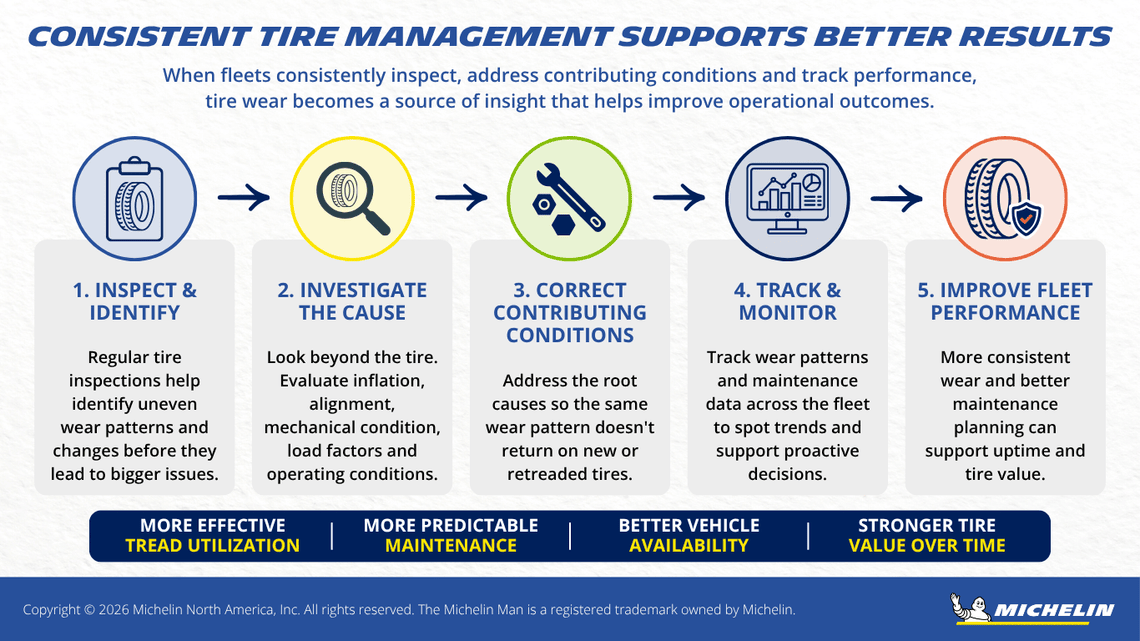
Consistent Tire Management Supports Better Fleet Results
Managing Uneven Tire Wear Can Help Protect Fleet Operating Costs
Uneven tire wear can affect more than the tire being replaced. When irregular wear shortens usable tread life or repeatedly brings a truck in for service, the impact can extend to tire costs, maintenance time and vehicle availability.
For fleets, this is why tire wear should be considered as part of the broader cost of operating a vehicle, not simply as a tire expense.
Get More Value From Each Tire
Consistent inflation, alignment and maintenance practices can help tires wear more evenly and support more effective use of available tread.
For fleets managing hundreds or thousands of tires, small improvements in tire utilization can become meaningful over time. Protecting the casing may also preserve future retread opportunities when the casing remains eligible.
Look Beyond Tire Purchase Price
The lowest purchase price does not necessarily mean the lowest operating cost. Fleets should consider how a tire performs over its service life, including mileage, maintenance requirements, casing value and retread potential where applicable.
Evaluating these factors through cost per mile can give fleets a more useful way to compare tire value than purchase price alone.
Plan Maintenance More Predictably
When tire condition is regularly inspected and recurring wear patterns are investigated, maintenance teams have more information to plan service before an issue becomes more disruptive.
That can help fleets reduce avoidable tire-related service events, make better use of planned maintenance windows and support more consistent vehicle availability.
Protect Your Tire Investment
The real opportunity is not simply extending the life of one tire. It is creating a repeatable approach to tire management across the fleet.
By monitoring wear, investigating recurring patterns and addressing contributing conditions, fleets can make informed decisions about tire replacement, maintenance and retreading, helping protect tire investment and support long-term fleet performance.
Additional Resources
Frequently Asked Questions About Uneven Commercial Truck Tire Wear
Uneven truck tire wear can have multiple contributing factors, including inflation pressure, wheel or axle alignment, suspension or wheel-end conditions, load distribution, tire selection and operating conditions. The location and pattern of the wear can provide clues, but the tire and vehicle should be inspected before determining the cause.
Wear concentrated toward the center of the tread may be associated with overinflation or other load, application and operating conditions. Check cold inflation pressure against the appropriate recommendation for the tire’s load and application, and consider the tire’s operating history before determining the cause.
Wear on both shoulders may be associated with underinflation, loading or operating conditions. Wear concentrated on only one side may point toward alignment or mechanical conditions. Because similar-looking patterns can have different causes, inspect the tire and vehicle rather than relying on tread appearance alone.
Alignment conditions can contribute to uneven or irregular tire wear. Toe and other wheel or axle alignment conditions may be associated with feathering, shoulder wear or other patterns. If irregular wear appears or repeatedly returns, alignment should be one of the conditions evaluated.
Regular tire inspections, appropriate inflation pressure, wheel and axle alignment checks, proper tire selection and attention to suspension, wheel-end, loading and operating conditions can help fleets manage uneven wear. Tracking recurring patterns by vehicle, axle position or route can also help identify conditions that need further investigation.


