Sustainable Mining Operations
Sustainable Mining Solutions
How Michelin Supports More Sustainable Mining
Michelin supports mining operations with tires, services and solutions designed to improve efficiency, extend tire life and reduce environmental impact. Through the Michelin Better Mining approach, we focus on areas including renewable and recycled materials, energy efficiency, end-of-life tire solutions and sustainable partnerships.
ON THIS PAGE
Michelin Better Mining
Michelin Better Mining is our approach to helping mining operations advance their safety, efficiency and sustainability goals through tires, services, solutions and support.
For more than 30 years, Michelin has been committed to reducing its environmental and social impact. That commitment extends to our role as a supplier to the mining industry.
We develop solutions for both surface mining and underground mining operations, helping miners operate safer, smarter and more sustainably while supporting the performance and productivity their operations demand.
Recycled and Renewable Materials in Michelin Tires
Michelin is working toward incorporating 100% renewable or recycled materials in its tires by 2050, reducing reliance on finite raw materials while maintaining the performance and durability required for demanding applications such as mining.
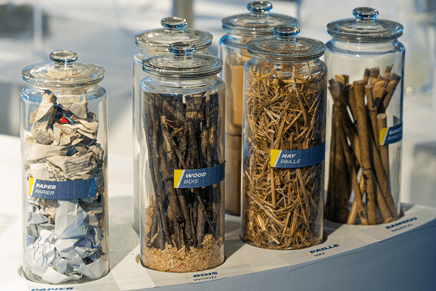
Renewable and Recycled Materials for Michelin Tires
Renewable materials come from resources that can be naturally replenished, while recycled materials are recovered and reprocessed for use in new products. By increasing the use of both, Michelin aims to support a more circular approach to tire production.
Through materials research and partnerships, Michelin continues to develop new ways to incorporate renewable and recycled materials into tires without compromising product quality or performance.
Energy-Efficient Mining Tires
Mining tires can play an important role in a mine’s energy efficiency. Rolling resistance, motion resistance, tire pressure and operating conditions can all affect the amount of energy a mining truck needs to move, influencing fuel consumption, operating costs and emissions.
Michelin develops mining tires, services and solutions to help mines improve tire performance and support safer, more efficient and sustainable operations.
Michelin develops solutions to advance mining sustainability
MICHELIN MEMS 4 remotely monitors tire pressure and temperature and tracks tire usage to help mining operations manage tire performance. Integrating tire monitoring into production and maintenance planning can help teams identify potential issues, reduce unplanned downtime and support longer tire life.
Michelin uses Life Cycle Assessments to evaluate environmental impacts across stages of a tire’s life, including raw material extraction, manufacturing, transportation, use and end of life. This approach helps identify opportunities to reduce environmental impact throughout the tire life cycle.
How Do Mining Tires Affect Fuel Consumption?
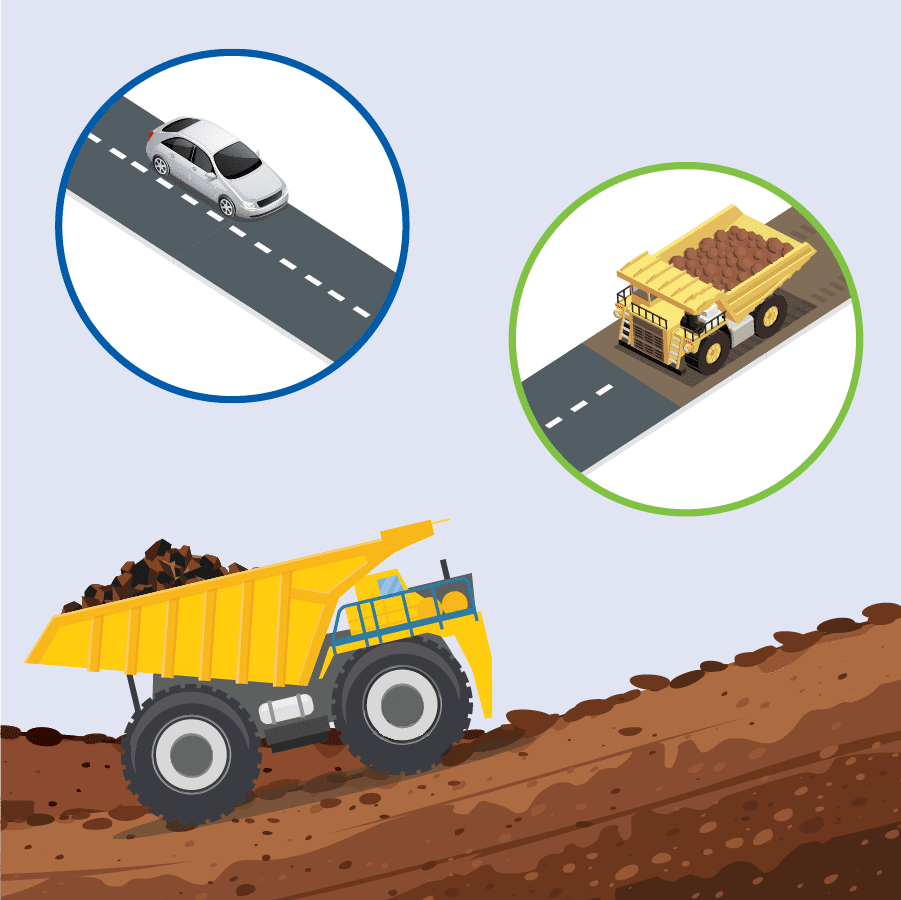
Mining trucks must overcome resistance to move, and tires are an important part of that equation. On hard surfaces, rolling resistance occurs as the tire deforms and flexes under the vehicle’s load, generating heat and consuming energy. On soft surfaces, motion resistance also becomes important because tires can sink into the ground, requiring additional energy for the truck to move forward.
Reducing unnecessary resistance can help a mining truck use less energy as it moves, supporting lower fuel consumption, reduced CO2 emissions and more efficient mining operations.
See how Michelin Mining identified opportunities to reduce a mine’s CO2 emissions through a Life Cycle Assessment.
Rolling Resistance vs. Motion Resistance in Mining
CARS
On hard surfaces, vehicles primarily encounter rolling resistance.
Rolling and Motion Resistance in Mining
MINING TRUCKS
Mining trucks operate on both hard and soft surfaces, where rolling and motion resistance can affect energy use.
End-of-Life Mining Tire Solutions
Michelin works with mining companies and partners to develop end-of-life mining tire solutions that can be adapted to local infrastructure and recycling capabilities. These initiatives help recover and process used mining tires while supporting more circular approaches to tire materials.
Michelin’s end-of-life mining tire initiatives include:
- Chile: Michelin’s first mining tire cutting and shredding facility
- Peru: Partnership with the Neuma Peru recycling facility
- Brazil: More than 10 years of end-of-life tire management
- South Africa, West Africa and Australia: Exploration of local partnerships and solutions
Life cycle assessments
Mining Tire Recycling in Chile
Michelin’s tire cutting and shredding facility in Antofagasta, Chile, provides an end-of-life solution for mining tires by processing used tires for recovery and recycling.
Watch the video to learn more about the facility and Michelin’s approach to mining tire recycling in Chile.
Responsible Natural Rubber Sourcing
Michelin is committed to improving transparency and sustainability across its natural rubber supply chain, including responsible sourcing practices designed to protect forests and reduce environmental and social risks.
In the 2025 SPOTT (Sustainability Policy Transparency Toolkit) assessment, Michelin ranked first among tire manufacturers evaluated for transparency in the natural rubber industry, with a score of 80.3%. The assessment evaluated public disclosures related to environmental, social and governance practices.
Michelin was also the only major tire manufacturer in the assessment to report verified evidence that plots in its supply chain are deforestation-free. Michelin first adopted a public commitment to source deforestation-free natural rubber in 2015 and continues to work toward greater traceability across its rubber supply chain.

Michelin Natural Rubber Sustainability
Sustainable Mining Partnerships
Michelin works with customers and organizations across the mining industry to support progress toward safer, more efficient and more sustainable mining operations.
By collaborating around shared sustainability priorities, Michelin can better understand the challenges mining companies face and identify opportunities where tires, services, technology and industry expertise can contribute to their environmental and operational goals.
This can include engagement with industry organizations such as the International Council on Mining and Metals (ICMM) to support dialogue and collaboration around responsible mining practices.
Looking for Mining Tires & Solutions?
Explore Michelin mining tires, services and solutions designed to support safer, more productive mining operations.
Sustainable Mining Frequently Asked Questions
Mining provides many of the raw materials needed for renewable energy technologies and electrification. Minerals and metals such as lithium, copper and nickel are used in applications including electric vehicle batteries, solar energy systems and wind power infrastructure. As demand for these materials grows, the mining industry faces the challenge of meeting that demand while reducing its environmental and social impact.
Minerals and metals are essential to industries ranging from construction and technology to transportation and energy. Sustainable mining focuses on meeting this demand while reducing environmental impacts, using resources efficiently and supporting the long-term wellbeing of communities and ecosystems affected by mining operations.
Mining tires can influence a haul truck’s energy use through factors such as rolling resistance, tire pressure and temperature, and performance on different ground conditions. Proper tire selection and maintenance can help reduce the energy required to move a loaded truck, contributing to lower fuel consumption and operating costs.
End-of-life mining tires can be managed through solutions such as cutting, shredding, recycling and material recovery, depending on local infrastructure and regulations. Michelin is working with the mining industry and local partners to develop end-of-life tire solutions that can be adapted to regional needs.
Michelin’s approach includes developing more energy-efficient mining tires, increasing the use of recycled and renewable materials, supporting end-of-life tire solutions, using connected technologies to help optimize tire performance, and collaborating with mining customers and industry organizations on sustainability challenges.