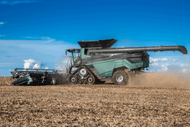
combine harvester with tracks
Combine Harvester Tracks

Choosing the Right Combine Harvester Tracks
Combine harvesters operate across varying field conditions during one of the most important periods of the agricultural season. Choosing the right rubber tracks starts with understanding your equipment's requirements and the conditions in which you harvest.
When selecting replacement combine harvester tracks, consider these key factors:
- Equipment Compatibility: Confirm that the tracks match your combine harvester's make, model, undercarriage configuration and track dimensions.
- Drive System: Determine whether your equipment requires positive-drive or friction-drive tracks. The correct type depends on the machine's drive system.
- Field Conditions: Consider soil type, moisture levels, terrain and the conditions your equipment encounters during harvesting.
- Track Maintenance: Follow equipment and track manufacturer recommendations for inspections, alignment and track tension to help support performance and service life.
Michelin offers agricultural rubber tracks for compatible combine harvesters and different operating requirements. Explore the available products below to find options suited to your harvesting equipment.
Find Your Combine Harvester Tracks
Explore Michelin rubber tracks for combine harvesters, including friction-drive and positive-drive options. Discover tracks designed for different equipment configurations and harvesting conditions, and find options compatible with your machine.
Looking for Camso Tracks?
Camso tracks are transitioning to the Michelin brand. Learn more about what this means for your equipment and track options.
Farmer
Farmer in soybean fields. Growth, outdoor.
Agricultural Track Expert Advice
Explore Michelin expert guidance on agricultural track selection, maintenance and equipment performance to help you make informed decisions for your operation.
Frequently Asked Questions About Combine Harvester Tracks
Yes. Michelin offers agricultural rubber tracks for compatible combine harvesters, including the BIBTRACK 150 FRICTION, BIBTRACK 150 RD POSITIVE and BIBTRACK 150 POSITIVE.
These tracks are designed for agricultural applications where traction, mobility and durability are important during harvesting. Available options depend on your combine harvester's equipment configuration and drive system.
Michelin rubber tracks are designed to support traction, stability and mobility in demanding agricultural environments.
Rubber track systems can also help distribute equipment weight across a larger ground contact area, potentially reducing soil compaction compared with certain tire configurations.
Actual performance depends on equipment specifications, track configuration, field conditions and operating practices.
Start by confirming your combine harvester's make, model, undercarriage configuration and required track dimensions.
Next, consider your equipment's drive system, typical harvesting conditions, soil type and operating requirements.
Michelin offers several BIBTRACK options for compatible harvesting equipment. Review product specifications or consult a Michelin track expert to identify the appropriate replacement tracks for your machine.
The primary difference is how power transfers from the machine to the rubber track.
Positive-drive tracks use mechanical engagement between the drive components and features on the track to transfer power.
Friction-drive tracks rely on friction between the drive components and the track to transfer power.
The appropriate system depends on your combine harvester's undercarriage design. These track types are not necessarily interchangeable, so confirm compatibility before purchasing replacement tracks.