
Commercial Trucks at a Fuel Station Supporting Fuel Efficiency Planning
Industrial long hauler carriers commercial big rig semi trucks with semi trailers fill up their fuel tanks at truck stop gas station at night time to continue driving on their routes in the morning
How Can Truck Tires Help Reduce Fuel Consumption?
Fuel is one of the largest operating expenses for many commercial fleets, and tires play a bigger role in fuel efficiency than many people realize. Factors such as rolling resistance, tire pressure, tread design and routine maintenance can all influence how much energy a truck needs to keep moving.
Understanding how tires affect fuel consumption can help fleet managers make more informed decisions that support lower operating costs, improved efficiency and long-term tire performance. This guide explains the key factors that affect fuel economy and how choosing and maintaining the right commercial truck tires can help reduce fuel consumption over time.
IN THIS ARTICLE
How Do Commercial Truck Tires Affect Fuel Consumption?
Every mile a truck travels requires energy, and the more energy needed to keep the vehicle moving, the more fuel it consumes. While factors such as vehicle weight, aerodynamics and driving habits all influence fuel economy, commercial truck tires also play an important role in overall fuel efficiency.
The right tire, properly maintained and matched to its application, can help reduce the energy required to move the vehicle. Over time, this can contribute to lower fuel consumption, reduced operating costs and improved fleet efficiency.
Key tire factors that influence fuel consumption
- Rolling resistance – Tires naturally resist motion as they roll. Lower rolling resistance requires less energy, which can help improve fuel efficiency.
- Proper tire pressure – Underinflated tires increase rolling resistance, forcing the engine to work harder and consume more fuel.
- Tire design – Tread pattern, casing construction and compound are designed to balance fuel efficiency, traction, mileage and durability depending on the application.
- Routine maintenance – Regular pressure checks, alignment and tire inspections help tires perform as intended and support consistent fuel economy.
For many fleets, improving fuel efficiency isn't about making one major change. It's the result of selecting the right tire, maintaining it properly and managing tire performance throughout its service life. The sections below explain how these factors work together to help reduce fuel consumption.
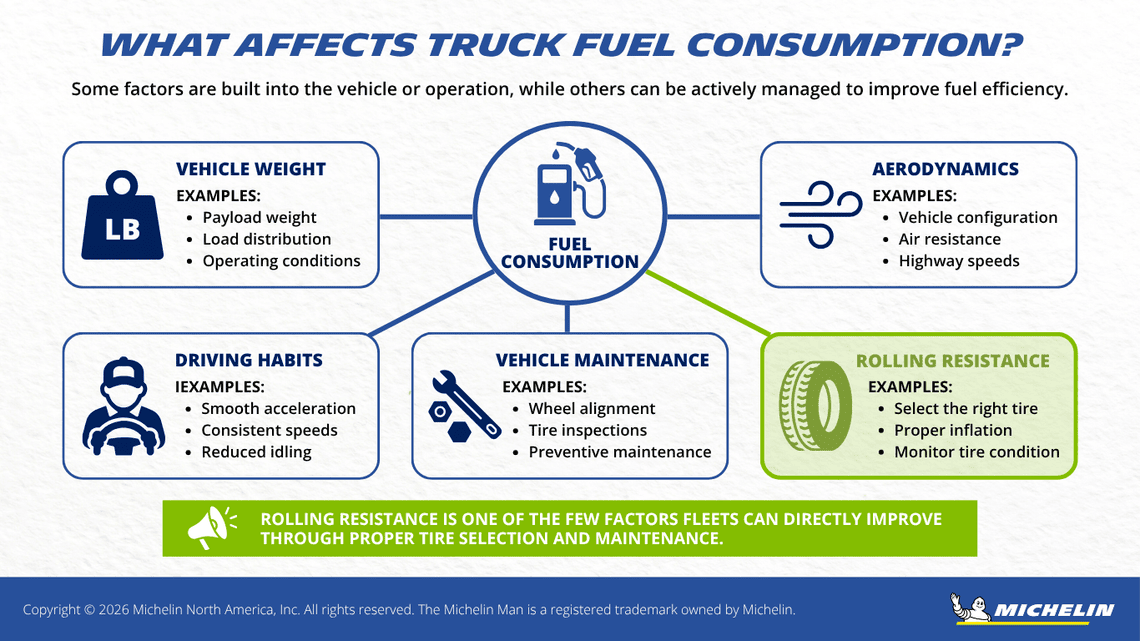
Key Factors That Affect Commercial Truck Fuel Consumption
What Factors Have the Biggest Impact on Fuel Consumption?
Fuel consumption is influenced by many factors, but not all of them can be managed in the same way. Some are determined by vehicle design or operating conditions, while others, such as tire selection and maintenance, are areas fleets can actively optimize to improve fuel efficiency.
Factor | How Fleets Can Influence It |
|---|---|
Vehicle Weight | Optimize payload distribution, avoid unnecessary weight and operate within recommended load limits to reduce the energy required to move the vehicle. |
Aerodynamics | Use aerodynamic equipment such as fairings and trailer skirts where appropriate, and minimize unnecessary drag caused by vehicle configuration. |
Driving Habits | Encourage smooth acceleration, maintain steady highway speeds when possible and reduce excessive idling or aggressive braking to improve fuel efficiency. |
Vehicle Maintenance | Keep the engine, drivetrain, wheel alignment and other mechanical systems properly maintained so the vehicle operates as efficiently as possible. |
Rolling Resistance | Select tires designed for the application's fuel-efficiency goals, maintain proper tire pressure and inspect tires regularly to help minimize energy loss as the tire rolls. |
While every factor contributes to fuel consumption, rolling resistance is one of the few areas fleets can directly influence through tire selection and ongoing tire maintenance.
Common Tire-Related Causes of Increased Fuel Consumption
When fuel consumption begins to increase, tires are one of the first areas fleets should evaluate. Even small changes in tire condition or maintenance can increase the amount of energy required to keep a truck moving, leading to higher fuel costs over time.
Many of these factors are manageable through proper tire selection, regular inspections and routine maintenance.
What can increase fuel consumption?
Underinflated tires
When tire pressure falls below the recommended level, the tire flexes more as it rolls. This increases rolling resistance, requiring more engine power and more fuel to maintain speed.
Incorrect tire selection
Choosing a tire that doesn't match the vehicle's application or operating conditions can reduce fuel efficiency. Selecting the right tire for long-haul, regional or mixed-service operations helps balance performance with operating costs.
Irregular tire wear
Uneven or excessive tread wear can increase rolling resistance and reduce tire performance. Regular inspections help identify wear issues before they begin affecting fuel economy.
Poor wheel alignment
Misalignment creates unnecessary drag and uneven tire wear, making the engine work harder to move the vehicle efficiently.
Inconsistent tire maintenance
Routine pressure checks, alignments and tire inspections help ensure tires continue performing as designed throughout their service life.
Fuel efficiency isn't determined by one factor alone. Tire pressure, maintenance, alignment and selecting the right tire all work together to help reduce fuel consumption and support lower operating costs.
Understanding Rolling Resistance
Rolling resistance is one of the most important ways tires influence fuel consumption. As a tire rolls under the weight of a vehicle, it continuously flexes where it contacts the road. This natural deformation requires energy, and that energy comes from the engine.
The more energy required to keep the tire rolling, the more fuel the truck consumes. Tires designed to reduce rolling resistance require less energy to move, which can help improve fuel efficiency without compromising the performance needed for the intended application.
How rolling resistance affects fuel consumption
- Tire pressure: Proper inflation helps minimize tire deflection and reduce rolling resistance. Underinflated tires flex more, increasing energy loss and fuel consumption.
- Tread design and compound: Tire designs intended for fuel efficiency are engineered to reduce energy loss while balancing traction, mileage and durability.
- Vehicle application: Long-haul fleets operating primarily on highways often benefit most from low rolling resistance tires, while regional or severe-service applications may require different performance priorities.
- Vehicle maintenance: Proper alignment, regular tire inspections and proactive maintenance help ensure tires continue performing as designed throughout their service life.
Rolling resistance is only one part of the fuel-efficiency equation, but it is one that fleets can actively influence through tire selection and maintenance. Choosing the right tire and maintaining proper inflation can help reduce unnecessary energy loss and support lower operating costs over time.
How Can Fleets Reduce Fuel Consumption Through Tire Management?
While factors such as vehicle design and operating conditions influence fuel consumption, tire management is one area fleets can actively optimize. Choosing the right tires and maintaining them throughout their service life can help reduce rolling resistance, improve efficiency and support lower operating costs over time.
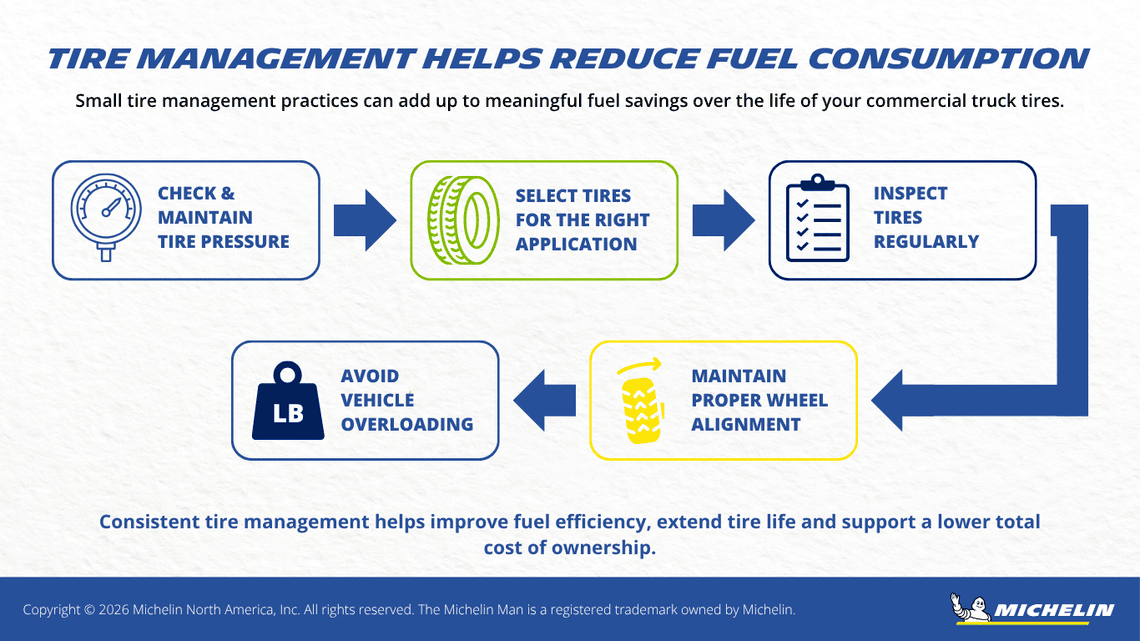
Tire Management Practices That Help Reduce Fuel Consumption
Maintain Proper Tire Pressure
Underinflated tires flex more as they roll, increasing rolling resistance and requiring more energy to move the vehicle. Regular pressure checks and a proactive tire maintenance program help tires perform as designed while supporting fuel efficiency. Learn more about proper commercial truck tire pressure to help maximize tire performance and fuel efficiency.
Select Tires for the Application
Different commercial truck tires are designed for different operating conditions. Selecting tires that match your fleet's routes, loads and performance priorities can help balance fuel efficiency, mileage and durability based on your operation. Understanding commercial truck tire size markings can help ensure you're selecting a tire designed for your application.
Routinely Inspect Tires
Routine inspections help identify uneven wear, damage and pressure loss before they affect fuel consumption or lead to unplanned downtime. Addressing small issues early can help maintain consistent tire performance throughout the tire's service life.
Maintain Proper Wheel Alignment
Misaligned wheels increase tire scrub and rolling resistance, causing the engine to work harder and accelerating tire wear. Regular alignment checks help improve vehicle efficiency while extending tire life.
Avoid Overloading
Operating within recommended load limits helps reduce unnecessary tire deformation and excessive heat buildup. Proper load management supports tire performance, improves fuel efficiency and promotes more predictable wear.
Every improvement may seem small on its own, but together these tire management practices can help reduce fuel consumption, extend tire life and improve total cost of ownership across your fleet.
Choosing Commercial Truck Tires for Fuel Efficiency
Fuel efficiency is one of several factors to consider when selecting commercial truck tires. The right tire depends on your operating conditions, annual mileage, axle position and overall fleet priorities. While long-haul fleets often prioritize low rolling resistance, other applications may require a different balance between fuel efficiency, traction and durability.
Choosing a tire that matches the way your trucks operate can help improve operational efficiency while supporting long-term tire performance and total cost of ownership.
Consider your application first
Commercial truck tires are engineered for different operating environments. Long-haul, regional, urban and severe-service operations each place different demands on a tire. Matching the tire to its intended application helps ensure you're optimizing for the performance characteristics that matter most to your fleet.
Balance fuel efficiency with other performance
Reducing fuel consumption is important, but it should be considered alongside other operational goals such as mileage, durability, traction and retreadability. The best tire choice is one that delivers the right balance of performance for your specific operation rather than focusing on a single attribute.
Think beyond the purchase price
Evaluating tires based only on upfront cost can overlook their long-term operational impact. Fuel efficiency, expected tire life, maintenance requirements and casing value all contribute to the overall cost of ownership. Considering the complete tire lifecycle helps fleets make more informed purchasing decisions.
Selecting commercial truck tires is about more than reducing fuel consumption. When tire selection aligns with your fleet's application and operating goals, it can help improve efficiency, support predictable performance and maximize value throughout the tire's service life.
How Michelin Technologies Help Improve Fuel Efficiency
Michelin designs commercial truck tires to help fleets improve fuel efficiency while balancing other important performance priorities such as mileage, durability and casing value. Rather than relying on a single innovation, Michelin combines multiple technologies that are designed to reduce rolling resistance while supporting long-term tire performance.
Michelin Silica Technology
Specialized rubber compounds are designed to reduce energy loss as the tire rolls, helping lower rolling resistance while maintaining the durability and traction required for commercial applications.
Michelin INFINICOIL Technology
Continuous steel reinforcement helps maintain tire stability throughout its service life, supporting consistent wear and helping preserve fuel-efficient performance over time.
Michelin REGENION Technology
As the tread wears, evolving tread features help maintain performance throughout the tire's life, supporting more consistent wear and long-term operational efficiency.
Fuel-efficient tire performance is the result of tire design, proper application and ongoing maintenance working together. Michelin technologies are designed to support that complete strategy, helping fleets maximize efficiency over the life of the tire.
Fuel Efficiency Is Part of a Smarter Tire Strategy
Fuel consumption is one of the largest operating expenses for many commercial fleets, making tire management an important part of controlling long-term costs. While no single change eliminates fuel inefficiencies, selecting the right commercial truck tires and maintaining them properly can help improve vehicle efficiency over thousands of miles.
The greatest results often come from treating tire management as an ongoing strategy rather than a one-time purchasing decision. Tire selection, proper inflation, regular inspections and preventive maintenance all work together to support lower rolling resistance, longer tire life and more predictable fleet performance.
For fleets focused on improving operational efficiency, fuel-efficient tire management can help:
- Reduce fuel consumption over the life of the tire
- Extend tire life through proper maintenance
- Support more predictable operating costs
- Improve total cost of ownership across the tire lifecycle
Small improvements made consistently across a fleet can add up to meaningful operational savings. By combining the right tire strategy with proactive maintenance practices, fleets can improve efficiency while maximizing the long-term value of every tire.
Additional Resources
Frequently Asked Questions About Fuel Efficient Truck Tires
Commercial truck tires affect fuel consumption primarily through rolling resistance. Tires that require less energy to roll can help improve fuel efficiency, while factors such as proper inflation, tire condition and selecting the right tire for the application also influence fuel use over time.
Rolling resistance is the energy a tire loses as it flexes while rolling under load. The more energy lost through tire deformation, the harder the engine must work to keep the vehicle moving, which can increase fuel consumption.
Yes. Underinflated tires increase rolling resistance because they flex more as they roll. Maintaining the manufacturer's recommended tire pressure helps support fuel efficiency, promotes even wear and may extend tire life.
It can. Commercial truck tires are designed for different operating conditions and performance priorities. Selecting tires that match your fleet's application and fuel-efficiency goals can help reduce rolling resistance while balancing mileage, durability and other operational needs.
Fuel is often one of the largest operating expenses for commercial fleets. Improving fuel efficiency can help reduce operating costs over the life of the tire while supporting longer tire life, predictable maintenance and lower total cost of ownership.


