Cybersecurity for trucking
Cybersecurity for trucking
Modern trucks are not merely large vehicles – they represent a network of connected, computerized machines on wheels. Telematics and technology improve fleet efficiency and innovation, but they also create opportunities for cybercriminals to exploit your fleet.
This blog post will discuss the dangers of cyber threats and ways to protect your fleet from falling victim to these evolving crimes. And make sure you download and print our cybersecurity quick tips guide.
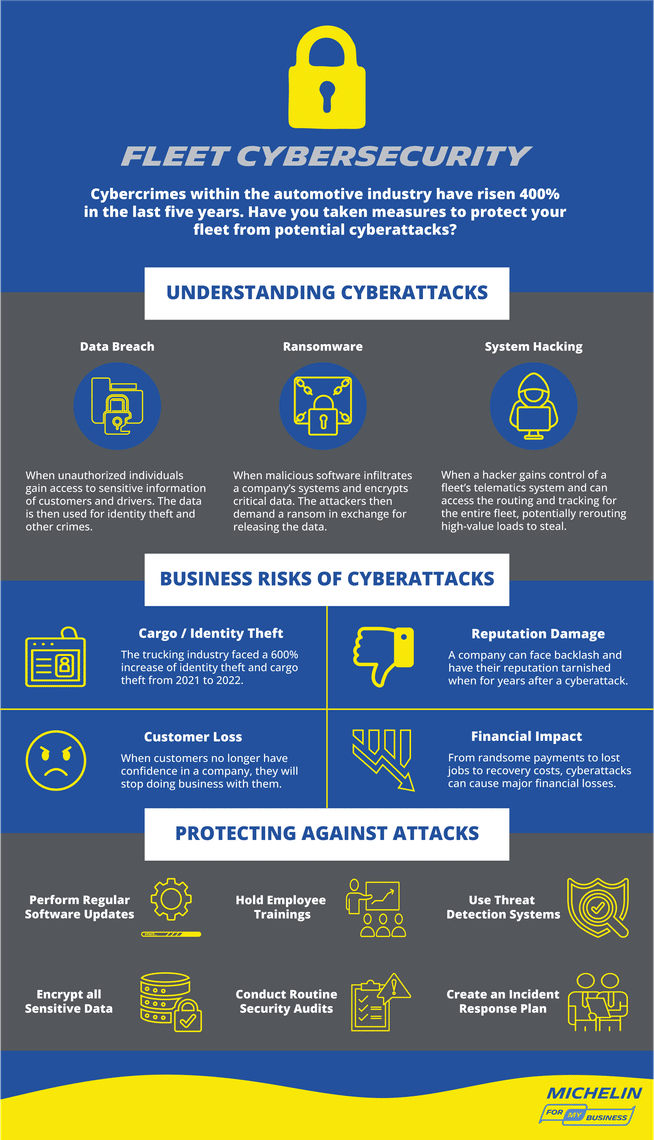
As our fleets become increasingly connected, they also become prime targets for cybercriminals. Over the past five years, cyberattacks within the automotive industry have increased by 400%*.
This increase highlights a significant liability in the industry’s security measures. Cyber security Ventures predicts that global cybercrime damages could hit $10.5 trillion by 2025*. The trucking industry is also at risk from these threats and must brace for the impact.
Cyberattacks are not just about data breaches, they can go way beyond that and have devastating consequences. These attacks can cause significant harm to the entire fleet. They can disrupt electronic logs, seize control of dispatch, and lead to rerouting that disrupts operations.
The increasing number of connected vehicles on the road exacerbates the cyber security risk. These vehicles generate vast amounts of data, including location, speed, and maintenance information. A data breach could compromise the privacy of drivers and passengers, as well as disrupt fleet operations.
Cybercrimes against trucking companies are real, with actual cases showing logistics firms dealing with these challenges. In 2017, FedEx fell victim to a ransomware attack called NotPetya. The attack caused widespread system outages that caused major delays and caused the company an estimated $300 million*.
More recently, Estes Express Lines was a victim of a cyberattack in October 2023*. The attack on Estes' computer system caused the company to shut down their IT system for weeks to fight against the attack.
During the attack, some shippers temporarily switched to different freight companies. This caused disruptions to their business. However, logistics operations continued.
Estes acted fast to stop a cyberattack, but it still took weeks to fix and cost $44 million in lost production time. Cyberattacks can be costly, even when a company reacts quickly. That's why companies should be proactive in protecting against cyber threats.
To combat the rising tide of cyber threats, trucking companies must adopt a multi-layered defense strategy. This includes:
Our way of dealing with [security threats] is to report them transparently, investigate and fix the root causes to prevent similar or more damaging incidents from happening again.
Pascal Mathieu, Director of Information Systems Security, Michelin Connected Fleet
Michelin Connected Fleet is a comprehensive telematics solution designed to optimize fleet management through advanced technology. Michelin Connected Fleet uses real-time data to help fleet owners track vehicle performance and driver behavior. This service also improves overall fleet efficiency.
Like any digital platform today, Michelin Connected Fleet has faced cybersecurity threats, but thankfully all have been minor.
To address cybersecurity concerns, Michelin Connected Fleet has multiple security measures in place, including:
Using these cybersecurity strategies, Michelin Connected Fleet users can feel assured their fleets are safe and defended against potential cyberattacks.
Technology clearly intertwines the future of trucking. Investing in cybersecurity is important for success in the future. Cybersecurity is not just a precaution, but a strategic move in this new era of connected fleets. The trucking industry can stay strong in the global economy by focusing on security and adapting to changes.
By focusing on cybersecurity, fleet owners can mitigate risks, protect their operations, and safeguard their bottom line.
You are using and outdated Web Browser.
You are using a browser that is not supported by this website. This means that some functionality may not work as intended. This may result in strange behaviors when browsing round.
Use or upgrade/install one of the following browsers to take full advantage of this website