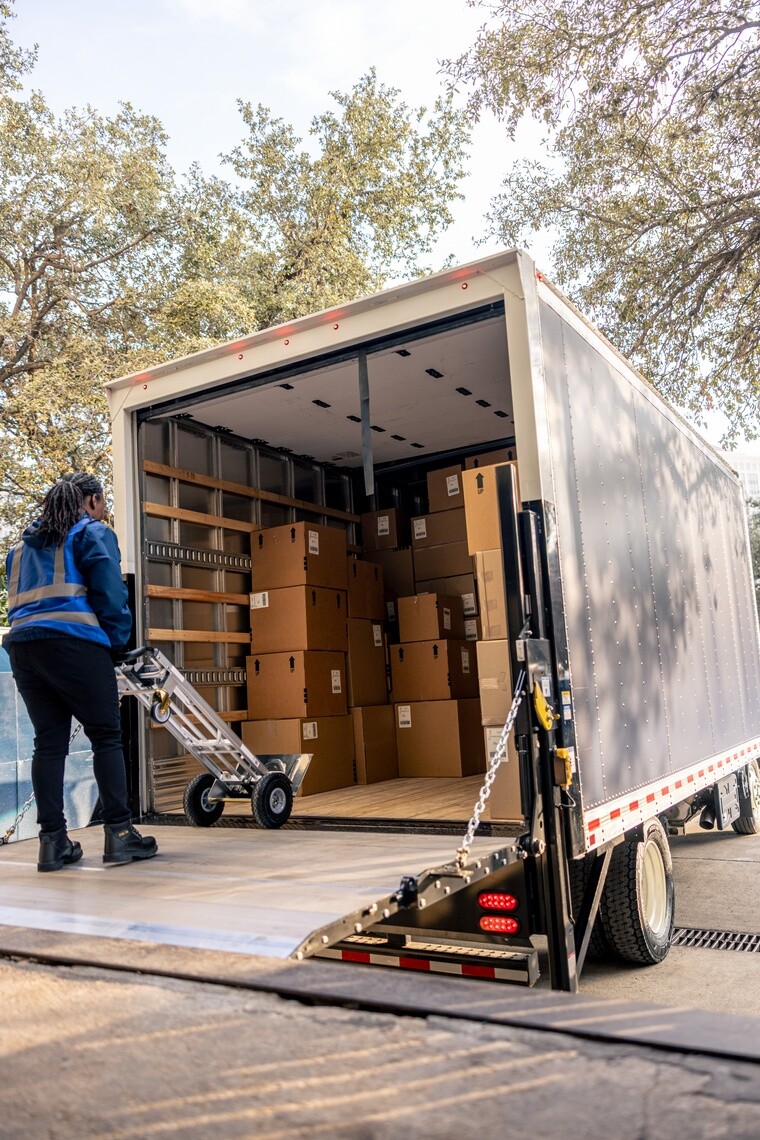
Worker unloading boxes from the back of a delivery truck
In last-mile delivery, the final stretch of a product’s journey is often the most expensive—and the most fragile.
For fleet managers, failed deliveries don’t just mean a late package. They mean wasted fuel, driver frustration, and increased operational costs that can quickly erode profit margins.
With urban congestion rising and customer expectations growing, tackling last mile delivery challenges has never been more important.
The True Cost of Failed Deliveries
Missed or unsuccessful deliveries cost businesses big. One recent analysis estimates that every failed delivery costs an average of $17. Multiply that by dozens—or hundreds—of stops per week, and the impact is clear.
But the cost breakdown goes beyond just fuel and time. Failed deliveries also lead to:
- • Higher customer service costs to manage complaints or reschedule deliveries
- • Lost revenue opportunities when goods are returned or delayed
- • Extra miles on the road, increasing vehicle wear and fuel consumption
- • Lower delivery driver morale, especially when they feel blamed for service failures
All of this adds up to significant last mile delivery cost breakdown issues that weigh heavily on a fleet’s bottom line.
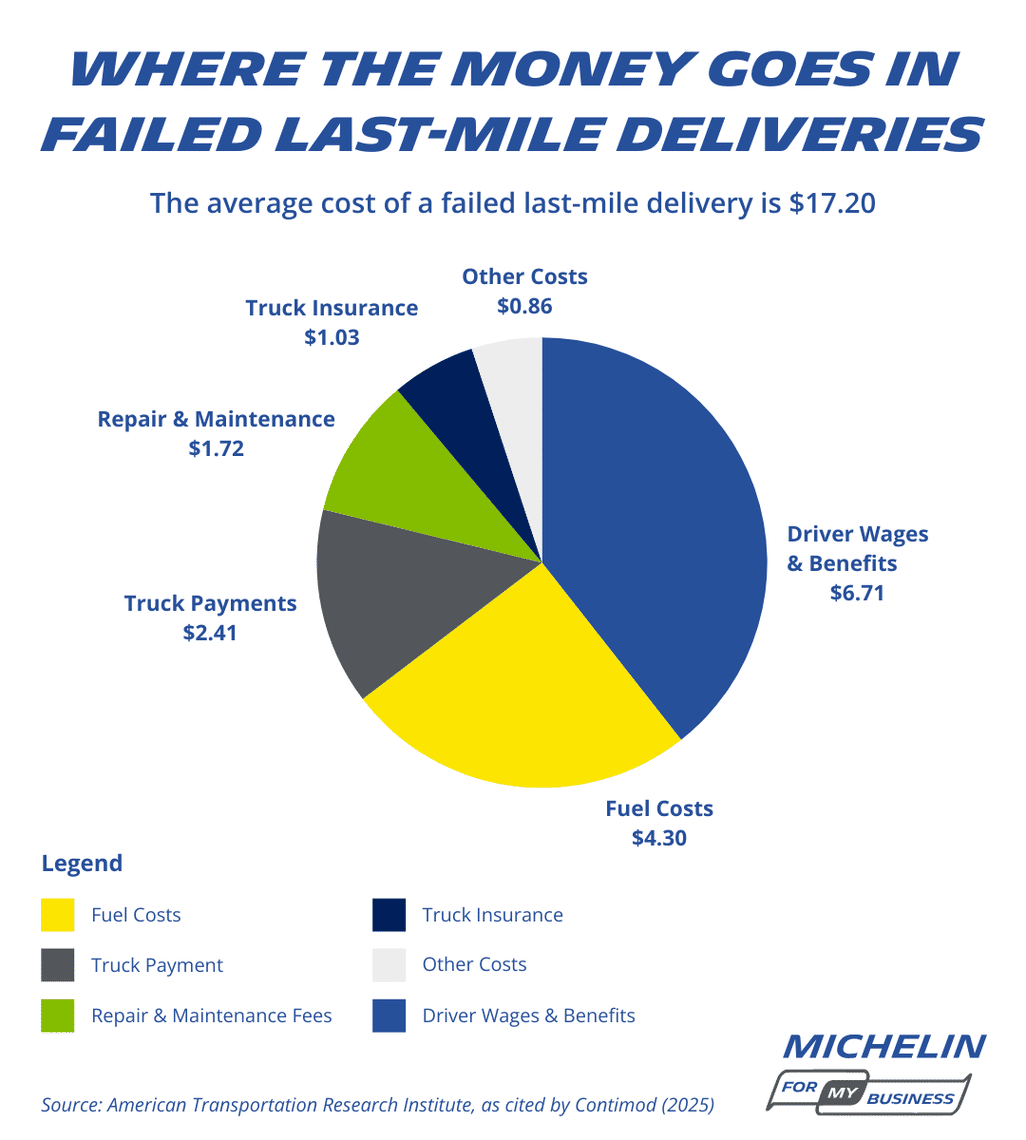
failed last mile delivery graphic
What Causes Last-Mile Delivery Failures?
Understanding the root causes of delivery issues is the first step toward solving them. Here are the most common reasons last-mile deliveries fail:
- • Traffic Congestion: Urban areas are becoming increasingly gridlocked. This leads to longer routes, missed delivery windows, and drivers rushing to stay on schedule.
- Tip: Use tools like Michelin Connected Fleet to build route plans that account for real-time traffic and road closures, allowing for optimizing delivery and customer service.
- • Inefficient Routes: Poorly designed route plans create backtracking, long wait times, and low stop density. These issues increase mile delivery cost and reduce on-time performance.
- • Unavailable Recipients: Even with the best planning, if no one is available to receive the package—or a business is unexpectedly closed—failed deliveries can still occur.
- • Incorrect or Incomplete Addresses: Bad address data is a silent killer of delivery performance. Drivers waste time hunting down buildings or navigating gated properties without access.
- • Limited Parking and Access: In dense cities, delivery drivers often struggle to find safe, legal parking near the drop-off location. The longer it takes to park, the more likely delays or errors will occur.
One often-overlooked challenge that causes many last-mile delivery failures are the roads themselves. Urban fleets operate in dense populations, so the roadways see many challenges associated with high-traffic areas: potholes, curbs, debris on the roadway and tight turns. These conditions add to the wear and tear that both the vehicles and tires see, presenting another potential risk of downtime and delays.
Why This Matters for Fleet Managers
For urban fleets, the cost of last-mile delivery failure isn’t just operational—it’s strategic.
Every missed stop reflects on your service. And when delivery failures become routine, customers may switch providers altogether. Plus, the increased operational costs put pressure on already-thin margins in high-volume delivery markets.
Even more, the delivery driver experience matters. Drivers who feel supported with better tools, route visibility, and parking options are less likely to burn out or make costly mistakes.
How to Improve Delivery Success Rates
Here’s how fleet managers can reduce last mile delivery challenges and avoid the high cost of failed deliveries:
- • Optimize Route Planning: Use smart tech that considers traffic congestion, delivery windows, and customer preferences to create efficient, flexible routes. Tools like Michelin Connected Fleet help with optimizing routes and reducing delays, all while improving fuel efficiency and asset tracking.
- • Improve Address Accuracy: Integrate real-time address validation during checkout or booking. Ensure drivers have accurate geolocation data and customer instructions.
- • Empower Your Delivery Drivers: Equip drivers with apps that offer customer contact tools, photo proof of delivery, and instant updates if conditions change. Training also matters. Make sure drivers know how to handle common issues like missed recipients or inaccessible drop-off points without escalating delays.
- • Track and Measure Failures: Don’t guess. Monitor delivery failure rates by driver, route, and time of day. This allows you to identify patterns and intervene early. Example: If one zone consistently underperforms, it may indicate an inefficient route or a recurring address problem that needs fixing.
- • Invest in Vehicle Reliability: Vehicle breakdowns during last-mile delivery are expensive. Keep tires properly inflated and serviced to avoid slow leaks and blowouts.
Michelin Connected Fleet offers tire pressure monitoring and real-time tracking to help prevent unexpected downtime.
Real Results from Optimizing the Last Mile
Companies that improve their last-mile operations typically see:
- • 20–30% lower fuel costs due to smarter routing
- • 15% higher delivery success rates
- • Faster average delivery times, even during rush hour
- • Better driver satisfaction and retention
In a crowded market, these gains can be the difference between staying competitive—or losing customers to faster, better-equipped fleets.
But, monitoring the vehicle isn’t the only thing that helps minimize breakdowns – make sure the tires are built for the demands of urban driving and delivery.
Michelin’s Agilis Family of Tires are engineered to be durable to take on the tough road challenges of last mile delivery.
- • CurbGard Technology helps protect the tire from curb impact and sidewall damage, extending tire life—even on narrow city streets.
- • Agilis CrossClimate LT, Agilis CrossClimate C-Metric and Agilis HD All Season are designed with durability and traction in mind—making them ideal for fleets navigating stop-and-go traffic, unpredictable weather, and rough urban surfaces.
- • Backed by a 20% mileage guarantee* and a 60-day satisfaction guarantee*, Agilis tires deliver the confidence fleet managers need to keep operations moving.
Final Thoughts: A Mile Worth Optimizing
Urban delivery isn’t getting easier. But last mile delivery doesn’t have to be a constant cost sink.
With the right tools, smarter routing, and support for your drivers, you can lower delivery failure rates, reduce operational costs, and build a more efficient, resilient delivery operation.
Because in last-mile logistics, every mile and every delivery counts.
20% Mileage Guarantee:
If the Michelin Agilis products do not provide 20% more mileage performance than your current light truck or medium-duty truck tires, we’ll make up the difference of your acquisition price per tire. See the Agilis Family Guarantee page, business.michelinman.com/agilis-family-satisfaction-guarantees, for the full terms and conditions.
60 Day Satisfaction Guarantee
If you’re not 100% satisfied with your new tires, just bring the tires and original sales receipt back to the place where you bought the tires within 60 days of your purchase, and we will gladly exchange them for a new set of tires of equal or lesser value. Certain conditions and limitations apply. See the Michelin Owner’s Manual for complete description and details.
https://www.capgemini.com/research/the-last-mile-delivery-challenge/
https://www.project44.com/resources/blog/delivery-failures-are-costing-you-more-than-you-think
https://www.dispatchtrack.com/resources/guides/last-mile-logistics-report
https://www.supplychain247.com/article/understanding_the_hidden_costs_of_last_mile_delivery
https://www.contimod.com/last-mile-statistics/


