Ag tire rotation can be beneficial to support tire longevity
Agricultural Tire Rotation: When and How to Rotate Farm Tires
Uneven tire wear can shorten the service life of agricultural tires. In some situations, rotating tires between positions can help distribute wear more evenly and extend tire life.
This guide explains when agricultural tire rotation may be useful and how rotation can be applied to tractors, dual tires, articulated tractors, telescopic forklifts and self-propelled sprayers.
What Is Agricultural Tire Rotation?
Agricultural tire rotation involves moving tires between different positions on a machine to help distribute wear and mechanical stress more evenly.
When tires wear unevenly because of their position, operating conditions or machine configuration, rotating them may help balance tire wear and extend tire life. The appropriate rotation method depends on the type of equipment and how the tires are being used.
When to Rotate Tractor Tires
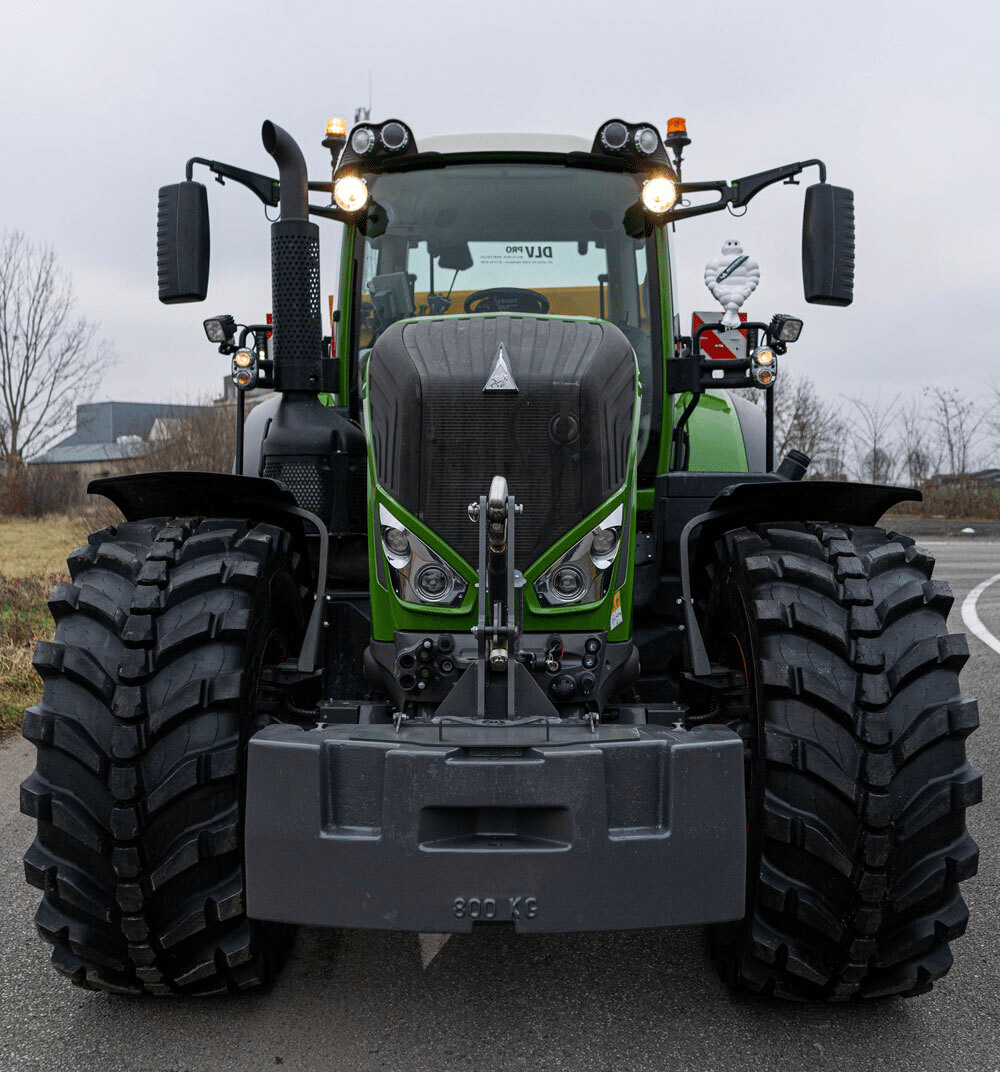
When a tractor spends significant time on the road, its front tires may develop uneven wear. In countries where traffic drives on the right, the right front tire may experience more wear because roads are often slightly crowned for water drainage.
The road slope can require small steering corrections to keep the tractor traveling straight. Over time, this can contribute to uneven wear across the front tires, particularly on the right side.
If one front tire is wearing more quickly than the other, swapping the front tires from side to side may help distribute wear more evenly and extend tire life.
Before rotating the tires, check for other possible causes of irregular wear, including wheel alignment, to make sure rotation is appropriate.
Tractor Front Tires
How to Rotate Dual Tires
Tractor With Dual Tires
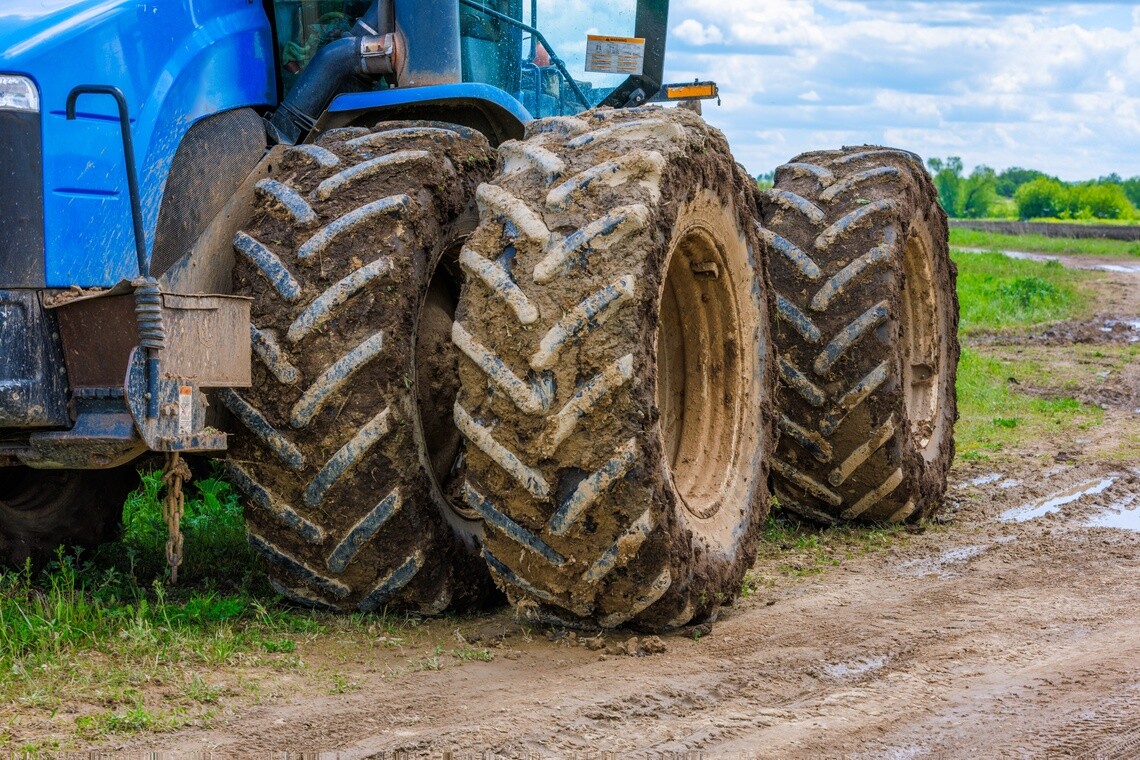
double wheels of agriculture tractor clogged with earth at summer day, close-up
Dual tires, sometimes called twinned tires, are two tires mounted side by side on the same axle. Because the inner and outer tires may accumulate different operating hours, they can develop uneven wear over time.
For example, the outer tires may be removed for certain transport or other operations, leaving the inner tires on the machine for more hours. This can cause the inner tires to wear faster, creating a difference in tread wear and tire size between the paired tires.
When uneven wear develops, swapping the inner and outer tires on the same axle can help balance wear between the dual tires and extend tire life. Maintaining more consistent wear between paired tires also helps limit the size difference between them.
Tire Rotation for Large Articulated Tractors
Large articulated tractors, which steer using a pivoting joint between the front and rear sections of the machine, are often equipped with dual tires, particularly in the U.S. and Brazil.
If the outer tires begin wearing faster than the inner tires, swapping the inner and outer tire positions can help distribute wear more evenly and extend tire life.
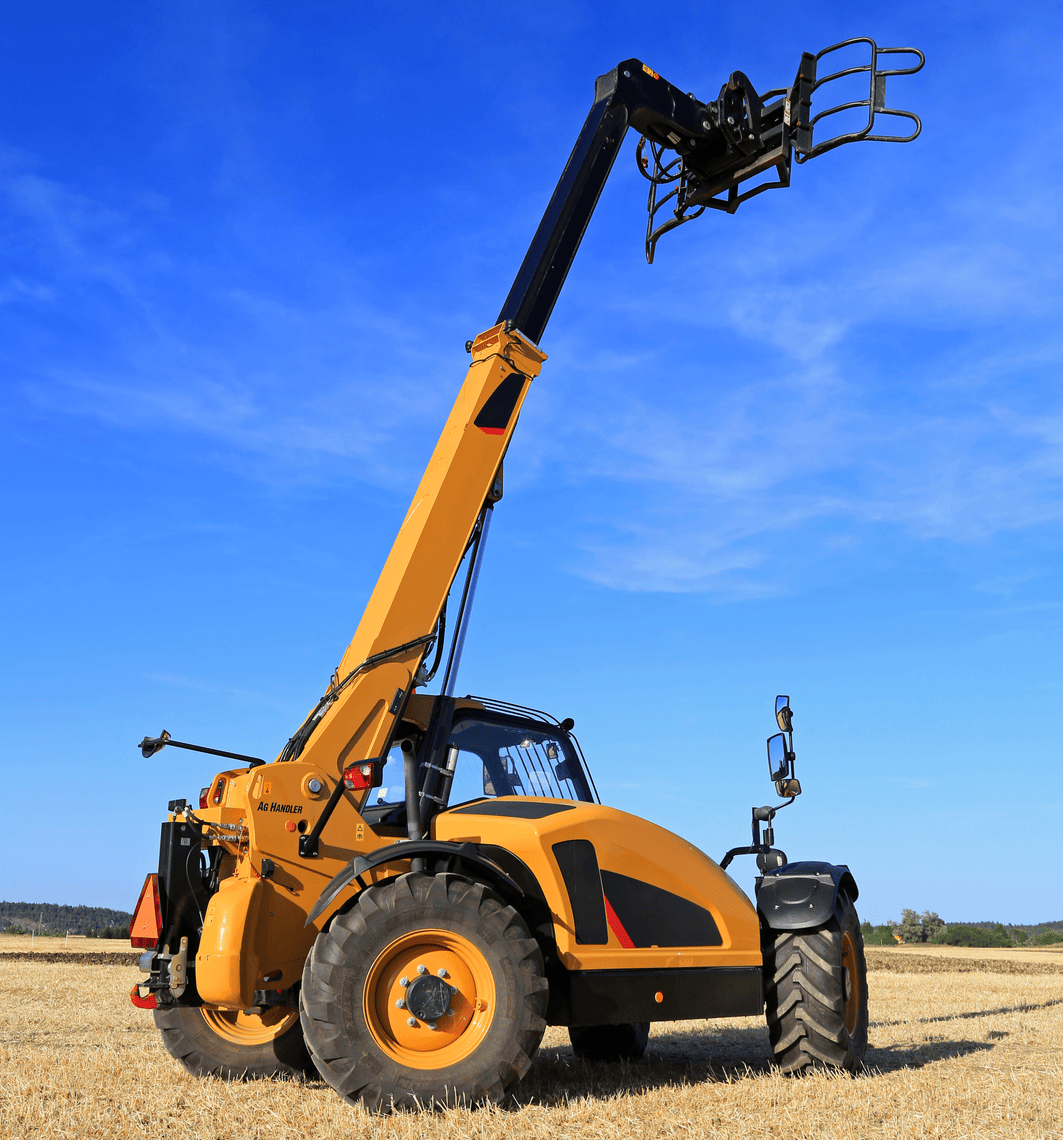
Tire Rotation for Telescopic Forklifts
Telescopic forklifts are versatile farm machines used for handling materials, transport and other tasks across fields, roads and hard surfaces such as concrete and asphalt.
Because these machines frequently maneuver across different surfaces and carry heavy loads, the front tires may wear faster than the rear tires.
When the front and rear tires are the same size, they can be rotated between the front and rear positions to help distribute wear more evenly and extend tire life. Consider rotation when a noticeable difference in wear begins to develop between the front and rear tires.
Telescopic Forklift in Field
Tire Rotation for Self-Propelled Sprayers
Self-Propelled Sprayer in Field
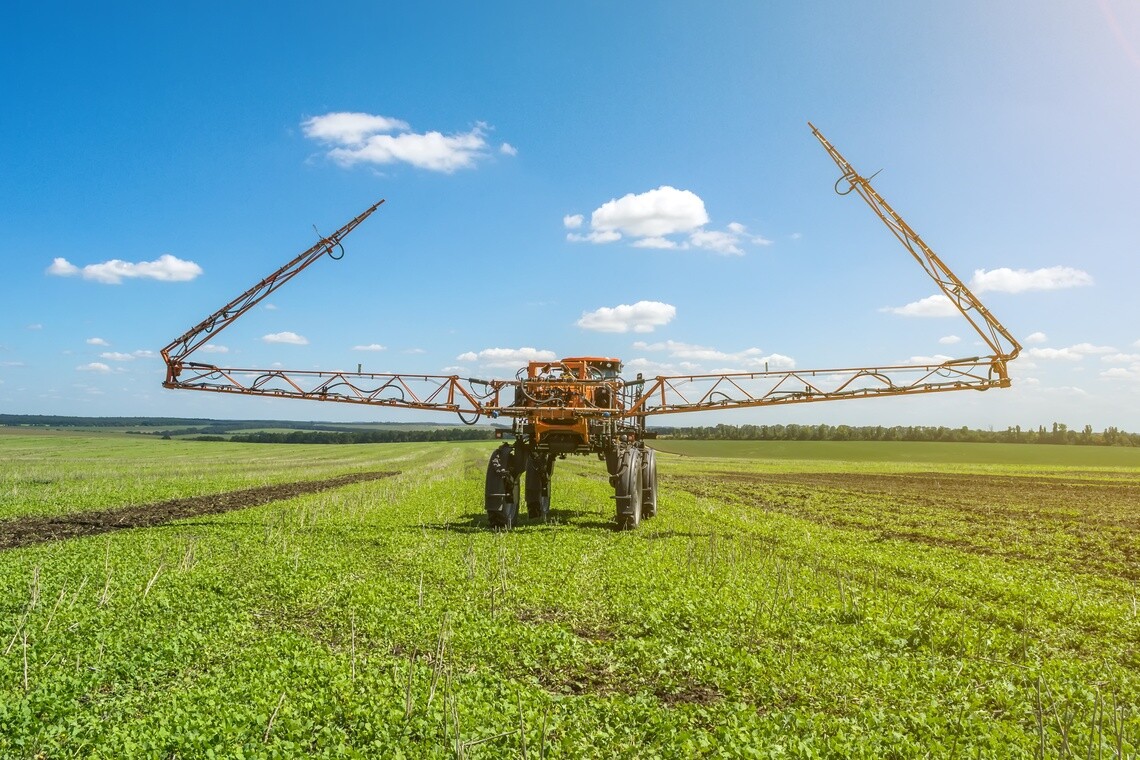
self-propelled sprayer works on a field under a blue sky with clouds.
Self-propelled sprayers often have high ground clearance, narrow tires and steering systems that can contribute to uneven tire wear if wheel alignment is not correct.
If irregular wear develops, check the wheel alignment first and correct any underlying issue before rotating the tires.
When all four tires are the same size and rotation is appropriate, moving the tires between positions can help distribute existing wear more evenly and extend tire life.
What to Check Before Rotating Agricultural Tires
Tire rotation can help distribute wear more evenly and extend tire life, but it is important to understand why uneven wear is occurring before moving the tires to different positions.
Irregular tire wear can sometimes indicate an underlying issue, such as incorrect wheel alignment or mechanical play. Rotating the tires without addressing the cause may not solve the problem.
Before rotating agricultural tires, check the wheel alignment and inspect the machine for mechanical issues that could be contributing to uneven wear. Once any underlying problems have been addressed, tire rotation may help balance existing wear and support longer tire life.
Explore More Agriculture Tire Resources
Learn more about agriculture tire care, maintenance and performance with these Michelin resources:
Explore More Agricultural Tire Resources
Find additional advice and solutions to help maintain your tractor tires and optimize performance in the field.