Commercial Trucks at Truck Show
How to Avoid Commercial Truck Tire Violations
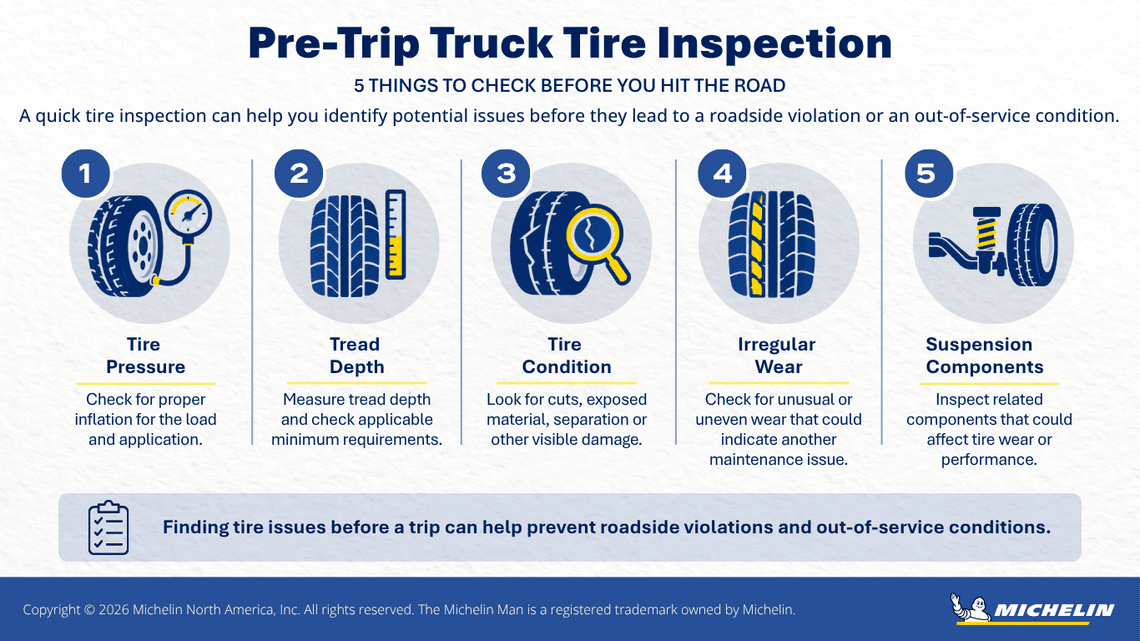
Pre-Trip Truck Tire Inspection Checklist
Commercial Trucks at Truck Show
Tire maintenance violations identified during roadside inspections can affect both drivers and fleets. Some tire conditions can also result in a vehicle being placed out of service (OOS) until the issue is corrected.
Under the Compliance, Safety, Accountability (CSA) program, tire violations are tracked within the Vehicle Maintenance category. Tire-related violations can include conditions such as:
Because tire violations can affect a fleet's safety record and potentially put a vehicle out of service, regular inspection and proper tire maintenance are an important part of keeping commercial trucks on the road.
A pre-trip tire inspection can help identify potential issues before they lead to a roadside violation or out-of-service condition. Check tire pressure, tread depth, tire condition, irregular wear and related suspension components before putting the vehicle into service.
Pre-Trip Truck Tire Inspection Checklist
Follow recommended tire inspection, maintenance and repair procedures to help identify tire issues before they result in a roadside citation or out-of-service condition.
Commercial truck tire violations can involve tire condition, tread depth, inflation and load capacity. The examples below show tire conditions identified during roadside inspections that may result in an out-of-service violation.
Tire Condition | What to Watch For |
|---|---|
Flat tire or air leak | A flat tire, significantly reduced tire pressure or an audible air leak |
Exposed ply or belt material | Fabric, ply or belt material visible through the tire |
Tread or sidewall separation | Separation in the tread or sidewall |
Cuts exposing tire structure | Cuts deep enough to expose ply or belt material |
Insufficient steer tire tread depth | Front tire tread depth below 4/32 inch |
Insufficient tread depth on other tires | Tread depth below 2/32 inch |
Improper regrooved tire use | Regrooved tires used in restricted front-wheel applications |
Insufficient tire load capacity | Vehicle weight exceeds the tire's load limit |
Underinflation | Tire pressure below the required operating level |
A pre-trip inspection gives drivers an opportunity to identify tire issues before getting on the road. Inspect both tractor and trailer tires, paying particular attention to:
Follow recommended inspection, maintenance and repair procedures for your tires and application. Tire repairs should be performed according to applicable industry guidance and manufacturer recommendations.
Avoiding commercial truck tire violations starts before the vehicle reaches a roadside inspection. Regularly checking tire pressure, tread depth, tire condition and wear can help drivers identify issues early, support tire performance and keep trucks moving.
Find more Michelin commercial tire solutions, guidance and resources for your operation.
You are using and outdated Web Browser.
You are using a browser that is not supported by this website. This means that some functionality may not work as intended. This may result in strange behaviors when browsing round.
Use or upgrade/install one of the following browsers to take full advantage of this website


