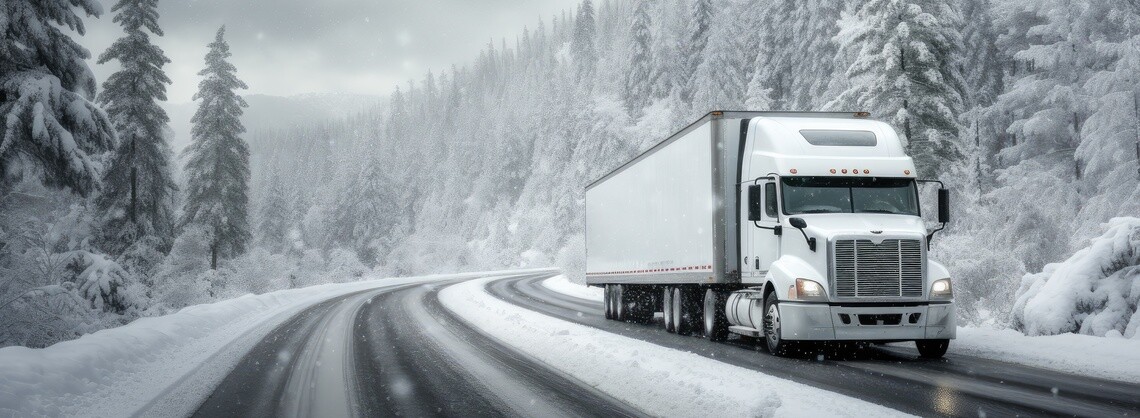
truck driving in snow
A large truck transports cargo during a winter storm. Thissymbolizes the strength and determination of the transportation industry in challenging weather conditions
Updated November 2026
Winter weather can make even familiar trucking routes unpredictable. Snow, ice, freezing temperatures and reduced visibility create challenges for commercial truck drivers, especially when road conditions change quickly.
Whether you're driving a long-haul route or making local deliveries, preparing your truck and knowing how to adjust your driving can make a big difference when winter weather hits.
So, how can truck drivers prepare for winter driving?
It starts with a few practical steps: checking your truck before hitting the road, adjusting your speed and following distance, carrying the right emergency supplies and knowing when conditions are too dangerous to continue.
These winter driving safety tips for truck drivers cover what to check before your trip, how to handle challenging road conditions and what to keep in your cab. We've also included a downloadable winter driving checklist you can save or print for your next trip.
ON THIS PAGE
• Prepare Your Truck for Winter Driving
• How to Adjust Your Driving for Winter Road Conditions
• What Should You Keep in Your Truck for Winter Driving?
• How to Stay Alert and Comfortable During Winter Drives
• When Is It Too Dangerous to Drive a Truck in Winter Weather?
1. Prepare Your Truck for Winter Driving
Winter driving preparation starts before you ever leave the yard. Freezing temperatures, snow and ice can affect everything from tire pressure to visibility, so taking a little extra time to inspect your truck before a trip is especially important.
Here are a few things to pay attention to before heading out:
• Check your fluids and cooling system. Make sure your antifreeze and windshield washer fluid are appropriate for freezing temperatures. Check fluid levels and inspect your cooling system for any signs of leaks or problems.
• Inspect your tires. Look for damage, uneven wear and adequate tread depth. Make sure your tires are appropriate for the conditions you'll encounter along your route.
• Pay extra attention to tire pressure. Cold temperatures can affect inflation pressure, so check your tires with an accurate gauge and follow Michelin's commercial truck tire pressure recommendations. If you're checking or inflating tires inside a heated facility, account for the difference between indoor and outdoor temperatures using the appropriate cold-weather pressure correction guidance.
• Keep your lights and windows clear. Remove snow and ice from your windshield, mirrors, lights and other areas that affect visibility. Check that your lights and windshield wipers are working properly before leaving.
• Check tire chain requirements before your trip. Depending on your route and weather conditions, you may be required to carry or install chains or other approved traction devices. Review the U.S. and Canadian tire chain requirements before traveling, and confirm current restrictions with the transportation authorities along your route. Make sure you know how to install your equipment before you need it.
• Plan for winter conditions along your route. Check weather forecasts, road closures and travel advisories before departing. Give yourself flexibility in your schedule, and don't feel pressured to continue driving when conditions become unsafe.
2. How to Adjust Your Driving for Winter Road Conditions
Winter weather can make even familiar routes unpredictable, especially when you're behind the wheel of a commercial truck. Snow, ice and freezing temperatures can reduce traction and increase stopping distances, so it's important to adjust how you drive based on the conditions.
Here are a few ways to stay safer on winter roads:
• Give yourself extra space. Increase your following distance to allow more time to react and stop safely if traffic slows or stops suddenly. Remember, trucks need more distance to stop, especially on slippery roads.
• Watch for black ice. Black ice can be difficult to spot because it often looks like wet pavement. Be especially cautious on bridges, overpasses and shaded areas where ice can form even when other roads appear clear. If you notice that vehicles ahead are no longer kicking up water spray, it could be a warning sign that the road surface has frozen.
• Slow down when conditions change. Posted speed limits aren't necessarily safe during snow, ice or freezing rain. Adjust your speed based on road conditions, visibility and available traction, even if other vehicles are traveling faster.
• Avoid sudden movements. Accelerate, brake and steer smoothly to help maintain traction. Sudden braking, sharp turns and rapid acceleration can increase the risk of skidding or losing control, particularly on icy roads.
3. What Should You Keep in Your Truck for Winter Driving?
Winter weather can be unpredictable, and road closures, heavy snow or icy conditions could leave you stranded longer than expected. Keeping a few essential supplies in your truck can help you stay safe and comfortable until conditions improve or help arrives.
Here's what you should have on hand:
• Sand and a shovel. A small shovel can help clear snow around your tires, while sand can provide additional traction if your truck gets stuck on snow or ice.
• Warm winter clothing. Pack an insulated jacket, gloves, a hat, warm socks and sturdy, slip-resistant boots. If you're stranded or need to leave your cab, you'll want to be prepared for freezing temperatures.
• Extra food and water. Keep nonperishable snacks and drinking water in your truck in case road closures or severe weather leave you waiting for an extended period.
• Enough fuel. Try to keep your diesel tank at least half full during winter travel. Extra fuel can be important if your route takes longer than expected or you're delayed by severe weather.
• A flashlight and high-visibility vest. A reliable flashlight with extra batteries can help you see in low-light conditions, while a high-visibility vest makes you easier to spot if you need to exit your truck.
• An emergency kit. Consider keeping a first-aid kit, extra blankets, a phone charger and any necessary medications readily accessible in case of an unexpected delay.
4. How to Stay Alert and Comfortable During Winter Drives
Winter driving can be physically and mentally demanding, especially when you're spending long hours behind the wheel. Taking care of yourself is just as important as preparing your truck for winter conditions.
• Keep moving when you can. Sitting for long periods can leave you feeling stiff and uncomfortable. Take opportunities to stretch and move around during scheduled stops. You can also try simple cab exercises while safely parked to help reduce stiffness during long trips.
• Take breaks and get enough rest. Driving through snow, ice and poor visibility requires extra concentration, which can leave you feeling tired. Fatigue can slow your reaction time and affect your ability to make safe decisions. Follow required rest periods, and if you're feeling drowsy, find a safe place to stop and rest before continuing.
When Is It Too Dangerous to Drive a Truck in Winter Weather?
Even experienced truck drivers can encounter winter conditions that make it unsafe to continue driving. While keeping your delivery on schedule is important, knowing when to slow down, pull over or wait for conditions to improve is just as important.
Here are some warning signs that it may be time to find a safe place to stop:
• Strong winds. Powerful crosswinds can make it difficult to maintain control of your truck, especially when pulling an empty or lightly loaded trailer. If winds are affecting your ability to stay in your lane, look for a safe place to stop.
• Poor visibility. Heavy snow, fog and blowing snow can make it difficult to see the road, other vehicles and potential hazards. If visibility becomes too limited to drive safely, reduce your speed and find a safe location to pull over.
• Ice-covered roads. Freezing rain and icy pavement can significantly reduce traction, making it harder to steer, brake and maintain control. If road conditions are deteriorating or you're struggling to maintain traction, don't push through.
• Blizzard or whiteout conditions. When heavy snow and strong winds make it nearly impossible to see, continuing to drive can put you and others at risk. Find a safe place to stop and wait for conditions to improve.
Remember, no delivery is worth risking your safety. Pay attention to weather alerts, road closures and changing conditions along your route. If you need to stop, choose a designated parking area or another safe location away from moving traffic whenever possible.
Related Resources
Looking for more ways to keep your truck in good condition and stay safe on the road? Explore these additional Michelin resources:
-
• Commercial Truck Preventive Maintenance Tips – Learn how regular inspections and maintenance can help prevent unexpected issues on the road.
-
• 3 Tips to Avoid a Roadside Truck Breakdown – Discover practical ways to reduce the risk of unexpected breakdowns.
-
• Cab Exercises for Truck Drivers – Find simple ways to stretch and stay comfortable during long trips.
-
• The Importance of Semi-Truck Brake Safety – Learn why brake maintenance is an important part of keeping your truck road-ready.
-
Frequently Asked Questions About Winter Truck Driving
Winter tire requirements for commercial trucks vary by location. In the U.S., there is no nationwide requirement for heavy commercial trucks to use winter tires, although certain states have seasonal traction and chain requirements. In Canada, requirements can vary by province, highway and vehicle type. Before traveling, check the regulations along your route and make sure your tires are suitable for the conditions you may encounter.
If your truck begins to skid on an icy road, avoid sudden steering movements or hard acceleration. Stay focused on maintaining control and follow the appropriate skid recovery procedures for your truck and braking system. Because recovery techniques can vary depending on the type of skid and vehicle configuration, it's important to understand your truck's handling characteristics before driving in winter conditions.
No. It's best to turn off cruise control when driving on snowy, icy or slippery roads. Cruise control can respond to changes in speed without accounting for reduced traction, potentially making it harder to maintain control. Keep your speed under manual control so you can respond smoothly to changing road conditions.


