Male trucker in cab
Driver in cabin of big modern truck vehicle on highway
UPDATED November 2026
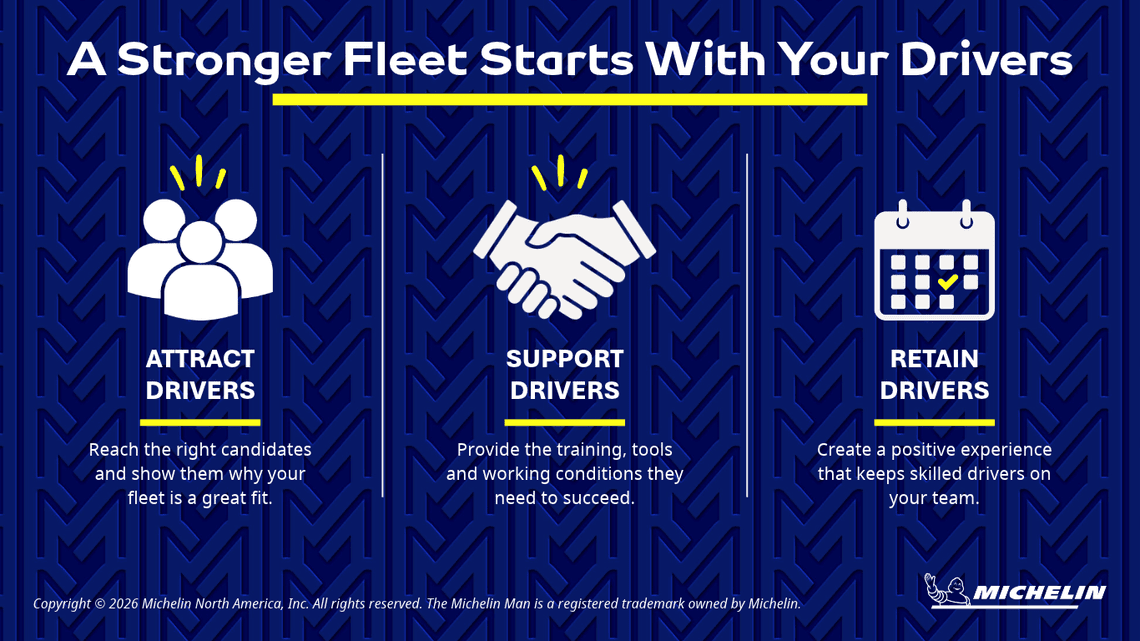
Recruiting qualified truck drivers is a challenge for many fleet owners, but finding the right drivers is only half the battle. Keeping experienced drivers on your team is just as important, especially when turnover can disrupt operations and put additional pressure on your existing workforce.
For small and medium-sized fleets, competing for talent isn't always about offering the highest salary. Working conditions, communication, career opportunities and how drivers are treated can all influence whether someone chooses to join your fleet and stay.
So, how can you attract qualified truck drivers and encourage them to build a career with your company?
Here are 10 practical ways to recruit qualified truck drivers, keep the ones you have and make your fleet a place people want to work.
ON THIS PAGE
- • Know Your Company as an Employer
- • Attract the Right Truck Driver Candidates
- • Reach the Next Generation of Truck Drivers
- • Improve Working Conditions to Retain Truck Drivers
- • Expand Your Truck Driver Recruitment Pool
- • Plan Ahead for Seasonal Driver Demand
- • Build a Strong Onboarding Experience for New Truck Drivers
- • Support Your Truck Drivers' Health and Well-Being
- • Give Truck Drivers Opportunities to Grow
- • Learn From Truck Driver Exit Interviews
Truck Driver Recruitment and Retention Strategy
1. Know Your Company as an Employer
What makes a driver want to work for your fleet instead of another company? Before you start recruiting, it's worth taking a good look at what you offer and where you could improve.
Think about what your current drivers appreciate most. Is it reliable equipment, consistent schedules, competitive pay or the way management treats them? Those are the things worth highlighting when you're trying to attract new drivers.
Just make sure you're being realistic. Promising great working conditions might get someone through the door, but delivering on those promises is what gives them a reason to stay.
2. Attract the Right Truck Driver Candidates
A good job posting does more than list qualifications. It gives drivers a reason to consider working for your fleet and helps them decide whether the job is right for them.
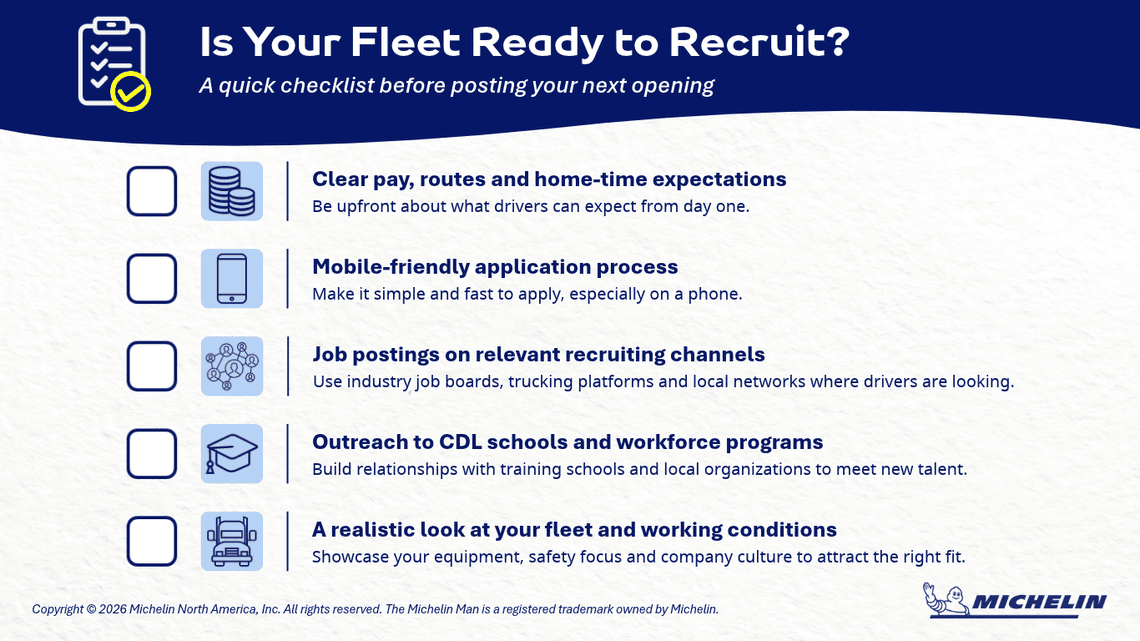
Be upfront about the type of driving, routes, home-time expectations, pay and benefits. And don't forget to highlight what makes your company different, whether that's newer equipment, opportunities to advance or a supportive team.
According to the Spring 2026 Truck Driver Survey by Conversion Interactive Agency and People. Data. Analytics, 63.7% of surveyed job-seeking drivers cited improved home time, while 61.6% cited predictable or higher pay as reasons for seeking a new driving position.
Once you've written a clear job posting, make sure the right people can find it. Use online job boards, trucking industry recruitment platforms and employee referrals to reach potential candidates. And keep the application process simple, especially for drivers applying from their phones.
You don't necessarily need more applicants. You need applicants who understand the job and are a good fit for your fleet.

Truck Driver Recruitment Checklist for Fleet Owners
3. Reach the Next Generation of Truck Drivers
Younger drivers are an important part of trucking's future, but reaching them means thinking beyond traditional recruiting methods.
Social media is a good place to start. Share photos or short videos that show what it's actually like to work for your fleet. Let current drivers talk about their experiences, show off the equipment they use and give potential applicants a look at a typical day on the job.
You can also highlight training opportunities, mentorship programs and the different career paths available within your company. Someone considering trucking for the first time may not realize how many opportunities exist beyond driving.
The more you can show candidates what life with your fleet is really like, the easier it is for them to picture themselves working there.
4. Improve Working Conditions to Retain Truck Drivers
Pay matters, but it's not the only reason drivers choose to stay with a company. Long hours, unpredictable schedules and time away from family can wear on even the most experienced drivers.
Think about the things that affect your drivers every day. Are their trucks well-maintained? Are delivery schedules realistic? Can they count on clear communication from dispatch? And when possible, are you giving them enough notice about their schedules and home time?
One of the simplest things you can do is ask drivers what's working and what isn't. You might hear about equipment problems, unnecessary delays or scheduling frustrations that haven't made their way back to management.
Of course, asking is only half the job. If drivers keep raising the same concerns and nothing changes, they're going to notice. Follow through where you can, and be upfront about what you can't change.
female driver in front of fleet
5. Expand Your Truck Driver Recruitment Pool
If you're struggling to find qualified truck drivers, it might be time to look beyond your usual recruiting channels. There are potential candidates who may never have considered trucking or simply haven't had the opportunity to explore it.
According to the American Transportation Research Institute's 2025 research on truck driver demographics, women represent just 4.1% of U.S. truck drivers. That's one example of why reaching a wider range of candidates is worth considering.
Try connecting with CDL training schools, local workforce development programs and organizations that help people explore new careers. These can be good places to reach women interested in trucking, people changing careers and others who may not come across your usual job postings.
Take a look at your recruiting materials, too. Do they show the different people and career paths within trucking? Are you highlighting training opportunities and the support available to new drivers?
You might be surprised by the candidates you reach when you look beyond the same recruiting channels you've always used.
6. Plan Ahead for Seasonal Driver Demand
If your fleet gets especially busy during certain times of the year, you already know how quickly staffing can become a challenge. Holiday deliveries, agricultural harvests and other seasonal peaks can put extra pressure on your drivers if you're not prepared.
Look back at previous years. When did freight volumes increase? Were there times when you struggled to cover routes or had to rely heavily on overtime? Those patterns can give you a better idea of when to start recruiting seasonal drivers.
And if you've worked with reliable seasonal drivers before, stay in touch! Someone who already knows your operation and performed well could be a great option when business picks up again.
Just make sure temporary drivers receive the same attention to safety, training and communication as your permanent team. Being hired for a few weeks or months doesn't mean they should be left to figure things out on their own.
7. Build a Strong Onboarding Experience for New Truck Drivers
You've found a qualified driver, they've accepted the job and they're ready to get started. Now what?
Those first few weeks matter. A new driver needs more than a set of keys and a list of routes to feel prepared for the job.
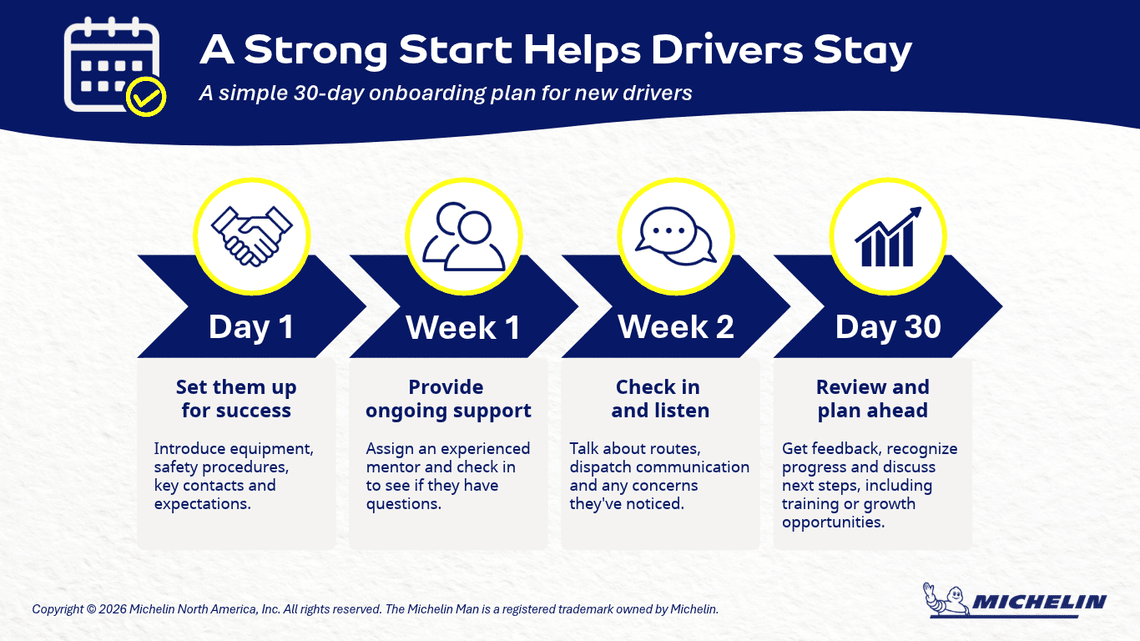
Take the time to walk new hires through your equipment, safety procedures, routes and company expectations. Make sure they know who to call when something goes wrong or they have a question on the road.
If possible, pair them with an experienced driver or team member who can help them get familiar with your operation. And don't wait until their first performance review to check in. A quick conversation after their first week or two can help you catch problems before they turn into bigger frustrations.
The easier you make that transition, the better chance a new driver has of settling in and feeling like part of the team.
30-Day Truck Driver Onboarding Plan
8. Support Your Truck Drivers' Health and Well-Being
Life on the road can take a toll on drivers, both physically and mentally. Long periods of sitting, irregular schedules and time away from family can make it difficult to maintain healthy routines.
Supporting driver health doesn't have to mean launching an expensive wellness program. Sometimes, it's about understanding what drivers are dealing with and finding practical ways to help.
Start by asking your drivers what would make a difference in their day-to-day lives. Depending on your fleet's resources, that could mean offering access to wellness programs, providing mental health resources or making it easier for drivers to take advantage of their health benefits.
Small changes matter, too. Encourage drivers to use their scheduled breaks to move around, stretch and recharge. Even simple cab exercises for truck drivers can help break up long periods of sitting without requiring special equipment.
Just as importantly, make sure drivers feel comfortable speaking up about fatigue, stress or health concerns without worrying that they'll be dismissed.
9. Give Truck Drivers Opportunities to Grow
Not every driver wants to stay in the same role forever, and not every career path has to lead away from the driver's seat. Some drivers may want to become trainers or mentors, move into dispatch or fleet management, or simply build their skills and take on new responsibilities.
Talk to your drivers about where they'd like their careers to go. Are they interested in additional certifications? Would they like to train new hires? Are there opportunities within your company they might not know about?
For smaller fleets, formal promotion opportunities may be limited, and that's okay. Offering additional training, recognizing experience or giving drivers more responsibility can still show them that there's room to grow.
The important thing is to make those opportunities visible. Don't assume your drivers know what's available or that they'll ask if they're interested.
10. Learn From Truck Driver Exit Interviews
Even when you've done everything you can to create a good working environment, drivers will sometimes leave. Maybe they're looking for better pay, want more time at home or have decided to pursue something entirely different.
Before they go, take the time to ask about their experience. What did they enjoy about working for your fleet? What frustrated them? Was there anything the company could have done differently?
Exit interviews don't need to be complicated or overly formal. A straightforward conversation can reveal problems you weren't aware of, especially if drivers feel comfortable being open about their experiences.
Of course, collecting feedback is only useful if you do something with it. Look for patterns in what departing drivers tell you. If several mention scheduling issues, communication problems or concerns about equipment, those are worth investigating.
You won't be able to prevent every departure, but you might learn something that helps you keep the next driver.
Building a Fleet Drivers Want to Join and Stay With
Recruiting good truck drivers takes work, but keeping them is just as important. You don't need a large HR department or an expensive recruitment campaign to make improvements. Start by listening to your drivers, being clear about what your fleet offers and following through on the commitments you make.
Small changes to how you recruit, support and communicate with drivers can go a long way toward building a team that wants to stay.